blog Communication Entrepreneurship Higher Education Innovation Leadership MUN Research summer Trending | 4min Read

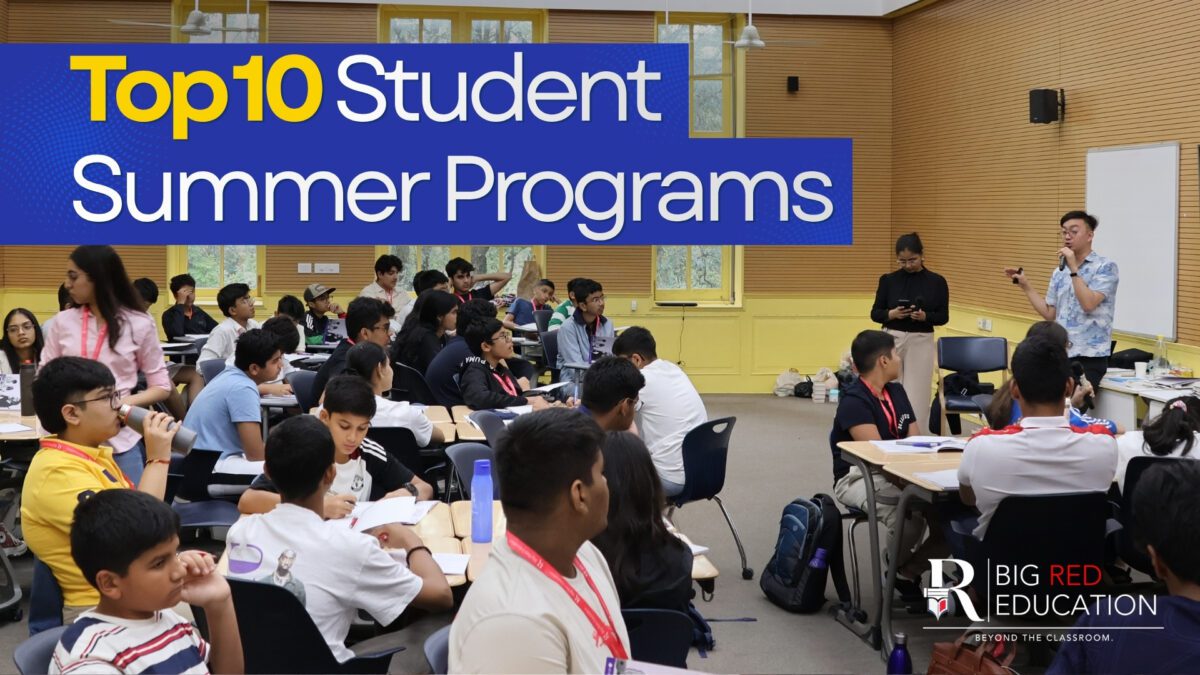
Top 10 Summer Programs for High School Students in 2026

Published on June 12, 2026

FacebookTwitterWhatsApp
Categories
blog Communication Entrepreneurship Higher Education Innovation Leadership MUN Research summer Trending

Top 10 Summer Programs for High School Students in 2026

Top 10 Summer Programs for High School Students in 2026


For ambitious high school students, summer break is one of the best opportunities to explore future careers, develop leadership skills, gain college-level experience, and strengthen university applications.

You have about 10 weeks of summer break. You can spend them scrolling, or you can spend them building a tech startup, programming AI, or negotiating global policy on an Ivy League campus.

Today, admissions officers are no longer just looking at your GPA—they want to see what you do when no one is forcing you to study. The best summer programs do more than just keep you busy; they push you out of your comfort zone, expand your worldview, and give you an undeniable edge in competitive college admissions.

If you are looking for impactful extracurricular activities for college applications, skip the generic camps. Here are the top 10 international and regional summer school programs you should enroll in to actually build real-world skills—categorized by the path you want to take.


How We Selected These Programs

Programs were evaluated based on:

  • Academic rigor
  • Leadership development opportunities
  • Hands-on learning experiences
  • Access to expert mentors
  • Global networking opportunities
  • Relevance for college applications

Why Summer Programs Matter for College Admissions


According to trends noted by the National Association for College Admission Counseling (NACAC), a student’s commitment to intellectual and personal growth outside the traditional classroom is a major differentiating factor. A well-chosen summer program proves that you possess intellectual curiosity, leadership skills, and the discipline to handle rigorous environments.


Academic Exploration

Students can explore majors before university, confirming their interest in a field or discovering a new passion without the pressure of full-time tuition.

Leadership Development

Students develop leadership outside school environments, learning how to manage teams, handle adversity, and guide projects to success.

Networking

Students connect with peers worldwide, building an international network that will serve them well in college and their future careers.

Portfolio Building

Students create projects that strengthen applications, moving from theoretical knowledge to real-world impact that admissions officers can clearly see.

How Parents Can Evaluate Summer Programs

Look for:

  • Faculty quality
  • Program outcomes
  • Student-to-mentor ratio
  • Project-based learning
  • Alumni success stories

The Top 10 Summer Programs to Enroll in This Year

International University Programs

  • 1. Yale Young Global Scholars (YYGS) (Yale University)
    • The Focus: Literature, philosophy, culture, and STEM tracks.
    • The Edge: It offers an authentic taste of Ivy League seminar-style learning and unparalleled international networking.
  • 2. Stanford Summer Humanities Institute (Stanford University)
    • The Focus: Advanced humanities research and analytical writing.
    • The Edge: Ideal preparation for drafting complex academic research papers, helping students stand out in their university applications.
  • 3. Harvard Pre-College Program (Harvard University)
    • The Focus: Higher education exposure across hundreds of course options from astrophysics to constitutional law.
    • The Edge: It provides a true “test drive” of university life, teaching students how to balance independent schedules and complex coursework.
  • 4. Wharton Global Youth Program (Wharton School of the University of Pennsylvania)
    • The Focus: Business economics, financial literacy, and corporate strategy.
    • The Edge: Students attend college-level lectures by Wharton faculty and collaborate on intensive business simulation projects.

Entrepreneurship Programs

  • 5. LaunchX Summer Program (Independent)
    • The Focus: Market research, rapid prototyping, and co-founder collaboration.
    • The Edge: Students are placed into co-founding teams and are challenged to start a real, revenue-generating company by the end of the summer.
  • 6. Social Startup Bootcamp: From Influence to Impact (Big Red Education)
    • The Focus: Social entrepreneurship, business design, and impact metrics.
    • The Edge: You learn directly from leading voices in business and social impact, transforming personal conviction or daily observations into a structured, sustainable venture.

Leadership & Diplomacy Programs

  • 7. Leadership & Social Innovation Conference (Big Red Education)
    • The Focus: Systems thinking, ethical leadership, and the UN Sustainable Development Goals (SDGs).
    • The Edge: Students collaborate to build comprehensive problem-solution models and pitch directly to a panel of expert judges.
  • 8. Ivy League Model United Nations Conference (ILMUNC) India (Big Red Education )
    • The Focus: Geopolitical strategy, multilateral negotiations, and persuasive writing.
    • The Edge: Rather than classroom debate, you step into the shoes of global diplomats to tackle real-world crises alongside mentors from top-tier universities.

Innovation & Technology Programs

  • 9. Command Z: Future Tech Lab (Big Red Education)
    • The Focus: AI literacy, creative tech application, and building real-world AI-powered platforms.
    • The Edge: Students step out of rote memorization and work alongside international experts to design a portfolio-ready tech solution.
  • 10. Innovate NOW (Big Red Education)
    • The Focus: Design thinking frameworks, agile methodologies, and creative problem-solving.
    • The Edge: Students tackle live corporate and social case studies, learning how to pitch, pivot, and prototype ideas under tight deadlines.

Beyond the Certificate: What You Actually Gain From These Programs


It is incredibly easy to sign up for a generic summer camp that hands you a certificate of participation just for showing up. Top-tier universities see right through that. The 10 programs listed above are fundamentally different because they are outcome-driven. Here is why you should prioritize them:

  • Real-World Artifacts: You do not just leave with memories; you leave with a tangible asset for your portfolio. Whether it is a functioning AI tool from Command Z, a pitch deck from LaunchX, or a viable impact strategy from the Social Startup Bootcamp, you walk away with proof of your capabilities.
  • High-Stakes Environments: Programs like ILMUNC India and InnovateNOW force you to think on your feet, handle difficult questions, and negotiate under pressure. This builds the kind of grit and cognitive agility that makes future college interviews feel effortless.

.

Ready to Build Something Meaningful This Summer?


Whether you want to launch a startup, explore artificial intelligence, develop leadership skills, or gain experience in global diplomacy, Big Red Education offers immersive summer programs designed to help students stand out in both college admissions and future careers.

Explore our upcoming programs and find the right fit for your goals.

Explore Big Red Education’s Summer Programs and Secure Your Spot Today!


Editor's Pick

blog Communication Entrepreneurship Higher Education Innovation Internship Leadership MUN | 4min Read

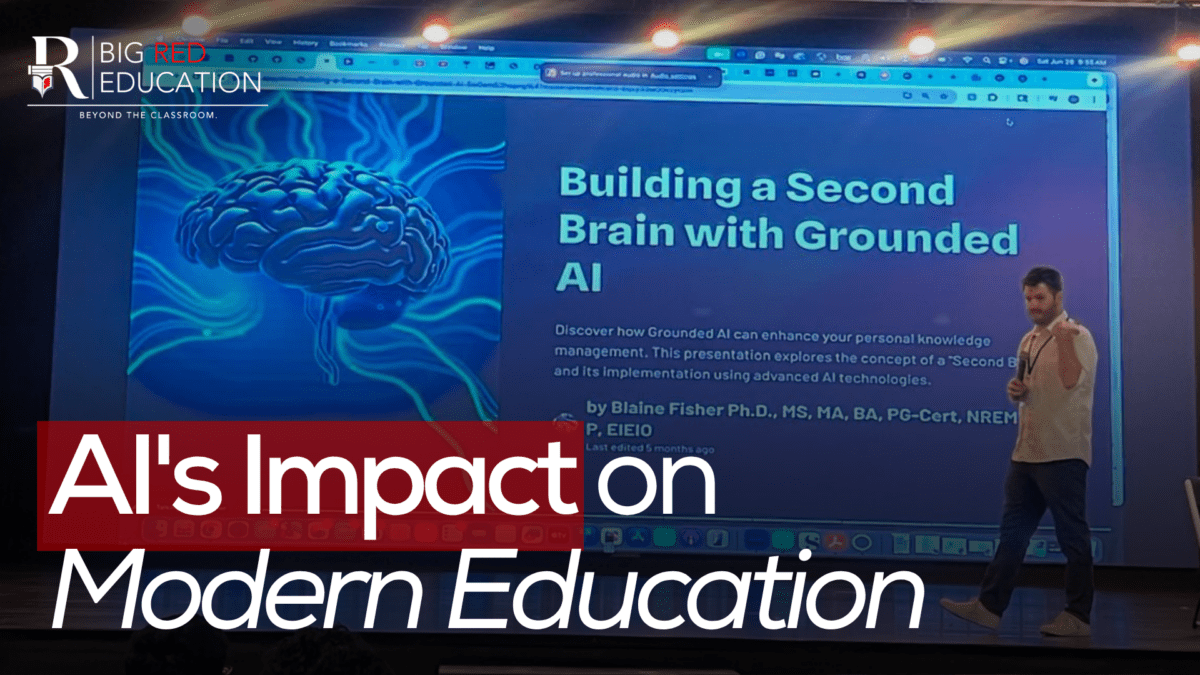
How AI Is Transforming Education: 4 Changes Every Student Should Understand

Published on

FacebookTwitterWhatsApp
Categories
blog Communication Entrepreneurship Higher Education Innovation Internship Leadership MUN

How AI Is Transforming Education: 4 Changes Every Student Should Understand

How AI Is Transforming Education

Whether you’re a student preparing for college or a parent thinking about future careers, artificial intelligence is already changing how students learn, solve problems, and prepare for the workforce. Understanding these changes is becoming just as important as understanding traditional academic subjects.

Here is a direct look at four ways artificial intelligence in education is reshaping the educational ecosystem and how to stay ahead of the curve.

1. The Shift from Rote Memorization to Critical Inquiry

For decades, traditional schooling disproportionately rewarded the ability to memorize facts and formulas. AI reduces the value of memorization as a primary educational outcome and increases the importance of critical thinking, analysis, and problem-solving. When global data can be recalled in milliseconds, the value of education shifts from knowing the answer to asking the right question.

  • Before: Students memorized formulas.
  • Now: Students need to evaluate AI outputs, verify information, ask better questions, and think critically.

As highlighted in the World Economic Forum’s report on Education Readiness for the Age of AI, the rapid integration of AI requires a fundamental shift in how we assess students. Educators are moving away from grading final answers and focusing instead on the logic and critical thinking a student uses to get there.

2. Radical Personalization at Scale

The holy grail of education has always been one-on-one mentorship, but traditional classrooms force a “one-size-fits-all” model. AI breaks this bottleneck by acting as an adaptive, hyper-personalized tutor.

Modern AI platforms analyze a student’s specific learning pace, identifying precise cognitive gaps. If a student struggles with algebraic concepts but excels at visual geometry, the AI dynamically restructures the lesson plan in real time, ensuring they are neither bored by repetition nor left behind.

3. Moving from Passive Consumers to Active Builders

The ultimate goal of classroom technology is not to create a generation that just knows how to use apps, but one that knows how to build them. True AI literacy in the future of education involves understanding the infrastructure of tech.

To evolve from being the “actor on the stage” to the “orchestrator” of AI tools (as discussed by Harvard University), students must develop automation thinking, prompt engineering, and product building skills.

4. Navigating the Ethics of the Algorithm

As AI integrates into everything from healthcare to climate modeling, the most critical skill a student can develop is ethical literacy. Understanding algorithmic bias, data privacy, and the social implications of automation is vital.

UNESCO’s AI competency frameworks emphasize that the leaders of tomorrow will not just be technical experts; they will be the ethical anchors ensuring technology serves human progress responsibly.

Why Human-Centric Skills Are the Ultimate Differentiator

While AI handles computation, data processing, and rapid content generation, it cannot replicate the nuance of human connection and strategic vision. To truly thrive in an AI-driven world, students must double down on the uniquely human skills:

  • Leadership & Collaboration: The ability to inspire diverse teams, navigate human emotions, and drive collective action.
  • Communication & Public Speaking: Articulating complex visions with personal charisma that algorithms lack.
  • Entrepreneurship & Design Thinking: Identifying real-world human problems and iterating innovative, empathetic solutions.
  • Negotiation: Managing conflicting interests, reading the room, and finding nuanced compromises.

What Can Students Do Next? Build Real-World Capability

Understanding these skills is one thing; practicing them is another. The traditional classroom cannot always provide the sandbox needed to build entrepreneurial resilience or high-stakes negotiation skills. This is where experiential learning ecosystems bridge the gap.

Big Red Education designs programs that move high schoolers from passive learning to active creation, specifically targeting the human-centric skills needed in an AI era. By learning directly from global mentors—including alumni and former faculty from Columbia, MIT, and Cornell—students can dive into specialized tracks designed to cultivate these very skills:

InnovateNOW Pre-College Entrepreneurship

  • Core Skills Developed: Entrepreneurship, Design Thinking, Collaboration
  • How It Prepares Students: Guided by Columbia Business School alumni, students build, validate, and pitch startup ideas. Through this intensive process, they learn how to identify critical market gaps and design deeply user-centric solutions.

Social Startup Bootcamp 

  • Core Skills Developed: Leadership, Communication, Social Innovation
  • How It Prepares Students: Mentored by former admissions officers and Ivy faculty, students tackle complex real-world case studies. This environment helps them develop personal charisma and learn exactly how to influence and lead with lasting impact.

ILMUNC India (Ivy League Model UN)

  • Core Skills Developed: Public Speaking, Negotiation, Global Policy
  • How It Prepares Students: Through high-level diplomacy simulations, students develop the art of persuasion, geopolitical negotiation, and the invaluable skill of commanding a room under intense pressure.

Command Z: Future Tech Lab

  • Core Skills Developed: AI Literacy, Automation Thinking, Problem Solving
  • How It Prepares Students: This residential workshop takes students entirely out of their comfort zones, moving them beyond simply using apps. Here, they focus on building functional AI models and thoroughly understanding ethical tech infrastructure.

What Parents Should Know About AI in Education

For parents, navigating AI in education can feel overwhelming. The best approach is to shift focus from “Is my child using AI to do their homework?” to “Is my child developing the skills AI can’t replace?” Encourage them to engage in real-world problem-solving, debates, and leadership opportunities that force them to think on their feet, communicate effectively, and lead with purpose.

Stop waiting for the future of education to arrive, and start building the skills to lead it today.

Editor's Pick

blog Entrepreneurship Higher Education Innovation Productivity summer | 6min Read

Why Every High School Student Should Learn Entrepreneurship (Even If They Never Start a Company)

Published on June 11, 2026

FacebookTwitterWhatsApp
Categories
blog Entrepreneurship Higher Education Innovation Productivity summer

Why Every High School Student Should Learn Entrepreneurship (Even If They Never Start a Company)

Why Every High School Student Should Learn Entrepreneurship (Even If They Never Start a Company)


When most people hear “entrepreneurship,” they picture a hoodie-wearing 22-year-old pitching a startup in Silicon Valley. Or maybe a shark tank. Or a business plan with revenue projections and a slide deck.

That’s one version of it. But it’s not the one that matters most for high school students.

The more useful version of entrepreneurship, the one that actually changes how you move through the world, has nothing to do with founding a company. It’s a mindset. A set of skills. A way of approaching problems that makes you more capable, more confident, and frankly more interesting to talk to.

And right now, it’s one of the most undervalued things a student can develop.


The Myth That’s Holding Students Back

Here’s a belief that quietly limits a lot of students: Entrepreneurship is for people who want to run businesses. I want to be a doctor / engineer / lawyer / academic so it’s not really for me.”

It’s an understandable assumption. But it’s wrong.

Entrepreneurship, at its core, is about identifying a problem, figuring out a solution, and doing something about it with the resources you have. That’s not a business skill. That’s a human skill. It’s what good doctors do when they rethink a treatment protocol. It’s what engineers do when they design around constraints. It’s what lawyers do when they build a novel argument. It’s what researchers do every single day.

The students who learn entrepreneurial thinking early don’t just become better entrepreneurs. They become better at everything.


What Entrepreneurship Actually Teaches You

Let’s get specific, because “entrepreneurial mindset” is one of those phrases that can mean everything and nothing.

How to identify real problems – not just symptoms

One of the first things entrepreneurship teaches you is the difference between a symptom and a root cause. Why do students in this school skip lunch? Is it the food, the timing, the social dynamics, something else entirely? Entrepreneurs are trained to dig past the obvious answer. That habit of thinking, asking “why” until you get somewhere useful is genuinely rare, and genuinely valuable.

How to act without a complete roadmap

School, for the most part, rewards following instructions well. You’re given a syllabus, a rubric, a set of steps and your job is to execute. Entrepreneurship is the opposite. You’re given a problem and a blank page. Learning to move forward anyway, to make decisions under uncertainty, to iterate rather than wait for perfect information, this is one of the most transferable skills you can build as a teenager.

How to pitch and persuade

Whether you’re convincing a teacher to let you do an unconventional project, interviewing for a college program, or explaining your research to an admissions panel, you are constantly selling ideas. Entrepreneurship teaches you to communicate the value of what you’re doing clearly and confidently, to an audience that didn’t ask to be convinced.

How to handle failure without falling apart

This one is harder to teach in a classroom. Entrepreneurship, even at the student level involves things not working. A project that flops. A pitch that gets rejected. A plan that needed to be scrapped and rebuilt. Learning to process that, extract what’s useful, and keep going is arguably the most important thing entrepreneurship education offers. Students who’ve had structured experience with failure are, across the board, more resilient.

How to see opportunity where others see inconvenience

Walk through your school, your neighbourhood, your daily routine with an entrepreneurial eye and you’ll start noticing things: inefficiencies, frustrations, gaps between what exists and what could exist. That’s not just a business skill, it’s a creative habit that makes you more engaged with the world around you.


What It Does for Your College Application

Let’s be honest- college admissions is part of the conversation for most students reading this. So here’s the direct answer.

Admissions officers at top universities have said, repeatedly, that they’re not looking for students who did everything perfectly. They’re looking for students who did something meaningful who showed initiative, who led something, who demonstrated that they can think independently and make things happen.

Entrepreneurship experiences tick those boxes in a way that’s hard to fake. You can’t manufacture a genuine story about identifying a problem in your community and building something to address it. You can’t pretend you pitched an idea to a panel and took the feedback on the chin and came back better. Those experiences are visible in how students write and speak and admissions readers notice.

There’s also this: entrepreneurship adjacent activities-  building something, launching something, solving something tend to generate the most compelling college essays. Not because they’re dramatic, but because they’re specific. Specificity is what makes an essay memorable, and nothing creates specificity like actually doing something.


You Don’t Need a Business Idea to Get Started


This is the part that trips most students up. They think they need a great idea before they can start learning entrepreneurship. They don’t.

Entrepreneurship education- done well gives you the frameworks and the experience before you have the idea. You learn to spot problems, test assumptions, build and iterate, present and defend your thinking. The idea, when it comes, lands in much more capable hands.

Some of the best entrepreneurship learning happens through structured programs that put students through the process in a compressed, intensive format with mentors who’ve actually built real things and know how to ask the questions you haven’t thought to ask yet. The kind of environment where you come out three days later thinking differently than when you went in.

That’s actually what the InnovateNow entrepreneurship workshop is designed to do. Not to produce startup founders, but to give students a genuine taste of entrepreneurial thinking working through real problems alongside mentors who’ve been on both sides of a pitch, who push back when your logic is soft, and who know the difference between an idea that sounds good and one that actually holds up. The kind that sticks.


A Note For Parents Reading This

If you’re a parent considering whether entrepreneurship programs are worth your child’s time especially when board exams and entrance tests are already demanding here’s a reframe worth considering.

The skills that are becoming hardest to automate, and therefore most valuable in any career, are exactly the ones entrepreneurship develops: problem-solving under uncertainty, creative thinking, communication, resilience, and the ability to lead. These aren’t soft skills. They’re the skills that determine who gets to do interesting work and who gets stuck doing the work that algorithms can handle.

Starting to build those skills at 15 or 16, in a structured environment, before the pressure of adult decisions kicks in, that’s an investment with a very long return horizon.


Where to Start


You don’t need to wait for a formal program to start thinking entrepreneurially. Here are a few ways to begin:

Notice problems deliberately. Spend a week writing down every frustration, inconvenience, or gap you encounter. Don’t try to solve them yet, just practice seeing them.

Read about builders. Not just the famous startup stories, but the messier, more honest ones. How founders actually figured things out, what went wrong, what they’d do differently. The unglamorous version is more useful than the TED talk version.

Find a small problem you can actually do something about. It doesn’t have to be world-changing. A school event that’s badly organised. A resource students need that doesn’t exist yet. Something small, real, and within reach. Try to make it better. Pay attention to what that process feels like.

Seek structured learning. There’s a limit to how much you can develop these skills alone. Programs that put you in a room with mentors, give you real constraints, and force you to present your thinking to people who’ll push back- these accelerate learning in ways that self-study can’t replicate.


The Bottom Line

The students who thrive in the next decade won’t just be the ones with the highest grades. They’ll be the ones who can look at an uncertain situation and figure out what to do next. Who can communicate their ideas clearly. Who knows how to lead a team, take feedback, and adapt.

Entrepreneurship education, at its best, is training for exactly that.

You don’t have to want to start a company. You just have to want to be capable of more things, in more situations, than you currently are.

That’s a goal worth working toward. And the earlier you start, the further it takes you.


Editor's Pick

blog Innovation Trending | 3min Read

Artificial Intelligence is Not Yet Taking Over the World

Published on May 12, 2023

FacebookTwitterWhatsApp
Categories
blog Innovation Trending

Artificial Intelligence is Not Yet Taking Over the World

I’m terrified of artificial intelligence, anxious it will render my writing abilities ineffectual and useless. What am I to do then? Sit back and watch it consume the rest of the world? While my classmates and teachers are exploring the possibilities of AI with ChatGPT, I am jumping to doomsday conclusions, too afraid to start a conversation with the chatbot. It feels forbidden, unethical, and frankly, too easy. In an article from The Atlantic that discussed AI potentially replacing English classes in school, the author, who had 12 years of English teaching experience, was surprised to see ChatGPT’s writing surpass “the large majority of writing seen by your average teacher or professor” (Herman). Who would prefer an eager and educated journalist to an omnipotent robot that can spit out eloquent articles at 10x the speed without burning out? A feat that is humanly impossible!

That’s the point.

ChatGPT’s capabilities are no longer a secret. It’s highly valued and manipulated by students, teachers, professionals, and even government officials. For example, high school teachers are now becoming dependent on AI to draft recommendation letters for their students. The consequences? Generic letters that cannot provide students with the competitive boost they may need to succeed. But AI’s potential? Unmatched.

According to ChatGPT itself, ChatGPT is a “computer program designed to understand and generate human-like responses” to input. Anybody can use it to answer questions, carry on conversations, and generate text. ChatGPT promises to be one of the most powerful language models currently available. It can learn from extensive amounts of text input and produce responses that are often “indistinguishable from those of a human” (ChatGPT). How can you compete with that?

You can’t. Instead, the question to ask is, “Is it still worth pursuing traditional learning?”

As Daniel Herman said in his article published in The Atlantic, “It was like magic” (Herman). Ever since its launch, my future as a writer has looked bleak. What value would my English degree hold? Even one from the most prestigious university? Was there any point in working as hard as possible to get accepted to the college of my dreams? I did not know then, but I do now. The answer is simple.

Yes.

Education systems are currently tackling what they believe is an existential confrontation between two AIs: artificial intelligence and academic integrity. But as EdTech VC, Tony Wan argues, “It doesn’t need to be so combative and oppositional. More likely, they’ll evolve together as kids, teachers and technologists uncover new ways to teach, learn, think and build with AI” (Sanako).

The key is balance. ChatGPT is limited to surface-level operations, so rather than letting it think and act for us, we should use it to enhance what we already can do, to make our work more impactful. This technology is not a replacement for humans, at least not yet. It can nudge us in one direction or another. But it is still humanity—with its intuition, evolutionary mindset, and emotional intelligence—that drives the world as we know it today.

As humans, we need to know that our work matters, makes a difference, to someone somewhere. That’s something artificial intelligence may never be able to provide. 

By Eedha Kaul | Oberoi International School

Editor's Pick

blog Innovation Trending | 5min Read

The Unlikely Relationship Between Gardening, Well-Being, and the Environment

Published on March 29, 2023

FacebookTwitterWhatsApp
Categories
blog Innovation Trending

The Unlikely Relationship Between Gardening, Well-Being, and the Environment

I remember playing baseball on my school field. During breaks, I would point my finger toward my apartment complex (I live right next door to the school) and excitedly tell my friends, “That’s my house!” Seeing the confused looks on their faces as they struggled to discern which of the 300 apartments was mine, I said, “The one with the balcony overgrown with all those plants.” Populated by Malabar chestnuts, heliconias, palms, and pink and white bougainvilleas whose vines reach down to the apartment below, my balcony resembles a mini forest. The number of nests we find there is proof enough of how homey our balcony is for birds.

Since we live in the city, this was the most one could do. When the pandemic broke out, I started watering the plants to help around the house. It was one of the most relaxing activities of my day amidst the chaos of online school and the anxiety of being cooped up at home.

It calmed me to walk back and forth from the kitchen with the heavy dark green watering can in my hand, tip it over, and listen to the soothing sound as the water hit the damp earth. The routine forced me to get up and move my body after sitting in a chair all day. In those moments, I forgot about the work going through my mind, my phone, or the TV and was just there. I also noticed other apartments. I could not spot more than one or two lonely potted plants lying unkempt on neighboring balconies. The lack of plants made it clear that most people were unaware of the many benefits that gardening has for us

Many online resources describe the positive impact gardening can have on our lifestyle and well-being. Many have noted that gardeners eat better and consume more fibre. Many have also explained gardeners’ likeliness to be in a better mood since physical activity releases endorphins (the hormone that helps relieve pain, reduce stress, and improve a person’s overall well-being). Direct contact with the sun can also provide them with an additional supply of vitamin D!

These discoveries have led to the development of a new concept: Community gardens. As the name suggests, community gardens are places where people garden together. They represent a promising nature-based lifestyle intervention. According to an article published in The Lancet Planetary Health, community gardening offers “structural opportunities for eating healthy diets and being active.” These gardens are also a “refuge from everyday stressors and a way to enhance ecological connections.” Components of a community garden project include proximity to nature, access to tools for growing, eating, and sharing food, opportunities for outdoor physical activity, and a network of neighbours who share an interest in gardening.

The article describes an experiment conducted to measure the effects of community gardening on a person’s diet, physical activity, and anthropometric results. The results were promising and confirmed the author’s hypothesis.

For example, the study found that participation in community gardening led to more physical activity than the average American. It was discovered that randomizing the community garden groups reduced stress and anxiety levels, with the greatest reduction seen in those with higher levels of these at the beginning of the study. Having baseline stress and anxiety behaviors and experiences can help to prevent cancer and other chronic conditions.

In addition, in assessing the effectiveness of the study, the authors compared their findings to another qualitative study in which “gardeners cited greater accessibility to fruits and vegetables, better taste and freshness of garden produce, an emotional connection to homegrown food, enjoyment of eating garden produce together, and a desire not to waste food as reasons for eating garden produce.” The authors conclude that community garden networks are “multi-component interventions that could reduce risk factors for cancer and other chronic diseases and promote wellness worldwide.”

Over the past 250 years, humans have released large amounts of CO2 emissions and other heat-trapping greenhouse gasses into the atmosphere by burning coal, oil, and natural gas in power plants, cars, homes, and factories. The accumulation of these gases has led to a rapid rise in the Earth’s average surface temperature. Global warming will continue to accelerate in the coming decades unless we curtail the pollution responsible for it. This is where gardening comes in. 

Planting trees and other plant species significantly increases the absorption of CO2. Trees can absorb and store up to a ton of CO2 from the environment. For example, one study found that each of the 85 million American households that planted just one young shade tree in their yard or community would absorb over two million tons of CO2 per year! Planting shade trees near your home can also help you save money on cooling in the summer.

The link between gardening and mitigating climate change is a surprise to many. But the growing numbers of studies are confirming this belief. Indeed, many of the impacts of global warming extend to gardening. Some of the associated changes include:

  • Rising temperatures and fluctuating precipitation patterns cause plants to flower earlier. This results in unpredictable growing seasons. Heat-loving plants such as tomatoes are also suffering from the intensified hot climate.
  • Invasive and non-native plant and animal communities (such as kudzu, garlic mustard, and purple loosestrife) are spreading. This rapid growth in their populations is threatening weaker ecosystems and native species.
  • Important connections between pollinators, breeding birds, insects, and other wildlife and the plants they depend on are disrupted.

Audrey Hepburn once said, “To plant a garden is to believe in tomorrow.” These changes in our environment and ecosystems are warning signs. We need to take more effective action to reduce our carbon emissions drastically. Below are some alternative suggestions from the National Wildlife Federation on how we can contribute to the movement to protect our planet and not compromise our gardening habits.

  • Improve your energy efficiency: using energy-efficient appliances and reducing energy consumption in your home can lower your carbon footprint. You can replace outdoor light bulbs with high-efficiency LED bulbs, install automatic timers for outdoor lighting, or purchase solar-powered garden products for your yard/balcony.
  • Reduce water use: there are several ways to reduce water use in your garden, especially during extended heat waves and droughts. Mulching, building rain barrels, changing your watering schedule, and using drip irrigation are examples.
  • Compost kitchen and garden waste: by composting these wastes, you reduce your contribution to carbon pollution, especially methane, a potent greenhouse gas. They are also an excellent source of nutrients for your plants and reduce the need for chemical fertilizers. Gray water reuse is also a great technique you can use. It involves treating wastewater from appliances such as dishwashers, showers, and sinks to reuse for flushing or gardening.

These are excellent examples and strategies to step in the right direction. The threat of climate change and global warming hovers over our heads, but we can remedy it, one helpful deed at a time. Whether you live in the city or the country or have a large garden or a small balcony, I urge you to make the most of your space and plant a garden. Although few people realize or understand it, gardening has much to offer our well-being and our planet. I hope this blog post has helped provide some insight into the wonderful possibilities of gardening. Let us make the most of it together!

By Eedha Kaul | Oberoi International School

Editor's Pick