I’m terrified of artificial intelligence, anxious it will render my writing abilities ineffectual and useless. What am I to do then? Sit back and watch it consume the rest of the world? While my classmates and teachers are exploring the possibilities of AI with ChatGPT, I am jumping to doomsday conclusions, too afraid to start a conversation with the chatbot. It feels forbidden, unethical, and frankly, too easy. In an article from The Atlantic that discussed AI potentially replacing English classes in school, the author, who had 12 years of English teaching experience, was surprised to see ChatGPT’s writing surpass “the large majority of writing seen by your average teacher or professor” (Herman). Who would prefer an eager and educated journalist to an omnipotent robot that can spit out eloquent articles at 10x the speed without burning out? A feat that is humanly impossible!
That’s the point.
ChatGPT’s capabilities are no longer a secret. It’s highly valued and manipulated by students, teachers, professionals, and even government officials. For example, high school teachers are now becoming dependent on AI to draft recommendation letters for their students. The consequences? Generic letters that cannot provide students with the competitive boost they may need to succeed. But AI’s potential? Unmatched.
According to ChatGPT itself, ChatGPT is a “computer program designed to understand and generate human-like responses” to input. Anybody can use it to answer questions, carry on conversations, and generate text. ChatGPT promises to be one of the most powerful language models currently available. It can learn from extensive amounts of text input and produce responses that are often “indistinguishable from those of a human” (ChatGPT). How can you compete with that?
You can’t. Instead, the question to ask is, “Is it still worth pursuing traditional learning?”
As Daniel Herman said in his article published in The Atlantic, “It was like magic” (Herman). Ever since its launch, my future as a writer has looked bleak. What value would my English degree hold? Even one from the most prestigious university? Was there any point in working as hard as possible to get accepted to the college of my dreams? I did not know then, but I do now. The answer is simple.
Yes.
Education systems are currently tackling what they believe is an existential confrontation between two AIs: artificial intelligence and academic integrity. But as EdTech VC, Tony Wan argues, “It doesn’t need to be so combative and oppositional. More likely, they’ll evolve together as kids, teachers and technologists uncover new ways to teach, learn, think and build with AI” (Sanako).
The key is balance. ChatGPT is limited to surface-level operations, so rather than letting it think and act for us, we should use it to enhance what we already can do, to make our work more impactful. This technology is not a replacement for humans, at least not yet. It can nudge us in one direction or another. But it is still humanity—with its intuition, evolutionary mindset, and emotional intelligence—that drives the world as we know it today.
As humans, we need to know that our work matters, makes a difference, to someone somewhere. That’s something artificial intelligence may never be able to provide.
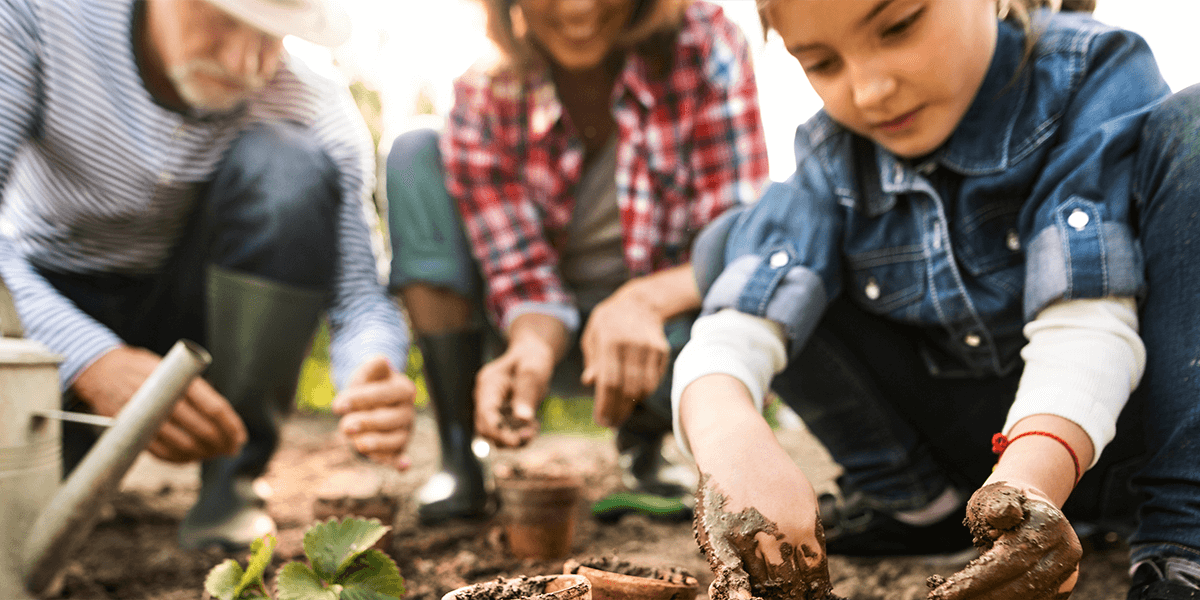
I remember playing baseball on my school field. During breaks, I would point my finger toward my apartment complex (I live right next door to the school) and excitedly tell my friends, “That’s my house!” Seeing the confused looks on their faces as they struggled to discern which of the 300 apartments was mine, I said, “The one with the balcony overgrown with all those plants.” Populated by Malabar chestnuts, heliconias, palms, and pink and white bougainvilleas whose vines reach down to the apartment below, my balcony resembles a mini forest. The number of nests we find there is proof enough of how homey our balcony is for birds.
Since we live in the city, this was the most one could do. When the pandemic broke out, I started watering the plants to help around the house. It was one of the most relaxing activities of my day amidst the chaos of online school and the anxiety of being cooped up at home.
It calmed me to walk back and forth from the kitchen with the heavy dark green watering can in my hand, tip it over, and listen to the soothing sound as the water hit the damp earth. The routine forced me to get up and move my body after sitting in a chair all day. In those moments, I forgot about the work going through my mind, my phone, or the TV and was just there. I also noticed other apartments. I could not spot more than one or two lonely potted plants lying unkempt on neighboring balconies. The lack of plants made it clear that most people were unaware of the many benefits that gardening has for us
Many online resources describe the positive impact gardening can have on our lifestyle and well-being. Many have noted that gardeners eat better and consume more fibre. Many have also explained gardeners’ likeliness to be in a better mood since physical activity releases endorphins (the hormone that helps relieve pain, reduce stress, and improve a person’s overall well-being). Direct contact with the sun can also provide them with an additional supply of vitamin D!
These discoveries have led to the development of a new concept: Community gardens. As the name suggests, community gardens are places where people garden together. They represent a promising nature-based lifestyle intervention. According to an article published in The Lancet Planetary Health, community gardening offers “structural opportunities for eating healthy diets and being active.” These gardens are also a “refuge from everyday stressors and a way to enhance ecological connections.” Components of a community garden project include proximity to nature, access to tools for growing, eating, and sharing food, opportunities for outdoor physical activity, and a network of neighbours who share an interest in gardening.
The article describes an experiment conducted to measure the effects of community gardening on a person’s diet, physical activity, and anthropometric results. The results were promising and confirmed the author’s hypothesis.
For example, the study found that participation in community gardening led to more physical activity than the average American. It was discovered that randomizing the community garden groups reduced stress and anxiety levels, with the greatest reduction seen in those with higher levels of these at the beginning of the study. Having baseline stress and anxiety behaviors and experiences can help to prevent cancer and other chronic conditions.
In addition, in assessing the effectiveness of the study, the authors compared their findings to another qualitative study in which “gardeners cited greater accessibility to fruits and vegetables, better taste and freshness of garden produce, an emotional connection to homegrown food, enjoyment of eating garden produce together, and a desire not to waste food as reasons for eating garden produce.” The authors conclude that community garden networks are “multi-component interventions that could reduce risk factors for cancer and other chronic diseases and promote wellness worldwide.”
Over the past 250 years, humans have released large amounts of CO2 emissions and other heat-trapping greenhouse gasses into the atmosphere by burning coal, oil, and natural gas in power plants, cars, homes, and factories. The accumulation of these gases has led to a rapid rise in the Earth’s average surface temperature. Global warming will continue to accelerate in the coming decades unless we curtail the pollution responsible for it. This is where gardening comes in.
Planting trees and other plant species significantly increases the absorption of CO2. Trees can absorb and store up to a ton of CO2 from the environment. For example, one study found that each of the 85 million American households that planted just one young shade tree in their yard or community would absorb over two million tons of CO2 per year! Planting shade trees near your home can also help you save money on cooling in the summer.
The link between gardening and mitigating climate change is a surprise to many. But the growing numbers of studies are confirming this belief. Indeed, many of the impacts of global warming extend to gardening. Some of the associated changes include:
Rising temperatures and fluctuating precipitation patterns cause plants to flower earlier. This results in unpredictable growing seasons. Heat-loving plants such as tomatoes are also suffering from the intensified hot climate.
Invasive and non-native plant and animal communities (such as kudzu, garlic mustard, and purple loosestrife) are spreading. This rapid growth in their populations is threatening weaker ecosystems and native species.
Important connections between pollinators, breeding birds, insects, and other wildlife and the plants they depend on are disrupted.
Audrey Hepburn once said, “To plant a garden is to believe in tomorrow.” These changes in our environment and ecosystems are warning signs. We need to take more effective action to reduce our carbon emissions drastically. Below are some alternative suggestions from the National Wildlife Federation on how we can contribute to the movement to protect our planet and not compromise our gardening habits.
Improve your energy efficiency: using energy-efficient appliances and reducing energy consumption in your home can lower your carbon footprint. You can replace outdoor light bulbs with high-efficiency LED bulbs, install automatic timers for outdoor lighting, or purchase solar-powered garden products for your yard/balcony.
Reduce water use: there are several ways to reduce water use in your garden, especially during extended heat waves and droughts. Mulching, building rain barrels, changing your watering schedule, and using drip irrigation are examples.
Compost kitchen and garden waste: by composting these wastes, you reduce your contribution to carbon pollution, especially methane, a potent greenhouse gas. They are also an excellent source of nutrients for your plants and reduce the need for chemical fertilizers. Gray water reuse is also a great technique you can use. It involves treating wastewater from appliances such as dishwashers, showers, and sinks to reuse for flushing or gardening.
These are excellent examples and strategies to step in the right direction. The threat of climate change and global warming hovers over our heads, but we can remedy it, one helpful deed at a time. Whether you live in the city or the country or have a large garden or a small balcony, I urge you to make the most of your space and plant a garden. Although few people realize or understand it, gardening has much to offer our well-being and our planet. I hope this blog post has helped provide some insight into the wonderful possibilities of gardening. Let us make the most of it together!
It is able to help students with their homework, provide clear explanations of difficult concepts, and respond to any inquiries that the students may have.
Also, Chat GPT is able to provide individualized feedback and recommendations to each learner, taking into account their unique learning styles as well as their progress.
Revolutionising Learning Models
The technology behind Chat GPT has the potential to revolutionize the way we teach and learn. For example, it can be used in intelligent teaching systems to adapt to the needs of each student and make individualized education easier.
Learning New Languages
Chat GPT also has the potential to be a useful tool for language learning. Practice dialogues, grammar explanations, and vocabulary training help pupils learn new languages. This tool may benefit students who don’t have access to native speakers or language teachers.
Helping Special Needs Students
Chat GPT can also help visually or hearing-impaired pupils. It can help these students access educational materials and take part in online classes by giving them support through text or voice
Superior Communication
In addition, Chat GPT can enhance collaboration and communication in education. Online learning can improve student-teacher contact and feedback. This can enhance learning and build a sense of community.
Finally, Chat GPT can bridge the digital divide by offering educational tools to remote areas. Chat GPT can democratize education and create global opportunities as internet access and mobile devices spread.
Researching for school projects was always, always a fun task to do. The nature of school projects in our early grades was usually arts and crafts. It would involve a couple of runs to the stationary store to buy cutouts of famous political leaders or birds, or countries and flags too! And then the whole family would collect together to stick them on chart paper and make one great collage of it all. And we, as children, would proudly roll it up, put an elastic band on it and carry it with us on our school bus. And before the project was due, we would exchange notes on who did a better job with all our fellow students.
As we got older, research projects got harder. We had to use four or five different kinds of books to pick out information that we thought best suited the point we were arguing about. We took the books from school libraries and would pour over them, till we found what we needed. It was a different kind of thrill, making our arguments from books.
Somewhere along the way, we built the Internet. And Google. And then research for our papers became a breeze. A simple search on Google gave us 1000s of articles to read from. And in a couple of years, we knew which websites gave us the best information, so we would make all our arguments from those. And with this, more students were submitting similar research papers or assignments.
Being a student in today’s world is a little more complex – yes, we have super-speed Internet, and we have tons of research papers available at our fingertips, but we also have AI. So, how are Digital Tools and Artificial Intelligence going to change the game of education? Will it change forever? Or will it be an academic’s downfall? Read on to find out!
Digital tools have already changed education in several ways and will continue to do so in the future. We leave the ‘for better or worse’ argument for you to conclude at the end of this blog.
Accessibility
For starters, digital tools have made education in general, way more accessible to the modern world, and to a wide range of students. All one needs to do is to have access to a smart device, and a decent internet connection. And there is no dearth of that, for any price range. With the widespread availability of the internet, students can now access educational resources and courses from anywhere in the world. This opens up opportunities for students who might not have been able to pursue higher education or otherwise gain knowledge and skills.
Digital tools such as smartphones and tablets have made it possible for students to learn on the go. This means that students can study and complete coursework from anywhere, at any time, as long as they have an internet connection. Digital tools also enable teachers to personalize learning for individual students, taking into account their strengths and weaknesses. This helps students learn at their own pace and ensures that they receive the support they need to succeed.
And for differently-abled students, digital tools often include accessibility features, such as screen readers and closed captioning, that make learning more accessible in today’s world, compared to before. Online learning and open-source educational resources can help to reduce the cost of education. This is especially important for students who might not be able to afford the cost of traditional education.
Digital tools have made education more accessible by providing students with more opportunities to learn, regardless of their location or financial situation. This has the potential to greatly improve educational outcomes for students and create a more equitable educational system.
An individualized approach to learning
Digital tools have made learning highly personalized and tailor-made for every student. You learn at your pace, with your strengths and weaknesses.
Digital tools allow teachers to track student progress and performance, providing them with real-time data to inform their teaching. This data can be used to personalize learning experiences for individual students, taking into account their strengths and weaknesses. AI algorithms can analyze a student’s performance data to identify areas for improvement and recommend personalized study materials. This helps students focus on the topics they need to work on the most, making their learning experience more effective. Hence, making digital tools a medium to create learning experiences that adapt to each student’s abilities and pace. This means that students can progress at their own pace, without being held back by the pace of the class.
And of course, it allows a teacher or professor to make customized content for every student. Digital tools make it easy for teachers to create customized learning experiences for individual students. For example, teachers can use online learning platforms to create tailored lessons and assessments for each student.
And lastly, digital tools make learning more interactive and engaging through gamification. Teachers can incorporate games and other interactive elements into their lessons to make learning more fun and motivate students to learn.
Collaboration
We use our smartphones for nearly everything! From instant messaging to social media to research and coursework. But what we don’t often realize is the power of digital tools for collaboration with education.
Digital tools such as email, instant messaging, and video conferencing make it easy for students to communicate and collaborate with each other and with their teachers from anywhere in the world. Social media platforms such as Facebook, Twitter, and LinkedIn provide students with opportunities to collaborate and network with their peers and with professionals in their field. Online forums and project management tools enable students to collaborate on projects and assignments in real time, regardless of their location. These tools help students stay organized and on track with their work, improving their ability to work together effectively. VR and AR technologies are rapidly changing the way students learn and collaborate. For example, VR can create virtual learning environments where students from different locations can work together in real time.
This leads to more productive and engaging learning experiences, which can improve experiential and exponential educational outcomes.
Blended Learning
Just like Work From Home, educators across the globe are choosing to be flexible about learning when students want to learn, and where they want to learn. An experience that was available to students way before COVID-19. Digital tools provide students with more flexibility to learn at their own time and pace. This means that students can choose to attend traditional classroom-based classes or complete coursework online, according to their schedule and preferences. With the personalization of education through digital tools, blended learning helps to ensure that students receive the support they need to succeed. Real-time data on students’ performances allows educators to track a student’s progress, even with blended learning. Digital tools provide students with access to a wealth of online resources, including video tutorials, interactive simulations, and e-books. This enables students to learn at their own pace and receive support when they need it.
Gamification
The best part about using digital tools for education is the experiential gamification that it allows a student to engage with. Digital tools make it easier for teachers to create games and other interactive learning experiences that engage students and keep them motivated. This makes learning more fun and helps students to stay focused and interested. It enables teachers to create games and other learning experiences that are tailored to the individual needs and abilities of each student. This makes learning more effective and helps students to progress at their own pace. Digital games and other learning experiences often provide students with real-time feedback on their performance, helping them to track their progress and identify areas for improvement. It makes it easy for students to collaborate and play games, regardless of location. This helps to build teamwork and communication skills, which are important for success in the workforce.
Overall, digital tools have made gamification in education better by enabling teachers to create more engaging and personalized learning experiences for students. This leads to a more effective and enjoyable learning experience.
Immersive Learning
VR and AR allow students to immerse themselves in virtual environments and experience learning in a whole new way. This makes learning more engaging and memorable. It is now possible for students to visit remote locations and experience learning in environments that would otherwise be inaccessible. This provides students with a deeper understanding of the world around them. Studies have shown that students who use VR and AR technologies are more likely to retain information and recall it more accurately than students who do not. VR and AR technologies enable students to collaborate and work together in virtual environments, regardless of their location. This helps to build teamwork and communication skills, which are important for success in the workforce.
With VR, students can experience virtual field trips to places they may not be able to visit in person. AR can enhance textbook learning by adding interactive elements to static pages.
Artificial Intelligence
AI-powered digital tools can analyze data on student performance and make recommendations for personalized learning paths based on individual needs and abilities. This helps to ensure that students receive the support they need to succeed. It can also provide instant feedback to students on their work, freeing up teachers to focus on more important tasks. This leads to a more efficient and effective learning experience. AI-powered digital tools can analyze student data and predict outcomes, allowing teachers to intervene early and provide support wherever needed. This helps to ensure that students are on track for success. It can be used to create educational content, freeing up teachers to focus on more important tasks. This leads to a more efficient and effective learning experience.
AI-powered digital tools can make learning more accessible for students with disabilities or learning difficulties by providing audio, visual, and text-based support.
In conclusion, digital tools are transforming education by making it more accessible, personalized, collaborative, interactive, and innovative. As technology continues to advance, we will see even more changes in the future. The challenge will be to ensure that these digital tools are used effectively to support student learning and provide equitable educational opportunities for all students.
How can parents, educators and students use digital tools better for education?
Yes, it’s true. While digital tools can greatly change the game of education, they also have the potential for great misuse. By establishing clear goals and outcomes, educators, parents, and students can work together to use the available digital tools for the desired outcomes. And of course, with this kind of power comes responsibility. Educators, parents, and students should work together to establish clear guidelines for the responsible use of digital tools in education. This helps to ensure that the tools are used in a safe and appropriate manner.
Educators, parents, and students should receive training on how to use digital tools effectively for education. This helps to ensure that they are using the tools in the most efficient and effective manner possible.
Educators, parents, and students should use data to inform their decisions about the use of digital tools in education. This helps to ensure that the tools are being used in the most effective way possible. It’s important to stay up-to-date with the latest developments in digital tools and technologies. This helps to ensure that they are using the most effective and efficient tools possible.
Educators, parents, and students should collaborate and work together to ensure that digital tools are being used effectively for education. This helps to ensure that everyone is working towards the same goals and that the tools are being used in the most effective way possible.
Are you an individual passionate about science and technology? Then you should really be exploring workshops that help you answer “why” to use technology and “how”.
There is considerable evidence that students respond well in subjects that involve programming of robots and there are plenty of opportunities out there giving you a chance to create the next best technology. And if you are a teen with the right curiosity and confidence, with our robotics workshop, you have the power of defining your career trajectory.
Robotics Workshop For Students - What You’ll Learn
Biologically Inspired Engineering takes inspiration from nature and naturally occurring processes to enhance existing technologies and invent new ones. By uncovering the biological design behind naturally occurring phenomena, complex human and environmental problems are solved. Groundbreaking applications have been seen in medicine, materials science, and robotics!
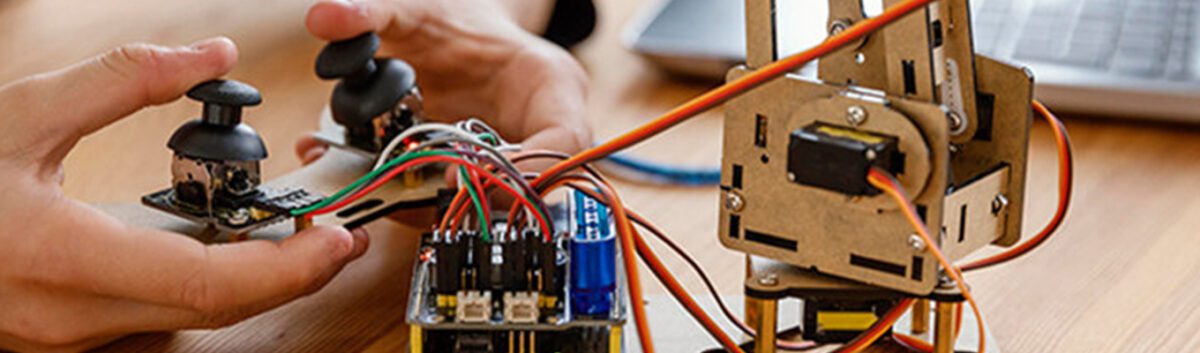
In our Robotics Workshop for students – high schoolers will invent new kinds of robotic motion, beyond the general movement of walking on two and four legs. In this robotics workshop, students will work in teams to design and construct new prototypes of robots. The groups will dive into the inner biological workings of unusual creatures, plants, and processes and develop the following:
Quick hand prototyping (cardboard, scissors, glue)
Digital design (computer-aided drafting, 3D modeling, digital computation)
Rapid prototyping (laser cutting, 3D printing, CNC milling)
By working together, students will push the boundaries of robotic motion and further expand the limits of robotic exploration. This is a must-do workshop for young designers, entrepreneurs, makers, and inventors!
Health Wearable Tech Workshop For Students - What You’ll Learn
Wearable technology is quickly replacing conventional forms. It is a sleek, nifty, and versatile proposition. The utility factor and the form factor have opened up new arenas of inventions. Wearable tech is the next big thing!
From the popular Apple Watch, which lets you monitor daily fitness and read emails, to Voltaic System’s Solar Backpack that powers up your electronics and charges them on the go – wearable technology is surpassing all horizons. Not to mention futuristics innovations such as Baubles and Bangles, a personal air purifier, worn on the wrist, that cleanses the air, or the Valedo Back Therapy product, a gaming technique, to help people with back pain. In the healthcare industry, wearable technology is readily being used to overcome problems and enhance people’s everyday life. Are you ready to make the next breakthrough product in wearable tech?
In the wearable tech workshop, students will develop the next generation of health-focused wearable tech products. Using innovative textiles, materials, and technologies, our students will learn how to design wearable tech products that will improve the lives of people, patients, doctors, and other healthcare professionals. These devices will enhance the capabilities of healthy individuals, as well as assist those who suffer from physical or neurological disorders. Based on the user group and medical challenges, students will design, build and program wearable tech products from the ground up, test them and see their performance.
Students Will Learn:
Students will learn the basics of electronics, micro-controllers, computer programming, engineering, 3D modeling, robotics, and programming skills. You will also learn how to integrate external sensors (from simple switches and buttons to heat/temperature, light, gas, touch) and actuators (such as motors, lights, speakers, solenoids, valves, fans) into their designs.
Students can build connections with mentors and leading experts from MIT and Harvard. These mentors provide daily feedback, challenge them to think in new ways and encourage iteration.
Student-Directed, Real-World Learning
Real-world studio topics, such as Designing During a Crisis make their work relevant. Using their creative skills, students come up with ideas and develop projects that aim to improve the lives of others.
3. Access To Dynamic Platforms
Students get access to digital platforms and are guided by experts throughout, moving from activities, relevant tutorials, inquiry, and exploration, leading to a final project.
Building a robot is a challenge, especially when you don’t really know where to start and robotics workshops, designed exclusively for high school students, are a good start. Here you will find people who are doing something similar to what you are doing.
The world is full of creative people and our robotics workshops are one of the places to find & collaborate with them. Share your ideas in the comments to get started.
Big Red Education and our Ivy Early
Entrepreneur Program
In our entrepreneurial workshop – Ivy Early Entrepreneur, students go through the process of business development and leave the entrepreneur program having completed a business model canvas, competitive analysis, financial model, minimum viable product, and a pitch deck.
Students get an opportunity to learn from successful entrepreneurs who are alumni of reputed universities and are experts in their respective industries.
These experts serve as coaches guiding students through the processes of developing a business concept. Risk-Taking, Decision Making, Critical Thinking, Problem Solving, Communication &
Storytelling, Design Thinking & Innovation, and Opportunity Recognition are a few of the key learning areas of our program.
On successfully completing the entrepreneur workshop, the guaranteed internship will be extended to all the students within our partner firms and with most of the mentors teaching the program. Students will be provided with a certificate of participation by Big Red Education. This certificate can be used for your college portfolio.
Ivy Early Entrepreneur
11th – 17th Jan 2022
Idea Generation | Market Research | Design Thinking | Pitching







 11th – 17th Jan 2022


