Childhood serves as a window through which many dreams and aspirations can enter. However, as children, we have a lot of goals and aspirations for who we want to be. Similar to that, Ritesh likewise aspired to be a pilot. He had aspired to do something different and unique since he was a child, and as they say, there are events in life that can change your entire perspective on how you think. Something coincidental occurred to him, his sister once attended a business festival shortly after he found himself curious about the term “entrepreneurship” and what it really meant. From flipping through the dictionary to find its true meaning to being one of the most successful ones out there.
The creator and CEO of the most affordable hotel chain in the world, OYO, is an Indian billionaire named Ritesh Agarwal, who is only 25 years old and has already made it to the list of the 100 Most Powerful People in Global Hospitality. He began his journey at the age of only 20 with the intention of building a solution for travelers looking for inexpensive hotels all over the world and has succeeded in doing so efficiently. His story from a college dropout to a billionaire has been
an inspiration for all the young entrepreneurs of today. “I’m lucky to be living in a generation where it doesn’t really matter how old you are,” Agarwal said of his success as a young entrepreneur. “If you’re really making a positive difference, there is a significant amount of capital chasing you. We were lucky that we were building a good business, and people found out about our good business, and when they found out, they tried to put their capital to work on the process.”
With a keen interest in technology from the very beginning, Ritesh began programming at the age of 10. Along with that, traveling the world was another passion he had discovered, and what better way to combine both? He observed and recognised the demand for inexpensive hotels that offer respectable services and amenities like air conditioning, WiFi, cosy beds, and breakfast options. He saw the opportunity and took it upon himself to build something that has never been experienced before. The hunch to solve this problem led him to combine his love for travel with his expertise in technology to make something extraordinary.
Ritesh Agarwal holds court as the youngest male self-made billionaire in the world and comes in second as the world’s youngest self-made billionaire. His work was recognised and he was mentioned in Forbes’ “30 under 30” under their consumer tech sector listing. His story is one of perseverance, commitment, and not losing sight of the big picture. “Challenging the status quo in any industry to make a positive difference is something that can create a lot of value,” he believes, and he is eager to deliver on his promises.
Ritesh, also known as the startup hero in India, has mentioned 5 business rules which are:
Innovate to Solve, Don’t follow the crowd
Hire the best
Remain strong and fight on.
There is no perfect timing, start as soon as possible and lastly
Follow your dreams because they know the way.
These are simple things in life, but they have been proof enough of what success really means: hard work and perseverance.
His work philosophy is quintessential: “I have always been a believer in the big cause that we’re trying to build here at Oyo,” Agarwal said in a recent interview. “This is a company that will fundamentally redefine how hospitality and real estate [are] seen by consumers and asset owners across the world.” The investment, he said, will “double down” on his commitment to the company and emphasise his interest “in trying to make a long-term impact” in the hospitality sector. Oyo has rapidly expanded into China (500,000 rooms across 10,000 hotels as of June), the Middle East, and Europe as it acquired traction in India (85 hotels in the U.K.). Ritesh Agarwal And his ambitious projects are backed by investors such as Sequoia Capital, Lightspeed Venture Partners, and Softbank. According to the founder, around 20% of the company’s revenues come from Europe. He added that these figures were essential to the company’s entry into the US market earlier this year. The corporation operated 68 hotels in 40 American cities as of June 2019. In addition to all of this, OYO launched Weddingz.in to help couples plan hassle-free weddings, and OYO Total Holidays to help people put together travel packages. This is just the beginning.
There is no universal definition or understanding of the term market research. Many businesses, however, include it in their marketing strategy. It is commonly understood as the activity in which a company gathers information and then researches market acceptance of specific products or services. It can be done online or in person, and it can include various types of research about people and organizations using multiple methods and techniques to gain market insight.
According to the American Marketing Association:
“Marketing research is the function that links the consumer, customer, and public to the marketer through information–information used to identify and define marketing opportunities and problems; generate, refine, and evaluate marketing actions; monitor marketing performance; and improve understanding of marketing as a process. Marketing research specifies the information required to address these issues, designs the method for collecting information, manages and implements the data collection process, analyzes the results, and communicates the findings and their implications.”
The History!
Market research has existed in some form or another for centuries because there has always been an effort to understand target audiences and cater to their needs, whether they are customers, members of an association or group, and so on.
Many experts believe that the modern understanding of market research was born in the early 1900s, as a result of the convergence of two seminal events: the United States Census introduced punch cards to tabulate data, and Literary Digest published what is thought to be the first national U.S. survey (for the U.S. Presidential Election). Market research has evolved and transformed rapidly since then and has become an integral part of making startups grow!
Why is Market Research Important?
Market research can aid in the proper utilization of all aspects of an invention. It provides a thorough examination of the various markets associated with the invention, the patent environment, and existing and future products. Thus, market research can add value to research and development operations, advancing them. Here are a few reasons why market research is important!
1. Reduced Business Risks:
To ensure that your business survives for a longer period of time, ensure that you have a steady flow of sales and customers. Market research is required for this. Regular market research will allow you to check in with current and prospective customers to ensure that you are still meeting their needs. Here’s how you can use it:
a. Before releasing new designs and products, put them to the test. Before you go all-in on a dramatic change for your company, test it on a smaller subset of your audience to see if the change will be welcomed. For example, if you intend to redesign a popular product, show the new design to your most loyal customers. Test or ask them if they prefer the new design over an alternative new design or the old design.
b. Discover why customers do not return. Your small business should ideally have repeat customers. If they don’t return, you can conduct a survey of previous customers or hold a focus group to figure out why you’re not getting repeat business.
c. Gain insight into problem areas. If your most popular product experiences a significant drop in sales for three consecutive months, you must figure out how to fix it before it completely destroys your profits. Find out where the problem is by polling your most loyal customers about the product. It could be anything from a drop in product quality to an error on your online store. Unless you ask, you’ll never know.
2. Setting Better Goals:
When business owners set goals for their company, it is usually to increase sales or customers. However, without market research, you won’t know if your goal is attainable or how to achieve it in the first place.
Say you want to double your sales by the end of the next quarter. How can you tell if this goal is attainable if you don’t know if your target market is larger than twice the size of your current customer base? Setting arbitrary goals without knowing the current size of your potential market is pointless. Market research will help you determine the specific directions in which you want to expand your customer base.
3. Do Better Marketing:
If you have ever wanted to know what images or text to use on your fliers, website, or social media accounts, thorough market research will provide you with the answers. Because your target customers have already expressed their wants, needs, and frustrations to you, you’ll know exactly what to address and how to address it when you begin developing marketing materials.
4. Spotting Business Opportunities:
After conducting market research, you’ll know who you want to reach out to (your target customers), how to reach them (your marketing channels), and what they’re interested in. Once you’ve defined these, you’ll be able to spot business opportunities with ease.
Five Steps to Conduct the Perfect Market Research!
1. Determine your goals:
When stated clearly, research objectives can provide the information required to solve the problem identified (described in the next point). All of your objectives should be as specific as possible to what you want to study in your market research.
Here are a few points that should be included in each objective:
Specify who will be gathered information from.
Always specify the information required
Rephrase the question in light of the responses.
2. Pinpoint the problem:
If you’ve decided to conduct marketing research, this is the most important step. If the problem is not correctly defined, all other efforts will be futile! Remember that the need to make a decision necessitates decision alternatives. There is no need to make a decision if there are no alternatives. For example, suppose your sales are down by 30%, causing a problem with your revenues. You could also compare how well ad #2 performs in terms of sales to ad #1. Use secondary data sources to expand on your research ideas.
Create a focus group for a powerful way to pinpoint important problems and receive information all at once! This is why:
It sparks new ideas
It permits customers to observe their participants
Comprehend a wide range of issues
3. Determine your research design:
There are five research designs from which to obtain the information you require: descriptive, exploratory, causal, and diagnostic research. Market variables are described in descriptive research. Exploratory research allows you to gather data in an unstructured manner. The goal of causal studies is to determine what factor(s) cause an event to occur. The sources of satisfaction and dissatisfaction are the focus of diagnostic research.
3. Know your sample size and plan of action:
Your sample plan should specify how each sample element will be drawn from the entire population. The sample size specifies how many people should be included in the sample. In other words, the sample plan’s purpose is to provide representativeness, whereas the sample size provides accuracy!
Here’s a simple but important step to take to avoid or minimize nonsampling errors: Re-contact your participants to validate their participation!
4. Analyzing the Research Data:
It’s always a good idea to go back and run tests on the information you have to screen out any potential errors. Once you have everything you need for the research (pie charts, bar graphs, statistics, surveys, etc.), you should make a report of it. Present the research report to the client in a way that communicates the findings clearly and accurately.
Popular Market Research Frameworks!
Market Research Frameworks are tools used by businesses and entrepreneurs to research the market for their products or services. Companies gain an understanding of the competitive dynamics of the market in terms of demand and supply of products and services, external factors of the industry, state of competition and degree of competition within the industry, future aspects of the industry, and differences between their organization and the competitors by using market analysis frameworks in detail. The BRE has compiled the three most popular and widely used market research frameworks for you:
1. SWOT:
SWOT analysis is a strategic mapping tool used in market analysis frameworks to evaluate an organization and its industry. It is an acronym that stands for Strengths, Weaknesses, Threats, and Opportunities. Strengths and weaknesses are internal organizational factors, whereas opportunities and threats are external organizational factors. The SWOT model is especially useful in determining whether or not to embark on a specific project by analyzing its positives and negatives as well as how to move forward.
2. Porter’s Five Forces:
Porter’s Five Forces is a model that identifies and analyses five competitive forces that shape every industry and aids in determining an industry’s strengths and weaknesses. Five Forces analysis is frequently used to determine corporate strategy by identifying an industry’s structure.
Porter’s model can be applied to any sector of the economy to better understand industry competition and increase a company’s long-term profitability. Michael E. Porter, a Harvard Business School professor, inspired the Five Forces model.
Porter’s five forces are as follows:
The industry’s competition
Potential for new industry entrants
Suppliers’ clout
Customer Influence
Substitute products pose a threat.
3. PEST:
PEST Analysis, also known as Broad Factors Analysis, is a critical market analysis framework for analyzing an organization’s external environment. PEST analysis is an acronym that stands for Political, Economic, Social, and Technological analysis. PESTLE analysis considers legal and environmental factors. Political factors include specific rules and regulations pertaining to the business’s political environment, such as ease of doing business, political stability, labor laws, trade policies, and political stability. GDP growth rate, inflation rate, exchange rate, capital markets, and so on are all economic factors.
Social factors are those that are related to society and the people who live in it. It includes information on health, fashion trends, demographics, age groups, and gender ratios. Technological factors include advancements and recent technological developments.
Two Brands that Aced Market Research!
McDonald’s is one of the world’s largest fast-food corporations. McDonald’s frequently uses market research to make its customers happy in order to maintain its number one position in the fast-food industry.
In its market research approach, McDonald’s asks four key questions:
What products are doing well?
What are the most affordable prices for consumers?
What are consumers reading and watching in order to effectively advertise?
Which restaurants are the most popular, and why?
By answering these questions, McDonald’s can determine whether or not its customer base is growing. If not, it adjusts its strategy in order to satisfy customers and outperform competitors. For example, many McDonald’s customers were concerned about the lack of healthy and organic food options on the menu. So McDonald’s listened to customer feedback and added healthy options to the menu, such as apple slices. It even launched an advertisement campaign to demonstrate that its chicken nuggets and patties are made with real meat.
Starbucks is the world’s largest and most successful coffeehouse chain. However, it is no secret how it became the world’s leading coffee company. Starbucks became the world’s largest coffeehouse chain due to its market research value.
Starbucks’ market research strategy includes the following steps:
Following cultural trends
Social media monitoring
Obtaining feedback from customers
Product testing in-store
Starbucks has conducted market research over the last 12 years by soliciting consumer feedback through its My Starbucks Idea platform. This platform enables customers, potential customers, and employees to visit the website and submit any creative ideas they have. These suggestions can range from new products to minor changes to existing products.
Conclusion
Market research can be extremely beneficial to many different aspects of a business. Correct research can assist a business in developing products and services that the target market requires; developing marketing plans based on the information gathered in order to reach all potential customers in the most effective way. Well-executed market research can provide useful information that can help a business gain an advantage over competitors and ensure customer satisfaction.
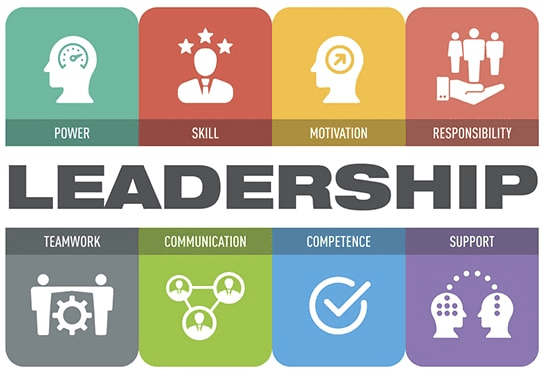
Leadership is a difficult concept to grasp. It is easy to recognize when you see it, but it is difficult to quantify. Leadership components are frequently examined and observed, but the ability to predict successful leadership has so far eluded the confines of a repeatable recipe. Many approaches have been tried in an attempt to document commonalities among successful leaders, with varying degrees of success.
To begin exploring this critical distinction, let us first consider the definition of leadership. According to the Oxford Dictionary, leadership is the action or ability to lead a group of people or an organization.
And…
To lead is to cause (a person or animal) to follow one by holding their hand, a halter, a rope, or another object while moving forward.
As a result, leadership necessitates influence, direction, and action. However, in order for leadership to manifest so that others will follow, the leader, whoever or whatever that may be, must first influence themselves, provide self-direction, and act on that direction. When we talk about leadership, we almost always refer to it in the context of the workplace. The value of leadership and good leaders in society is grossly underappreciated. Leadership is not limited to the corporate setting. It should be extended to society as well because it began as a social phenomenon long before it became a professional phenomenon.
Leadership in society is essential because someone must be able to structure human society and help it develop and grow in a responsible manner. People have naturally been divided into leaders and followers, and the leaders make and lead the way for the followers while they complete the assigned tasks and contribute to the change. Leadership is critical to achieving social change because it is impossible to unite and inspire a group of people without the help of a good leader.
A positive and content society is created by good leadership. A leader with a high level of self-confidence can keep the people in his or her society motivated and aspired, and he or she will work for the betterment of the society rather than for his or her own benefit. People are in a better frame of mind when they have trust and faith in their leader.
What is a Leadership Style?
A quick internet search (psychology.com) reveals, that the majority of the various leadership theories that have emerged over the years can be classified into a handful of major types:
Great Man Theories
Trait Theories
Contingency Theories
Situational Theories
Behavioral Theories
Parcipitative Theories
Relationship Theories/Transformational Leadership
Management theories/Transactional Leadership.
There are numerous theories and models listed under each type, which are well worth investigating. The leadership style you choose can be a success or a failure depending on a variety of factors: what works with one personality in one environment may not work in another. Understanding the theories listed above (as well as any others that may be floating around) can help you clarify what you believe to be true about leadership and how you should approach your own leadership development.
However, within any of these theories, the individual leader and his or her preferences must also be considered. There are many leadership “styles” listed in the literature, in addition to the leadership theories that have been studied.
The Different Leadership Styles:
Again, a quick internet search reveals some of the more commonly discussed ones:
Autocratic or Authoritarian Leadership
Participative or Democratic Leadership
Laissez-Faire Leadership
Servant Leadership
Transactional Leadership
Transformational Leadership
Situational Leadership
Again, these appear to be the most prominent; however, other leadership styles identified in the literature are worth investigating for yourself. I’ve included these in particular for two reasons: first, they appear to have the most written about them; and second, these are the styles I see the most frequently in my own leadership coaching practice.
Unfortunately, I see more examples of Authoritarian Leadership than I’d like, in which the leader makes decisions unilaterally and frequently unfairly. This never works outside of military or paramilitary organizations. The other styles listed can be more or less effective depending on the environment, culture, and people involved; it’s important to understand the differences.
Transformative leadership is one of the more recent styles to emerge, and it is frequently cited as one of the most effective. It is about motivating others and sharing a larger vision. Of course, this type of leadership is fantastic; however, it is frequently best balanced by a Transactional Leadership style based on role compliance and achievement incentives.
Why A Single Leadership Style Does not Work!
In any given situation, one leadership style is not the most effective. When it comes to effectively manage people, the atmosphere and type of work environment frequently require you to “switch” your leadership trait into a different gear. Good leaders understand what needs to be done and the people they are leading instinctively.
Much of what determines leadership in any given situation is determined by a few factors, such as whether the environment is stable, conservative, or constantly changing. The most effective leadership style for that team is determined by whether the work to be done is new or routine, as well as the level of skill possessed by your team.
Most people in management develop a consistent and fixed leadership trait. Your team may perceive you as bossy, picky, or easy to work with. The reality is that most environments are constantly changing, and in order to be most effective for the benefit of your company and team, you must recognize that it takes more than one leadership trait.
Three Most Common Leadership Styles:
Below, we have shed some light on the three most popular styles adopted by leaders!
1. The Free Reign Style: The laissez-faire or delegative style of leadership is the most empowering. The delegative leader establishes an overall priority, goal, or instruction, but then steps back to allow things to happen. Using this style, a leader accepts responsibility for all decisions made while delegating decision-making to the team. This also implies that team members must analyze, evaluate, and change issues and problems as they progress. This leadership style is definitely appropriate for more mature or senior teams – those who have had the time to prove themselves to the leader and have the confidence to handle all issues. Failure is one of the most common pitfalls of this type of leadership.
In the delegative or free reign leadership style, you delegate specific tasks to workers or employees whom you believe are capable of handling the task. While you are still responsible for any decisions made, you recognize that you cannot handle every task on your own and place your trust in those who can.
A good manager will not use delegative leadership style excessively, but only when necessary. This type of leadership frequently boosts morale by demonstrating to employees that they can be trusted to make decisions.
2. Relations-oriented/Democratic style: Participative or democratic leadership is a leadership style in which the leader still outlines a goal but allows input from the organization on how the goal will be achieved. However, a democratic leader requires approval for decisions made by any member of the team. A democratic style may work in situations where information is disseminated between the leader and team members. This style can also be used by an autocratic leader to transition out of that style without ceding complete control to the team. This leadership style is very empowering for teams that have not previously felt empowered.
Do you work to improve your employees’ skills and confidence? People-oriented leaders are those who are dedicated to organizing their teams and assisting them through good support and participation. This is an effective style for getting a team to collaborate and work together in a friendly, cooperative environment.
3. The Authoritarian style: Authoritarian leadership is another term for autocratic leadership. In this style, the leader usually outlines what he or she wants and how to get it. In many ways, autocratic leadership is a form of disciplinarian management rather than leadership. Is this style effective in certain situations? First and foremost, consider the organization. An autocratic situation may be effective if the organization is well motivated and mature. Assume you have the majority of the information you require, but you only have a limited amount of time to complete a task. You can probably give an autocratic order in a well-motivated organization without worrying about how it will be received – as long as this does not become your dominant style.
If you like to be in complete control of every situation, you will use the authoritarian leadership style to manage employees. When immediate action is required or time is of the essence, this can be an effective management style. However, you should avoid using authoritarian leadership in every situation because employees will perceive you as a control freak; it may also reduce employee dedication and motivation.
Elon Musk’s Leadership Style!
When it comes to leadership styles, Elon Musk’s is best described as transformational.
He believes there is always a better way to do things and strives for constant improvement. He has big ideas and wants to rally his team around his (sometimes ridiculous) vision and goals. From running an aerospace company that manufactures rockets and other spacecraft to disrupting the electric car market, it stands to reason that Musk’s approach includes unconventional ideas.
He’s known for being fearless and forward-thinking. And he expects every member of his team to innovate alongside him. Musk’s grandiose vision and lofty goals can be intimidating, but also inspiring.
“Most of us can’t imagine these things working; he can’t imagine them failing.” “Period,” said Jim Cantrell, SpaceX’s first engineer.
Many former and current employees admit that working for Musk is rigorous and demanding, but many credit it with shaping their careers. There’s a reason for this: Musk is an inspirational leader. While some of his ideas are unrealistic, he has the ability to excite people with his goals, projects, and plans.
“The thing that makes Elon Elon is his ability to make people believe in his vision,” said Dolly Singh, former SpaceX HR Head.
Musk is also said to have contagious enthusiasm and energy for his work, which means that his commitment and passion for pursuing the next big idea or source of inspiration are often shared by his employees.
Conclusion
None of the examples above may be an exact match for the type of leadership trait you employ. Others include the transformational leadership style, which many people believe is appropriate in most business or corporate settings. A manager who takes this approach is a good communicator, establishes clear goals, encourages and supports employees, inspires workers to look beyond their own needs in order to focus on team efforts, and recognizes employees for their efforts. It is critical that you use the leadership trait that works best in that situation.
There are several factors to consider when deciding on a leadership style. First and foremost, how much time do you have? If you’re short on time, a participative or autocratic style may be best. Of course, this is dependent on the team and its composition; if you have an experienced team with limited time, an autocratic stance is unnecessary. Simply explain and emphasize that time is of the essence. You should also consider who has access to information about the project or task at hand; if the information is shared amongst you, the leader, and the team, you may want to take a more active role.
If your team has all of the information, take a delegative approach and let them use their knowledge to find the best solutions. Consider the type of task at hand as well: how difficult is it? When you compare this to the team’s skills, you should be able to select an appropriate leadership style.
On May 13th, 1940, three days after taking over as Britain’s Prime Minister, Winston Churchill stood before the House of Commons and said—“I have nothing to offer but blood, toil, tears and sweat.” His speech lasted just five minutes. Heralded as one of the greatest speeches ever delivered, it firmly set the course for Churchill’s prolific career.
While Hitler was amassing power in Germany anew, Winston Churchill, reputed for his successful military and political prowess, spent much of the 1930s encouraging Britain to comprehend and acceptthe gravity of the situation. Britain, however, in its haste to avoid another conflict, disregarded the German threat. War ensued, and Neville Chamberlain quickly abdicated his position as Prime Minister. After the then-foreign secretary refused the job, Churchill was elevated to the Prime Minister’s office. As Britain began preparations for what was to become a ruthless, exhaustive battle, its chances looked bleak. Morale was low, and fear ran rampant. Amid this adversity rose Churchill, his speech infusing the nation with hope in one of its darkest hours.
In his distinctive writing style, Churchill repeatedly uses a combination of short, direct sentences followed by much longer sentences to elaborate on and substantiate statements made in the former. When disclosing the position of the armed forces, Churchill states, “The three Fighting Services have been filled. It was necessary that this should be done in one single day, on account of the extreme urgency and rigor of events.” In the first sentence, Churchill wastes no time delivering the necessary information. In the second, he incorporates an additional detail—“on account of the extreme urgency and rigor of events”—justifying the course of action described in the preceding sentence. The contrast between these sentences highlights differences in their purposes and value. While the first sentence is intended primarily to convey an essential piece of information, the second was likely crafted to ensure transparency in the discussed process. In this manner, Churchill effectively supports his decisions without compromising the integrity of his report.
This writing pattern is also apparent in the part of his speech where he discloses his plans and actions, stating, “I hope to complete the appointment of the principal Ministers during to-morrow. The appointment of the other Ministers usually takes a little longer, but I trust that, when Parliament meets again, this part of my task will be completed, and that the administration will be complete in all respects.” Once again, the first sentence is brief, simply stating a desire and fulfilling its purpose to inform. In contrast, a non-essential phrase breaks up the second sentence—“but I trust that”—which introduces and affirms Churchill’s stance on the situation and his forthcoming duties.
Although the first half of the speech is informational in nature, Churchill then switches the tone to bear an emotional appeal. With his promise of only “blood, toil, tears, and sweat,” he endears himself to his countrymen, gaining their trust and firmly establishing himself as one among them.
“We have before us an ordeal of the most grievous kind. We have before us many, many months of struggle and suffering.”—Churchill consistently incorporates personal pronouns and inclusive language to cement his endeavor to kindle unity, collaboration, and support. He uses repetition and rhetorical questions to convey his determination to lead Britain to victory—“You ask, what is our policy?” “You ask, what is our aim? I can answer in one word. It is victory. Victory at all costs—Victory in spite of all terrors—Victory, however long and hard the road may be, for without victory there is no survival.” His self-assurance reverberates through his audience, instilling in them the courage and resolve to continue fighting. This subtle and cleverly concealed method of empowerment establishes a common goal for which they must work and fight together.
Rather than sugarcoat the truth, Churchill repeatedly chooses a more forthright tone and manner of speech. Surprisingly, this brutal honesty fosters a sense of trust in the audience. By acknowledging and emphasizing the situation, Churchill encourages alertness, demonstrating his proactiveness amidst changing times. This admission showcases the strength of his language and how he holds himself while buffeted by adversities of change and conflict. His bluntness in describing the situation’s potential consequences, saying, “No survival for the British Empire, no survival for all that the British Empire has stood for,” stoked fear among his listeners, highlighting the need for urgent measures. This balance between awareness and panic, that Churchill weaves is an excellent representation of his leadership ingenuity. He exemplifies poise and elegance in a delightfully persuasive manner. His words are wrought with inspiration and authority. This speech is monumental: a beacon of hope.
Historians have attributed the original line about “blood, toil, tears, and sweat” to the nineteenth-century Italian revolutionaryGiuseppe Garibaldi, who once marshaled his troops, promising them only “hunger, forced marches, battles and death.” But that doesn’t diminish Churchill’s brilliance in the least. Instead, it highlights his incredible ability to dive into the past and resurface with a gem that secures his reputation and his post as Britain’s Prime Minister through the end of World War II.
Churchill remains the only politician to win the Nobel Prize in Literature to this day. Indeed, in a time of chaos and fear, Churchill ingeniously applied the intricacies of language to inspire his people, garner their support, and establish an attitude of hope, strength, and courage.
Works Cited
International Relations and Security Network. Winston Churchill’s First Speech to the House of Commons. 1940, www.files.ethz.ch/isn/125391/1019_Churchill_blood_toil_tears.pdf.
Lindsay, James. “TWE Remembers: Churchill’s ‘Blood, Toil, Tears, and Sweat.’” Council on Foreign Relations, 13 May 2013, www.cfr.org/blog/twe-remembers-churchills-blood-toil-tears-and-sweat.
Rothman, Lily. “This Is the Speech That Made Winston Churchill’s Career.” Time, 13 May 2015, time.com/3848735/churchill-best-speeches-blood-toil-tears-sweat/.
Speeches are different. That’s the point. They are different from a story, a poem, a debate or from a discussion. Speeches can inform, persuade, motivate or inspire. They can change. Change people’s minds about issues, change how we look at things. Change how we see the world. They may change everything. However, there’s a catch. To be able to do all of that, one must know the art of speechwriting, as well as public speaking. Ideating the material and performing it.
So, how do we write a compelling speech? Is it easy?
The question isn’t really about ease, though, it’s about what you want to talk about. Who do you want to talk to? What impact do you want to make? As soon as you can answer all these questions, you’ll be ready to embark upon the journey of actually writing the very script for the speech.
In this blog, we will unpack three main principles of speechwriting and public speaking with references to Martin Luther King Jr’s memorable speech, “I have a dream”, spoken in the year 1963, during the Civil Rights Movement in America.
Principle 1: Know your audience and purpose
When writing and performing a speech, it is always essential to know your audience. Whether this is for a product pitch or to make a motivational speech to teenagers about how they can combat anxiety, a speaker should know who they’re addressing and prepare accordingly. In the former example of a product pitch, the speaker will have to present a product in front of multiple businesses, and therefore will have to be experienced and well-versed in the realm of business. In the latter example, the speaker needs to be experienced in the field of mental health, especially for teenagers, and be able to break down complex principles of psychology into easily explainable analogies and examples, and then, provide effective and simple solutions about how a teenager can actually combat anxiety.
In “I have a dream”, Martin Luther King, Jr. was speaking to a large crowd at the Lincoln Memorial, Washington DC. This crowd consisted of fellow African American folk, who supported the Civil Rights Movement, as well as people of other races and creeds who, too, supported this movement. As is clear from its title, “I have a dream” was not only to tell African American people to take a stand against their mistreatment by white leaders but also to propel them forward- to fill them with hope, with a dream.
Martin Luther King, Jr. speaks of oppression, of police brutality, of blatant inequality despite there being a constitution that regards blacks and whites as equals. Martin Luther King, Jr. does not accept a constitution that is not being executed, and instead being ignored. Dishonoured. He does not defend the American government. However, he still maintains that to be taken seriously and to have their dignity never falter, the African American people fighting for justice must do so non-violently. Respectfully.
It is clear that MLK had written this speech in a way that will be logical, but at the same time, motivating, uplifting and inspiring. With the motif of, “I have a dream”, MLK not only stands up for what’s right, but also lifts up the spirit of the people who have faced every injustice fathomable, and shows them an idealistic, yet an achievable vision of the future.
Principle 2: Richness, Rhetoric, Repetition
In order to make your speech both a rewarding experience for a future reader, as well as a listener, it’s important to make the speech phonetically rich, as well as sprinkle in literary devices wherever they fit in.
Metaphors, analogies and examples, in general, without a doubt, considerably ease up any concept that a speech might be covering. Apart from that, these tools also add a certain sense of richness and depth to the entire speech, at large.
“This is our hope. This is the faith that I go back to the South with. With this faith, we will be able to hew out of the mountain of despair a stone of hope. With this faith, we will be able to transform the jangling discords of our nation into a beautiful symphony of brotherhood.”
Here, MLK uses phrases such as, “mountain of despair”, “stone of hope” and “symphony of brotherhood” which while making the speech easier to understand, also lends it richness and creativity.
Apart from this, it’s always important to remember that repetition legitimises. This can be done in the form of simple repetition, anaphora (repeating the same word or phrase at the beginning of consecutive sentences), alliteration (repeating the same/similar sound at the beginning of consecutive words) and so forth. Repetition legitimises when used right.
While an overarching motif of “I have a dream” looms over the entire speech, MLK makes use of other repetitive techniques to enunciate his points regarding justice and oppression, while adding a sensory experience that subconsciously lures every listener in.
Now is the time to make real the promises of democracy. Now is the time to rise from the dark and desolate valley of segregation to the sunlit path of racial justice. Now is the time to lift our nation from the quick sands of racial injustice to the solid rock of brotherhood. Now is the time to make justice a reality for all of God’s children.
While repeating, “now is the time” MLK calls for quick action. Yes, the dream is into the future, but the plan is to not just keep dreaming more and more fantastical dreams. No, the plan is to act now and do what it takes to achieve this dream and make it a reality as soon as possible. MLK does not lament the past. He calls for action then and there.
Another example of repetition that spans multiple paragraphs includes, “We are not satisfied”, where MLK points out exactly where African Americans are still treated in an ever-unjust manner, despite reforms being made to laws and the constitution long ago, they continue to be aliens to the constitutions “unalienable rights”.
It is also important to utilise Aristotle’s appeals. These include logos, ethos and pathos. Logos induces logical facts and evidence to drive home a point. Ethos utilises an authoritative and/or reliable power to emphasize an argument. Pathos goes directly for the emotional appeal: to speak of tragedies raw and unfiltered, to fill peoples’ eyes with sorrow, and to allow them to hope for the future. A speech should make use of either or a combination of all three of these appeals to make said speech balanced and well-rounded.
MLK directly speaks of the state of African American activists in jail, but he also speaks of hope. He also speaks of dignity, respect and change. He maintains a balance between logical reasoning and emotional appeal.
Moreover, allusions and citations can always help. Whether you quote Freud in that speech to teenagers about anxiety or discuss Immanuel Kant’s assertions in a speech about ethics, it is always valuable to quote, allude and cite.
MLK regularly alludes to Abraham Lincoln (note that the speech also took place at the Lincoln Memorial), a president who strived to end the slave trade and to have all races be treated equally. He also makes religious allusions, and concludes his speech with an African spiritual, “Free at last. Free at last. Thank God almighty, we are free at last.” A simple conclusion, which will still make every hair on the listener’s body stand up as they listen to it.
Lastly: have a structure. Having a structure is extremely important, and every speech will have a different structure, which mostly depends on what the speaker wants to convey and what context the speech is in. For example, in a product pitch, you would probably describe a problem, provide a list of possible solutions to said problem, mention your product, mention how it is unique from other similar products, talk about costs, sustainability and so forth.
In “I have a dream”, Martin Luther King, Jr. speaks of how the constitution is not being lived up to, discusses the perils of African American folk, enunciates that they must be non-violent and ends with describing his own dream for the future.
A structure will add semblance and in general, make the speech much more well-rounded and easy to grasp.
Principle 3: Confidence
As the speaker, it is essential to be confident. Confidence comes from within, so it is best to be prepared for any obstacle that may come in between your speech. To always be able to think and improvise on the spot, and most importantly, to sound confident. To not let your shoulders droop, your arms flail about and to not let your voice falter and fall.
Throughout his speech, MLK’s voice stands strong. His voice stresses and releases particular syllables, and he is consistently confident.
MLK spoke in front of a crowd of 250,000 people. A number that is incomprehensible. He spoke about something earth shatteringly important yet controversial at the time. His sense of self and his confidence were thoroughly unwavering throughout.
This makes him a charismatic leader and a trustworthy mentor.
This makes his speech all the more inspiring and moving. Never forget the adage, “confidence is key”.
To conclude, to make a speech that stands tall, is substantive and overall uplifting: one must know who, what and why they are writing and making a speech. One should make the speech easy to follow and add depth to it by using multiple figures of speech. One should always be confident in themselves- always trust themselves and always be prepared for the worst.