blog Communication Higher Education Leadership summer Trending | 4min Read

Why Empathy Is One of the Most Important Leadership Skills for Students

Published on June 22, 2026

FacebookTwitterWhatsApp
Categories
blog Communication Higher Education Leadership summer Trending

Why Empathy Is One of the Most Important Leadership Skills for Students

Why empathy is one of the most Important leadership skills for students?

We often romanticize the “eureka” moment in business and social innovation. The narrative usually focuses on a lone genius who has a brilliant idea, writes a revolutionary line of code, or designs a slick new product. But here is the hard truth: having a good idea is only about 10% of the equation. The same mistake isn’t limited to startups. Students often focus on presenting solutions before truly understanding the people they’re trying to help, whether in leadership roles, community projects, or social innovation initiatives.

The graveyard of failed startups is full of incredible, technically flawless products that nobody actually needed. Why? Because the founders fell in love with their solution rather than the people they were solving the problem for. At the core of every truly transformative initiative—whether it’s a global social enterprise or a local community project—is empathy. It is the most critical, yet frequently underestimated, leadership skill. And contrary to popular belief, it is incredibly difficult to master.

The Misconception of the “Ruthless” Leader

For decades, the archetype of a successful leader was someone stoic, hyper-logical, and uncompromising. Empathy was often dismissed as a “soft” skill, a nice-to-have trait that took a backseat to strategic vision and operational efficiency. However, recent data has completely shattered this myth. Empathy is not just a moral imperative; it is a measurable driver of success. According to research highlighted by the Harvard Business Review, organizations with empathetic managers experience:

  • 76% less burnout among team members.
  • 50% stronger work relationships.
  • 37% higher innovation metrics.

When leaders actively listen and validate the experiences of their team, they create a psychologically safe environment. In these spaces, people aren’t afraid to take creative risks, flag potential failures early, and collaborate genuinely.

Social Innovation: Operating Like a Sociologist

When we look at social innovation—creating solutions that address systemic societal issues—empathy moves from a management tool to the very engine of design. The best founders and social innovators operate almost like sociologists. They don’t just look at a spreadsheet; they observe the “default” behaviors of a culture. They analyze how people interact in their daily lives, the language spoken in a typical household, and the unsaid friction points that make life difficult. To build a product that changes lives, you have to step entirely outside your own perspective.

It requires moving through the three dimensions of empathy:

  1. Cognitive Empathy: Intellectually understanding another person’s perspective.
  2. Emotional Empathy: Truly feeling what others feel.
  3. Compassionate Empathy: Taking actionable steps based on those insights.

You cannot design a health tech app, an educational platform, or a sustainability initiative without compassionate empathy. You have to understand the human on the other side of the screen.

Leadership Starts Before the Boardroom

Leadership doesn’t suddenly begin when you receive a C-suite title. It starts much earlier. It begins when you’re a school president trying to keep a diverse team motivated, or a mentor guiding anxious juniors through the grueling gauntlet of university entrance exams.

In those moments, you quickly learn that the root of a problem isn’t always what it seems. A peer’s sudden drop in performance might look like a lack of dedication, but an empathetic leader digs deeper. You might discover that their stress isn’t about the grand end-goal; sometimes, it’s the immediate, crushing weight of delayed college assignments or personal friction. By validating their specific reality, you don’t just fix a productivity issue—you build trust. According to Businessolver’s State of Workplace Empathy Study, 67% of employees are willing to work longer hours for an understanding employer. People don’t just work for companies; they work for people who genuinely care about them.

Cultivating the Empathy Muscle

Empathy is hard because it requires vulnerability, active listening, and the willingness to admit that your initial assumptions might be wrong. It takes energy to suspend your ego and center someone else’s experience. But the good news is that it is a muscle that can be trained. 

If you are ready to move beyond traditional classroom learning and build real-world leadership capabilities, explore how you can turn your empathy into action:

  • Master Collaborative Problem-Solving: Dive into real-world case studies and align your passion with the UN Sustainable Development Goals at the Leadership & Social Innovation Conference.
  • Step Into Global Diplomacy: Develop your public speaking, high-level negotiation, and persuasion skills under pressure through intensive simulations at ILMUNC India.

At Big Red Education, we believe that the leaders of tomorrow need more than just academic excellence and technical acumen. They need the emotional intelligence to navigate complex human dynamics and turn ideas into tangible impact. We equip students with the frameworks needed to observe societal challenges, design thoughtful solutions, and lead with purpose.

Editor's Pick

NYAC | 3min Read

The Truce Of Terror

Published on June 19, 2026

FacebookTwitterWhatsApp
Categories
NYAC

The Truce Of Terror

The Truce Of Terror

“NOW HAND OVER CLARISSA,Aether (Daniel) roared at the supervillain who calls himself Knox (Jonas), the knife pressed against his throat, glimmering with the fallen sweat of fear and dominance. Knox blinked at the hero, the fear dissipating from his eyes and replaced by pure confusion.

Knox blinked, the panic on his face giving way to pure confusion. “Wait… someone took Clarissa,he stammered, his voice jumping an octave.

Daniel didn’t lower his knife but eased the pressure, snarling, “I don’t believe you! Who else could have?”

“OF COURSE NOT, GOD. YOU SHOULD HAVE JUST TOLD ME, DANIEL, YOU IDIOT!” Knox roared back, his voice echoing as his hands remained pinned. “I haven’t seen her in two days! I thought it was you, Jonas,” Aether snapped, sheathing his knife but remaining tense. “We were supposed to meet up for her birthday, and she never showed. Her apartment was empty.”

Jonas shoved a hand into his pocket, pulling out a crumpled, tear-stained napkin.

“You think I’d be this panicked? Look at this, you absolute blithering bat. I got this two hours ago. It says, ‘Clarissa is with me. Stop chasing your petty ego if you ever want to see her again.‘” Jonas’s voice cracked.“I thought it was from you. Someone is using our feud to get to her.

Daniel’s hostility drained away, replaced by a cold dread.

“Petty rivalries? It’s been two years since we spoke about anything but our next fight. Who else would know about us?” He looked at his oldest enemy, now a desperate mirror of his own fear.

They moved with awkward cooperation, two old enemies relearning how to read each other. Clarissa had always been the mischievous chord between them, favouring arguments as much as peace and keeping them tethered. She always believed that Daniel and Jonas were different from Aether and Knox, even when they themselves didn’t.

The windows in the dull room were boarded, and the shadows were thick and alive. The only light came from a broken overhead bulb, swinging lazily and throwing jagged patterns across the cracked concrete floor. Jonas pressed his back to the wall, knife raised, and Daniel mirrored him from the other side, his silver blade glinting.

Neither spoke for a long moment. Every creak and distant drip made their nerves tighten.

“Are we… really doing this?” Daniel finally asked, his voice low and strained. “Working together, I mean. It’s been years. You’ve tried to—

“Kill me?” Jonas interrupted sharply. “Yes, I’ve tried. But Clarissa’s life isn’t a score to settle, Daniel. She—she’s ours to protect, or… or not at all.
Daniel’s jaw tightened.“And what happens when she’s gone? We’ll be back to knives, and grudges, and blood.

Jonas let out a harsh laugh, shaking his head.

“No, I know that. I live that. But right now, we’re out of options. You follow procedure; I follow instinct. Clarissa’s somewhere out there, and she trusts us both, whether we trust each other or not.

Daniel’s eyes narrowed. “Instinct… right. What if this is a trap?”

Jonas’s fingers twitched on the hilt.

Then we die. But the point is, if we can’t even pretend to cooperate, she’s already lost. Look at her note, Daniel. Stop chasing your petty ego… Whoever took her knows us. Knows exactly what will make us kill each other before we ever reach her.

Daniel’s blade dipped slightly. “I… I don’t like it.

Jonas smiled thinly, sharp and bitter. “Good. You shouldn’t. Trust me, I hate it too. But this isn’t about you or me. It’s about her. Clarissa. And right now, she’s the only reason neither of us has our throats slit.

They stood in silence, knives raised, the tension dense. A fragile thread of understanding wove through the fear and anger. They weren’t friends. They weren’t allies. But they had to be, at least long enough to find her.

Editor's Pick

blog Higher Education Productivity Research summer Trending | 6min Read

Why Most High School Research Projects Fail (And How to Actually Stand Out)

Published on June 18, 2026

FacebookTwitterWhatsApp
Categories
blog Higher Education Productivity Research summer Trending

Why Most High School Research Projects Fail (And How to Actually Stand Out)

Why Most High School Research Projects Fail (And How to Actually Stand Out)

Every year, thousands of high school students submit research projects. To competitions. To university applications. To science fairs. To scholarship committees.

And most of them look exactly the same.

Same format. Same approach. Same safe topics. Same conclusion that basically says “more research is needed.”

The students behind those projects aren’t unintelligent. Many of them worked really hard. But hard work alone doesn’t make a research project stand out, and most students don’t realise that until it’s too late.

So let’s talk about what actually goes wrong. And more importantly, what actually works

Mistake #1: Picking a Topic That Sounds Impressive Instead of One That Is

“The Effect of Climate Change on Biodiversity.” “AI and Its Impact on Society.” “Mental Health in Teenagers.”

Sounds familiar?

These topics aren’t bad. They’re just enormous. Broad. Vague. And every admissions officer, competition judge, and professor has seen fifty versions of them this year alone.

The instinct makes sense – students pick big topics because they want to seem ambitious. But ambition in research doesn’t come from choosing a massive subject. It comes from asking a precise, original question within a subject.

Compare these two:

“The impact of social media on mental health in teenagers”

“Does the type of content consumed on Instagram (passive scrolling vs. active posting) affect self-reported anxiety levels differently in students aged 14–17?”

The second one is smaller. That’s exactly why it’s better. It’s specific. It’s testable. It shows that the student actually understands how research works – which is the whole point.

Mistake #2: Doing a Literature Review and Calling It Research

This one stings a little, but it needs to be said.

Summarising what other people have found is not research. It’s a book report.

Real research means generating new data, new insights, or a new analysis that didn’t exist before you started. That could mean running a survey. Designing an experiment. Analysing a dataset. Interviewing practitioners in a field. Building and testing a model.

Most high school research projects are essentially Google Scholar recaps with a conclusion attached. Judges and admissions reviewers can spot this instantly, and it reads as exactly what it is: a student who didn’t know the difference between researching and doing research.

The fix? Start with a question that requires you to actually find out something, not just read about it.

Mistake #3: No Mentor. No Guidance. No Feedback Loop.

Here’s the uncomfortable truth: research is a skill. And like any skill, you can’t just figure it out by yourself on a deadline.

The students whose projects actually stand out almost always have one thing in common – they had someone in their corner who actually knew what good research looked like. A teacher who had done research themselves. A family connection to a university lab. A programme that gave them access to real academic mentorship.

Without that, you’re essentially trying to learn chess by reading the rules and then immediately entering a tournament.

Most students don’t get honest feedback on their research question before they’ve already invested weeks into the wrong approach. By the time they realise their methodology is weak or their hypothesis is untestable, there’s no time to fix it.

This is the gap that good research programmes exist to close – getting structured guidance before you’re deep in, not after.

Mistake #4: Forgetting That Presentation Is Half the Battle

You could have the most rigorous, original, well-executed research in the room. And still lose to someone whose project was cleaner, clearer, and better communicated.

That’s not unfair. That’s how research actually works in the real world. Scientists write papers. Engineers present findings. Data analysts tell stories with numbers. The ability to communicate your work is inseparable from the work itself.

Most students spend 95% of their time on execution and 5% on communication. The ratio should be closer to 70/30.

Ask yourself: Can I explain what I found in two sentences to someone who knows nothing about this topic? Can I walk through my methodology without notes? Can I explain why this matters – not just what I did?

If the answer is no, the project isn’t done yet. Even if the data is collected and the graphs are made.

Mistake #5: Starting Too Late (Way Too Late)

This one needs no elaboration. You know exactly what this means.

But here’s the part students don’t consider: it’s not just about having enough time to do the work. It’s about having enough time to iterate.

The first version of your research question is almost never the right one. Your initial methodology will probably have a flaw you haven’t spotted yet. Your data collection will take longer than expected. Your results might point in a direction you didn’t anticipate – which is actually exciting, but only if you have time to explore it.

Great research isn’t a straight line. It loops back. It self-corrects. It surprises you.

That only happens if you started early enough to let it.

So What Does a Research Project That Actually Stands Out Look Like?

Let’s flip the script.

The projects that get noticed – the ones that win competitions, that pop in university applications, that make professors do a double take tend to share a few things:

A question nobody has answered in quite this way before. Not necessarily world-changing. Just genuinely specific and original.

Methodology that matches the question. The student didn’t just pick a method because it was easy. They thought about what kind of evidence would actually answer this question, and then found a way to get it.

An honest engagement with limitations. Counterintuitively, research that acknowledges its own constraints reads as more credible, not less. “I couldn’t control for X, which means my findings apply to Y but not Z” shows you understand the scientific method. “My research conclusively proves…” usually shows you don’t.

A student who can talk about it fluently. In an interview, in an essay, in a two-minute pitch. The research becomes part of who they are, not just something they did.

Evidence of real guidance. Not a project done entirely alone, but one where the student sought out feedback, refined their approach, and learned how research actually works from people who do it.

The Shortcut That Isn’t a Shortcut

There’s a reason more and more serious students are seeking out structured research experiences before diving into independent projects, not to outsource the thinking, but to learn the craft first.

Understanding how to frame a hypothesis. How to choose between qualitative and quantitative approaches. How to handle data that doesn’t behave the way you expected. How to write a research abstract that actually communicates something. These aren’t things you can Google effectively. They’re things you pick up by doing, with guidance, in an environment built for exactly this.

That’s what the Big Red Education STEM Research Bootcamp is designed for. It’s not a template kit or a crash course in looking smart, it’s a structured programme where students work directly under mentors from Stanford, Cornell, Columbia, and MIT. People who have done real research at the highest level. Who can tell you, before you’ve wasted three weeks, that your hypothesis isn’t testable. Who can push back on your methodology the way a PhD supervisor would, except you’re in high school, and this is exactly the right time to learn it.

That’s not a small thing. Access to that calibre of guidance is usually reserved for university students. Getting it before you’ve even chosen your degree? That’s the kind of head start that quietly changes everything.

The Honest Bottom Line

Most high school research projects fail, not because the students aren’t smart, but because nobody told them what research actually requires.

It requires a specific question, not a big topic. It requires new thinking, not a summary. It requires honest methodology, not impressively complicated words. It requires early starts and multiple iterations. And it almost always requires someone in your corner who can tell you when you’re going wrong before it’s too late to fix it.

The students who figure this out early – who stop trying to look like they’re doing research and actually learn how to do it are the ones who end up with projects that open doors.

That’s the difference. And now you know it.


Editor's Pick

blog Future career in sports Higher Education Innovation summer Trending | 5min Read

Why Sports Management Is One of the Fastest-Growing Career Paths for Students

Published on

FacebookTwitterWhatsApp
Categories
blog Future career in sports Higher Education Innovation summer Trending

Why Sports Management Is One of the Fastest-Growing Career Paths for Students

Why Sports Management Is One of the Fastest-Growing Career Paths for Students

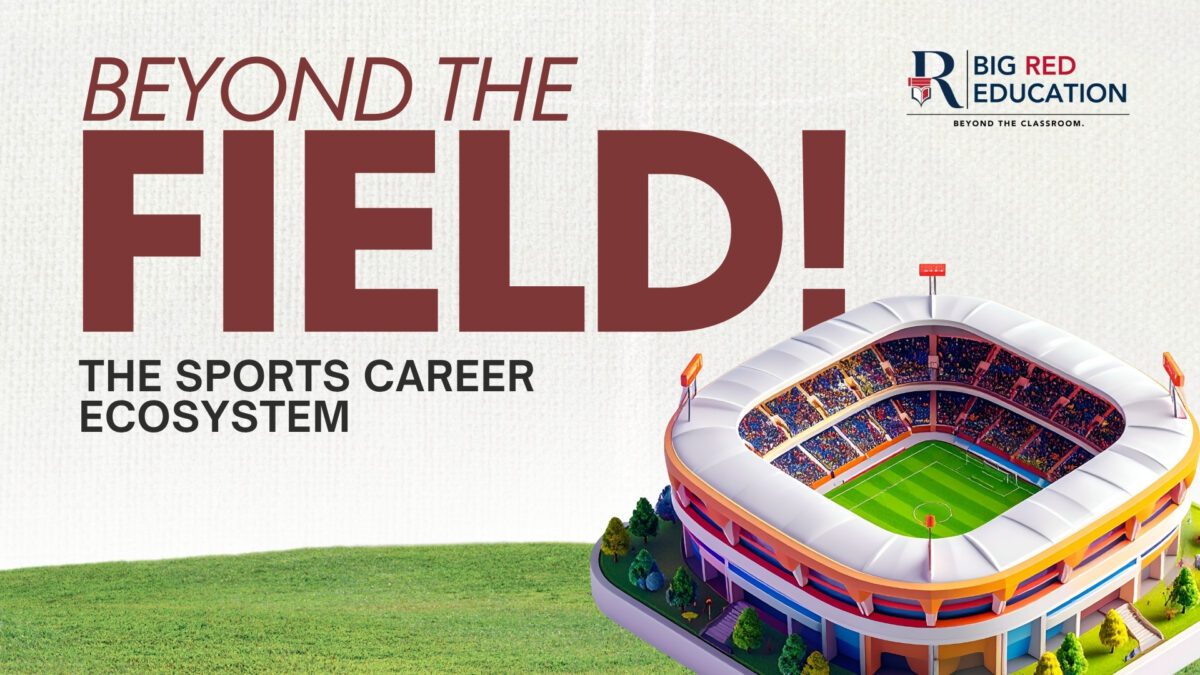
Think about the last time you watched a big cricket match, a Premier League game, or the Olympics. While you were focused on the action on the field, hundreds of professionals were working behind the scenes – managing logistics, analysing player performance, handling sponsorships, crafting media strategies, and keeping the entire machinery of sport running like clockwork.

That world – the business and science of sport, is expanding fast. And for students today, it represents one of the most exciting, dynamic, and genuinely viable career paths available.


The Industry That Never Sleeps

The global sports industry is now worth over $600 billion – and it’s growing faster than most traditional sectors. The IPL alone crossed a valuation of $16 billion. Streaming platforms are in bidding wars over broadcasting rights. Athletes are building personal brands worth more than most businesses. Esports arenas are filling up faster than cricket stadiums.

And behind every single one of those things? There are professionals who planned it, managed it, marketed it, analysed it, and made it happen.

That’s the world of sports management. And it is hiring.


It’s Not One Job. It’s a Whole Universe.

Most students hear “sports management” and think it means… managing a team? Kind of. But actually, it’s an entire ecosystem of careers, most of which you’ve probably never heard of but would absolutely love.

Here’s a taste:

Event & Operations Management Someone has to make sure 60,000 fans get in, get seated, get fed, and get home safely, and that the broadcast truck is in the right place and the sponsor banners are exactly where the contract says they should be. That someone is an operations manager. It’s high-pressure, fast-moving, and endlessly satisfying.

Performance Analysis Modern sport runs on data. Every sprint, every pass, every heartbeat is tracked. Performance analysts sit between the data and the coaching staff, translating numbers into decisions. It’s basically sport + data science – and it’s one of the fastest-growing roles in the industry.

Sports Marketing & Sponsorship How does a brand end up on a jersey? How does an athlete get a deal with a sneaker company? How does a franchise build a fanbase in a new city? That’s sports marketing – creative, commercial, and deeply strategic.

Sports Science & Athlete Welfare Nutrition, psychology, recovery, injury prevention – the science that keeps athletes at their best. This side of the industry is growing rapidly as teams realise that performance isn’t just about training harder; it’s about training smarter.

Sports Media & Content Podcasts, reels, documentaries, live broadcasts, social media – sport generates more content than almost any other industry. Someone’s writing it, filming it, editing it, and building the strategy behind it.

Athlete Management & Representation Contracts, endorsements, career transitions, personal branding, the people who help athletes navigate the business of being an athlete. Think of it as sports meets law meets PR.

Different strengths. Different personalities. All under one roof. That’s what makes this field genuinely exciting for students – you don’t have to be one type of person to belong here.


Why Students Are Waking Up to This Field

A generation ago, the conventional wisdom was simple: if you love sport but can’t go pro, become a PE teacher or a coach. Today, that thinking is outdated.

Several forces are reshaping what’s possible:

Professionalisation of grassroots sport in India. As sports infrastructure grows, more academies, more leagues, more government investment in athletic development, the need for trained professionals to manage these organisations is growing too.

Technology is creating new roles. Wearables, AI-driven analytics, drone filming, virtual fan experiences – the intersection of tech and sport is generating career categories that didn’t exist ten years ago.

Global sport is going local. International franchises and leagues are expanding into Asian markets. That means demand for locally trained sports professionals who understand both global standards and local contexts.

Universities are taking it seriously. World-class institutions now offer dedicated degrees in sport management, sport science, and sport business. The academic pathway is more credible, more specialised, and more globally recognised than ever before.


What Skills Does This Career Actually Demand?

Here’s something that surprises many students: sports management is not a “soft” career. The professionals who thrive in it tend to combine hard technical skills with strong interpersonal and strategic abilities.

Some of the most valued competencies include analytical thinking (especially around data and performance metrics), project management, marketing and communication, understanding of sports law and governance, financial acumen, and perhaps most importantly – the ability to work under pressure in high-stakes, time-sensitive environments.

This is also a field where early exposure matters enormously. Internships, industry connections, and hands-on experience are often the difference between candidates who land roles and those who don’t.


The Question of Early Exploration

For students in Grades 10 to 12, one of the most common frustrations is that they’re asked to make major life decisions – which subjects to take, which universities to target, which careers to pursue, without enough real information about what those careers actually look like day-to-day.

Sports management is no different. You might think you want to work in sports events, only to discover that performance analysis lights you up far more. Or vice versa. The only way to know is to actually step into that world and see.

That’s one of the reasons immersive, hands-on learning experiences in the sports sector where students get to explore career pathways through real-world engagement, industry visits, and expert mentorship are becoming increasingly popular among high schoolers who are serious about their futures.

Programs like the Turn Your Passion for Sport into a Real Career (delivered by Deakin University – home to the world’s #1 Sport Science School and hosted at Legacy school) are designed precisely for this: giving students in Grades 10–12 a structured, immersive experience that covers both sport management and sport science, connecting them with industry professionals and helping them map out what a future in sport could actually look like for them.

Why Start Now?

There’s a broader lesson here that applies beyond sport. The students who ultimately build exceptional careers are rarely the ones who waited until university to start thinking seriously about their field. They’re the ones who explored early, asked hard questions early, and built relevant knowledge and connections early.

Sport, as a career domain, rewards passion, but it also rewards preparation. The industry is competitive precisely because so many people love it. The ones who stand out are those who bring both genuine enthusiasm and a demonstrated understanding of how the industry actually works.

If you’re a student who’s passionate about sport – whether you play it, follow it obsessively, or are drawn to the business and science behind it, this is the right time to start taking that interest seriously. The field is growing. The opportunities are real. And the window to get ahead of the curve is now.


Editor's Pick

blog Communication Entrepreneurship Higher Education Innovation Leadership MUN Research summer Trending | 4min Read

Top 10 Summer Programs for High School Students in 2026

Published on June 12, 2026

FacebookTwitterWhatsApp
Categories
blog Communication Entrepreneurship Higher Education Innovation Leadership MUN Research summer Trending

Top 10 Summer Programs for High School Students in 2026

Top 10 Summer Programs for High School Students in 2026


For ambitious high school students, summer break is one of the best opportunities to explore future careers, develop leadership skills, gain college-level experience, and strengthen university applications.

You have about 10 weeks of summer break. You can spend them scrolling, or you can spend them building a tech startup, programming AI, or negotiating global policy on an Ivy League campus.

Today, admissions officers are no longer just looking at your GPA—they want to see what you do when no one is forcing you to study. The best summer programs do more than just keep you busy; they push you out of your comfort zone, expand your worldview, and give you an undeniable edge in competitive college admissions.

If you are looking for impactful extracurricular activities for college applications, skip the generic camps. Here are the top 10 international and regional summer school programs you should enroll in to actually build real-world skills—categorized by the path you want to take.


How We Selected These Programs

Programs were evaluated based on:

  • Academic rigor
  • Leadership development opportunities
  • Hands-on learning experiences
  • Access to expert mentors
  • Global networking opportunities
  • Relevance for college applications

Why Summer Programs Matter for College Admissions


According to trends noted by the National Association for College Admission Counseling (NACAC), a student’s commitment to intellectual and personal growth outside the traditional classroom is a major differentiating factor. A well-chosen summer program proves that you possess intellectual curiosity, leadership skills, and the discipline to handle rigorous environments.


Academic Exploration

Students can explore majors before university, confirming their interest in a field or discovering a new passion without the pressure of full-time tuition.

Leadership Development

Students develop leadership outside school environments, learning how to manage teams, handle adversity, and guide projects to success.

Networking

Students connect with peers worldwide, building an international network that will serve them well in college and their future careers.

Portfolio Building

Students create projects that strengthen applications, moving from theoretical knowledge to real-world impact that admissions officers can clearly see.

How Parents Can Evaluate Summer Programs

Look for:

  • Faculty quality
  • Program outcomes
  • Student-to-mentor ratio
  • Project-based learning
  • Alumni success stories

The Top 10 Summer Programs to Enroll in This Year

International University Programs

  • 1. Yale Young Global Scholars (YYGS) (Yale University)
    • The Focus: Literature, philosophy, culture, and STEM tracks.
    • The Edge: It offers an authentic taste of Ivy League seminar-style learning and unparalleled international networking.
  • 2. Stanford Summer Humanities Institute (Stanford University)
    • The Focus: Advanced humanities research and analytical writing.
    • The Edge: Ideal preparation for drafting complex academic research papers, helping students stand out in their university applications.
  • 3. Harvard Pre-College Program (Harvard University)
    • The Focus: Higher education exposure across hundreds of course options from astrophysics to constitutional law.
    • The Edge: It provides a true “test drive” of university life, teaching students how to balance independent schedules and complex coursework.
  • 4. Wharton Global Youth Program (Wharton School of the University of Pennsylvania)
    • The Focus: Business economics, financial literacy, and corporate strategy.
    • The Edge: Students attend college-level lectures by Wharton faculty and collaborate on intensive business simulation projects.

Entrepreneurship Programs

  • 5. LaunchX Summer Program (Independent)
    • The Focus: Market research, rapid prototyping, and co-founder collaboration.
    • The Edge: Students are placed into co-founding teams and are challenged to start a real, revenue-generating company by the end of the summer.
  • 6. Social Startup Bootcamp: From Influence to Impact (Big Red Education)
    • The Focus: Social entrepreneurship, business design, and impact metrics.
    • The Edge: You learn directly from leading voices in business and social impact, transforming personal conviction or daily observations into a structured, sustainable venture.

Leadership & Diplomacy Programs

  • 7. Leadership & Social Innovation Conference (Big Red Education)
    • The Focus: Systems thinking, ethical leadership, and the UN Sustainable Development Goals (SDGs).
    • The Edge: Students collaborate to build comprehensive problem-solution models and pitch directly to a panel of expert judges.
  • 8. Ivy League Model United Nations Conference (ILMUNC) India (Big Red Education )
    • The Focus: Geopolitical strategy, multilateral negotiations, and persuasive writing.
    • The Edge: Rather than classroom debate, you step into the shoes of global diplomats to tackle real-world crises alongside mentors from top-tier universities.

Innovation & Technology Programs

  • 9. Command Z: Future Tech Lab (Big Red Education)
    • The Focus: AI literacy, creative tech application, and building real-world AI-powered platforms.
    • The Edge: Students step out of rote memorization and work alongside international experts to design a portfolio-ready tech solution.
  • 10. Innovate NOW (Big Red Education)
    • The Focus: Design thinking frameworks, agile methodologies, and creative problem-solving.
    • The Edge: Students tackle live corporate and social case studies, learning how to pitch, pivot, and prototype ideas under tight deadlines.

Beyond the Certificate: What You Actually Gain From These Programs


It is incredibly easy to sign up for a generic summer camp that hands you a certificate of participation just for showing up. Top-tier universities see right through that. The 10 programs listed above are fundamentally different because they are outcome-driven. Here is why you should prioritize them:

  • Real-World Artifacts: You do not just leave with memories; you leave with a tangible asset for your portfolio. Whether it is a functioning AI tool from Command Z, a pitch deck from LaunchX, or a viable impact strategy from the Social Startup Bootcamp, you walk away with proof of your capabilities.
  • High-Stakes Environments: Programs like ILMUNC India and InnovateNOW force you to think on your feet, handle difficult questions, and negotiate under pressure. This builds the kind of grit and cognitive agility that makes future college interviews feel effortless.

.

Ready to Build Something Meaningful This Summer?


Whether you want to launch a startup, explore artificial intelligence, develop leadership skills, or gain experience in global diplomacy, Big Red Education offers immersive summer programs designed to help students stand out in both college admissions and future careers.

Explore our upcoming programs and find the right fit for your goals.

Explore Big Red Education’s Summer Programs and Secure Your Spot Today!


Editor's Pick