blog | 3min Read

Your Complete Guide to High-School Summer Internships

Published on June 30, 2022

FacebookTwitterWhatsApp
Categories
blog

Your Complete Guide to High-School Summer Internships

Summer break is finally here! With school work taking a backseat, it is the perfect time for you to explore your passions and up-skill! And what better way to do that than an internship?

Now some may ask, Internships in high school?! Won’t most organisations prefer college candidates? 

Nope! that is just an age old myth! Interns today are hired by their passion and willingness to work. You just have to dig and find the right one for you! 

Here is why you should be looking to do internships this summer-

  • Internships boost your college application as they showcase your work ethic and determination to get tasks done.
  • Internships not only help you identify what you want to do in your future career, but also what you DON’T want to do.
  • Internships let you meet and network with various professionals who can guide and assist you with your career.

(Read more about internship benefits here!)

And now for the big question – how do you land an internship? Turns out, there are more ways than one!

1. Family and Relatives

Your family is not only the people you love, but also the first level of networking you receive right when you are born! And chances are, someone from your family or relatives may already have connections with organizations looking for young and fresh perspectives. And if so, they may just be willing to have you on!

2. Cold Mailing

The tried and tested method! If you have organisations in your mind that you really want to be a part of, why not drop them a good (c)old email? For maximum success, you must follow proper email etiquette and convince them of your candidature in limited space. Attaching a detailed resume and portfolio can only improve your chances!

While wait times can be uncertain with this method, the advantage of cold mailing is that you get to aim for the organization as well as the position that you desire. Most organizations will already have a contact email provided on their website. But If you wish to be even more thorough, you can create a Linkedin account, and look for the profiles of the CEO or HR management of your preferred organization. Chances are, they would have provided their own email addresses for you to write to!

3. Summer Programs that offer Guaranteed Internships

Click here to check out Aryaman’s journey!

While most Summer Programs usually train you in theoretical aspects, some programs take it a step further and offer you guaranteed internships to apply your learnings in a practical environment. 

For example, Ivy Early Entrepreneur, taught by real-life successful entrepreneurs, trains high school students like you for a week in crucial aspects of entrepreneurship. This is followed by a guaranteed 2-3 month internship with leading firms, where you get invaluable experience as a budding entrepreneur.

Similarly, Business of Sports 101 – offered in partnership with Deakin University and Rajasthan Royals – teaches you the essentials of sports business and concludes with a chance to work on a live project with Rajasthan Royals!

4. Online Platforms

There are various websites on the internet that compile or offer internships and programmes for high school students. Websites like Internshala compile internship opportunities from a wide range of employees.

5. NGO Organisations

Several Non-Governmental Organizations across India offer internship and volunteer opportunities to high school students. While these options may not always be paid, they allow you to give back to the marginalized sections of society. A few NGOs where you can try your hand include Smile Foundation, Child Rights & You(CRY), HelpAge India and CARE India.


Editor's Pick

blog | 4min Read

Discover A Passion For STEM Fields Through A Robotics Workshop

Published on

FacebookTwitterWhatsApp
Categories
blog

Discover A Passion For STEM Fields Through A Robotics Workshop

STEM is an academic philosophy and approach that integrates the four core academic disciplines – science, technology, engineering, and mathematics. Many schools and educational institutions have adopted a STEM-focused curriculum to prepare students to meet growing industrial and labor demands. 

Robotics has been one of the most popular fields that promote STEM education principles because it marries the core disciplines of STEM. 

Robotics’ Relation to STEM

Robotics, in terms of elementary and high school education, refers to the application of knowledge in electronics and engineering to produce simple robots that move according to commands set by a coder. 

While there are schools that include robotics in their curriculum, many still don’t offer this program. These schools may not have the resources and educators to conduct robotics classes. Some of them may be offering other STEM programs but not necessarily robotics.

Whatever the cause may be, there is no denying that robotics is still one of the best ways to ignite interest and long-term passion in STEM fields.

How does learning robotics accomplish this?

When you take on robotics, you need to learn a strong foundation of knowledge of the STEM fields in order to design and program a robot successfully. In other words, robotics is an interactive way of learning science, technology, engineering, and mathematics. 

If robotics classes are not available at school, you can still reap the benefits of this STEM-related discipline by joining a robotics workshop.

Benefits of Robotics Workshops

Demystifying STEM Fields

STEM fields like mathematics and science are often perceived to be difficult and only enjoyed by smart people. However, robotics workshops will make you realize that it does not take a Math genius to create a working robot. You actually need just a receptive attitude to learning and making mistakes. 

Similar to robotics classes in schools, robotics workshops can make you apply what you learn in STEM fields to build a simple machine. Concepts in engineering, mathematics, science, and technology don’t just remain abstract in robotics. They are actually applied to produce tangible products. 

Robotics workshops will not only help you understand STEM fields like mathematics and science but also appreciate them because you can see first-hand their practical applications and uses in the world. 

Active and Tactile Learning

In robotics workshops, you are not just a passive listener to a lecture. A big part of this workshop is about doing things yourself. As you go through the processes of building robots, both your mind and hands will become busy.

At one point, you could be on the computer trying to code commands for the robots or debug the program. On another, you could be tightening screws or moving parts to solve a structural or mechanics issue with the robot. By doing such tasks, you develop a deeper understanding of how coding and engineering contribute to the overall makeup and functionality of a robot. 

Some students may find the coding part more interesting; others may think the engineering component of robotics is much more exciting. Either way, an initial robotics workshop experience can lead to serious pursuits of careers in computer science, technology, or engineering. 

Stress-Free and Fun Learning

There are pressures to deal with when you’re in a formal class at an educational institution. Students can be more worried about meeting teacher and parent expectations and performing well academically.  

In formal classroom settings, not solving math equations correctly or writing a science essay up to standards result in a low mark. In these scenarios, the emphasis is more on test marks. The stigma of getting low marks can result in disappointment and disinterest from students. 

After getting low marks in science and math, the immediate thought may be that you are not good in these subjects. This thought can prevent anyone from being passionate about these STEM disciplines. 

Robotics workshops take away most of those familiar academic pressures because high marks are not the goal. You don’t have to be at the top of everyone to succeed at a robotics workshop.

Robotics is a field that welcomes mistakes as it is part of the learning process. You cannot be an excellent robotics engineer or encoder if you don’t make errors along the way. If there is no pressure to get something right the first time, it makes learning more stress-free and fun.  

Promotes Collaboration and Teamwork

STEM fields like engineering and computer science are perceived to be individual-based disciplines. How good of an engineer or coder you are, depends on individual skills. In classrooms, you usually solve math problems or take a science test alone. 

However, in robotics – collaboration and teamwork are important aspects of learning.  

Robotics workshops force you to work with others closely because they model real-world robotics applications, where projects are too big to be handled by just one person.

In robotics workshops, you will learn to communicate clearly and compromise when necessary. You will not be sitting in one corner solving problems on paper by yourself. Your knowledge in STEM fields will not be for your own use and benefit. You will need to share them to solve project issues and produce the best possible robot product. 


Editor's Pick

blog MUN | 4min Read

What to Expect at Your First MUN and Tips for Acing It!

Published on

FacebookTwitterWhatsApp
Categories
blog MUN

What to Expect at Your First MUN and Tips for Acing It!

Did you know that the United Nations got its name when Churchill was enjoying a bubble bath in Washington and Roosevelt barged in to declare that United Nations shall be the name of the Allies in the middle of WW2!

Model UN Conferences are a great tool for students to practice as the in-depth simulation equips the students with a number of very important skills – leadership, debating, researching, etc. Students also learn to negotiate and develop problem-solving skills through drafting resolutions and responding to real-world problems. 

How Does a MUN Conference Work?

At every conference, delegates representing different countries in a UN Committee come together to discuss a global issue (climate change, poverty, access to education, etc) which is passed on to the delegates beforehand. This way, they can make a policy sheet to gather information about their country’s policies and laws on the issue at hand. This is followed by debates between the delegates of different countries in that committee to come up with practical solutions (resolutions) to solve any issue. These resolutions are then voted upon by the committee and will be passed only if there is a majority in favor of it.

What are The Different Stages of a Conference?

  1. The Pre-Conference Stage: Before every Conference, students are assigned countries and given the topic that the committee will discuss upon. During this time, the delegates must research about their country and its policies regarding the topic to be discussed in the committee. At this point of the conference, you must prepare your opening speech and deliver it in a way that clearly presents your country’s position.
  2. Morning Session: The chair of the conference briefs the delegates about the logistics of the conference and the format that the same would follow. The Morning Session is also where the delegates interact with each other and deliver their opening speeches to voice their country’s perspective on the issue at hand. Through this session, the delegates can decide to collaborate with other countries that might share a similar problem or ideology to form blocs.
  3. Afternoon Session: This is a very important stage of every conference. Real-world solutions to the problems regarding the issue being discussed in the committee are drafted into documents – Resolutions. Upon approval of the resolution, delegates partake in an Authors Panel. In the Authors Panel, delegates present their resolutions and respond to any questions the opposing delegates might have about the resolution or the procedure involved in its execution.
  4. Resolution Voting: Finally, the committee transitions into a Voting Phase where the resolutions are voted upon to be either approved or rejected. Delegates also have the freedom to abstain from partaking in the voting procedure. Whatever motions get the majority of votes are passed and with this, the conference is adjourned!

Final Tips and Takeaways:

Now that you know how MUNs work, do you want to win the Best Delegate award at your next conference? Of course, you do! Here are a few tips that might help you become a better MUNner:

  1. Research! Research! Research! This is the only weapon that you take with yourself into the battlefield that we call Model UN. Facts and statistics regarding the particular issue being discussed might favor your country’s agenda and make it easier to respond to any objections. Also, maintaining a research binder where you collate all important information regarding the pressing issue in the committee will greatly help you!
  2. Do NOT badger the chair! I am not kidding. Chairs are humans too and being respectful to them will only work in your favor. You could address them as ‘honorable chair’ and be polite whenever you talk to them. Apart from being respectful to the chair and other senior officials, you must also keep in mind the importance of proper etiquette. This would ease the process of making connections with representatives of other countries and forming blocs later in the conference!
  3. Listen! A good delegate focuses on listening over talking more. Your speeches must be in line with the facts other delegates are stating and you could also use the same against them or in favor of your country. This is very difficult to master but actively listening to other delegates would greatly help you in forming solutions that benefit all.
  4. Engage! Try to participate in all discussions that are taking place in the committee. Try to look for ways that the particular topic affects your country and present your country as relevant to the discussion. I’m not telling you to become the “loudest” delegate at the conference because that does not mean that people would be interested in hearing what you have to say. Incorporate some value in your words every time you get to speak.

Conclusions:

These pointers and tips are surely going to prepare you for any MUN Conference that comes your way. Now that you are equipped with all the foundational knowledge regarding the world of MUNs, take a look at our [MUN plug]


Editor's Pick

blog | 5min Read

Tips for Stress Management – 5 Do’s and Don’ts

Published on

FacebookTwitterWhatsApp
Categories
blog

Tips for Stress Management – 5 Do’s and Don’ts

Did you know that there are two types of stress but that only one of them is negative? If yes, do you know how to manage this stress? If the answer is no for the latter or for both, do not worry, we have got you!

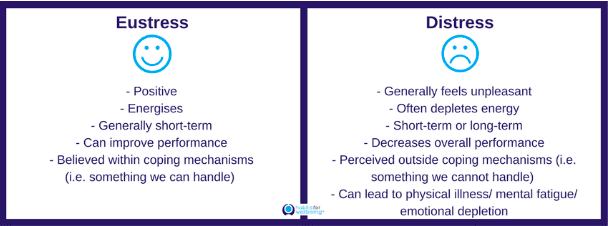
There are essentially 2 types of stress – Eustress and Distress, the former being positive stress that boosts performance and the latter being negative stress that hinders and deteriorates performance. It is this ‘distress’ that we need to manage. 

First, it is important to know what not to do when dealing with stress. Many high school and college students often indulge in activities such as smoking, drinking and so on, thinking that their stress will go away; however, not only are they temporary fixes for stress but also cause long term health consequences. These are a few of the many ineffective ways of dealing with stress that you should avoid – 

 5 Dont’s:

1. Having a pessimistic attitude– focusing only on the negatives and failing to see the stressful situation from another perspective will only cause more stress and the feeling of helplessness will slowly arise. It is so important to be kind to yourself and try to find the positives and a way out rather than dwelling on the negative.

2. Ignoring the problem– once in a while, it is okay to forget about your stress and watch a movie or sleep to avoid it, I used to do it all the time. However, I have started to realise that consistently avoiding our stress and putting it off is not helpful at all. It only adds to the existing stress and it really helps to get a plan of action in place instead of ignoring it. To do this you could make a to-do list, create a schedule for yourself if it is schoolwork related stress, or confront the source of your stress. These solutions will be further elaborated in the “5 Do’s” section.

3. Smoking, drinking, and other vices– I have seen my friends fall into the vicious cycle of using drinking, smoking, and other vices to deal with stress. This is bound to build up stress once the ‘high’ achieved from these activities wears off. Moreover, all of these will harm your body and in doing that, your ability to deal with the stress will reduce further.

https://pubs.niaaa.nih.gov/publications/aa71/aa71.htm

4. Pushing people away– Talking to people and asking for help is important; if not in the early stages of the stress, at least in the later stages when it gets out of hand and difficult to deal with alone. I have made this mistake before and it was not beneficial for me. Pushing the people who are willing to help you is not effective. Keep them around!

5. Eating the stress away– I could be the epitome of eating junk food as a coping mechanism for stress (and for foodies like me, high calorie and high sugar comfort foods have always served as a go-to solution for everything.) However, over time your body starts associating negative feelings, which arise out of distress, with food. Any time you feel these negative emotions, you will find food before even trying to solve the problem and deal with your emotions. Moreover, overeating will cause weight gain and further mental health and body issues.

https://identity-mag.com/heres-your-easy-guide-to-avoid-stress-eating/

Now, let us look at some of the effective ways to deal with stress:

5 Do’s:

1. Exercise– Not only is exercise good for our bodies, physical fitness and immunity system but also releases happy hormones called endorphins. These elevate our mood and help us cope with the negative emotions that arise out of stress. 

2. Sleep– Getting the right amount of sleep – at least 8 hours – helps us feel rested, improves our mood, and increases our cognition. This in turn helps us find solutions to deal with stressful situations quicker. However, sleeping for extended periods to avoid your problems can actually cause lethargy which causes the body to go into a slump. This in turn hinders our ability to cope with stress. It is, thus, necessary to get 7-9 hours of sleep; not less, not more either. 

       (https://www.compton.edu/facultystaff/professional-development/Compton_EASE_Stress_Management_HANDOUT.pdf)

3. Problem-focused coping- This is the method of coping wherein you directly try to overcome the stress inducing situation by acting on the stressor or the individual causing the stress. So if your exam is giving you stress, to overcome that, you attend all the classes, take up doubts with your teacher, make a schedule to study efficiently, spend more hours studying etc. If a person is the cause of your stress, you can directly confront them and speak to them about the problem. 

4. Emotion-focused coping- While problem-focused coping is more likely to be used effectively in instances where you think the stressor can be modified in order to overcome it, emotion-focused coping is when you think the stressor is beyond your control. This method is more about taking charge of your emotions and amending the negative feelings that may be arising due to the stressor. One can start by being more positive, practising relaxation techniques, and reaching out for help. Talking to others, seeking social support or taking time away from social media can be very helpful. In the past, I have chosen self-isolation and taking a break from my phone as methods of dealing with my stress. While the latter worked wonders for me, self- isolation was not as beneficial. This is because when I told a third person, the advice and tips they gave brought in a fresh and positive perspective that I could not have reached alone because of my stressed-out state. 

https://www.verywellmind.com/forty-healthy-coping-skills-4586742

5. Meditation- 15-20 minutes of meditation every day will help calm your mind and relax your body which helps release stress (honestly, I thought I would fall asleep while meditating, but it was actually really relaxing and it was a real stress buster). 

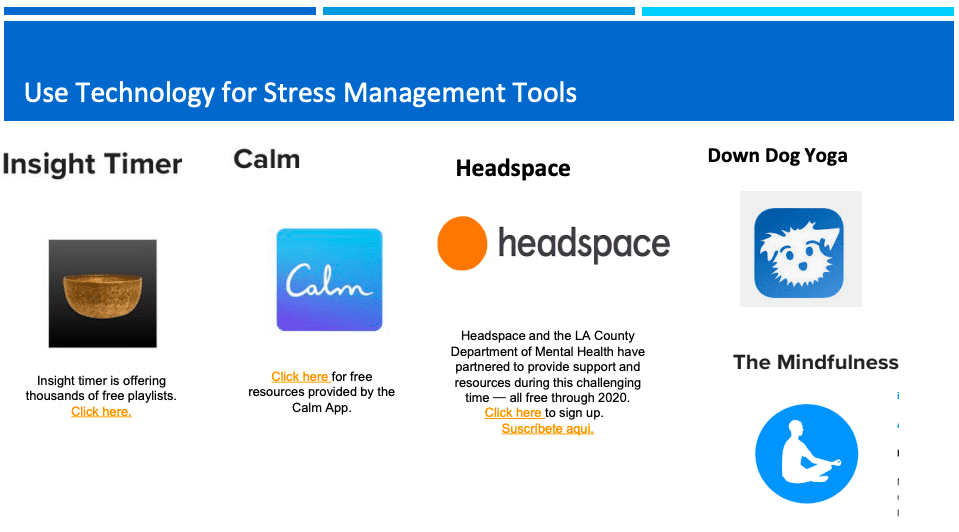
For delving deeper into the world of stress, causes, effects, its management etc you can have a look at this link. The image below is taken from there which highlights a few apps that can help with stress management. 

P.S. Do not forget to ask for help, reach out to counsellors and go for therapy if needed! Feel free to even email us with your problems; our inboxes are always open!

Editor's Pick

blog poetry | 4min Read

Getting Started With (And Acing) Poetry Writing

Published on

FacebookTwitterWhatsApp
Categories
blog poetry

Getting Started With (And Acing) Poetry Writing

-Avanti Nayal
Jamnabai Narsee School

The process of writing poetry is as personal and unique as the poem itself

Writing poems may seem daunting to some, while it may seem like a cakewalk to the rest. Irrespective of which category you belong to, I hope you’re able to take something away from this article (it sounds utterly fancy, but in reality, I am typing this on my laptop while sitting in my pj’s).

Poetry writing is as enjoyable as it is cathartic. How one perceives poetry (or any kind of literature for that matter) is highly subjective. Obviously, even the process of poetry writing varies from person to person. Many a time, people have asked me “how do you write poems?” Or “how to write good poetry?” This question usually stumps me because there is no one size fits all answer to this question. In order to understand what works best for you, you must start writing and figure it out for yourself. 

In this article, I wouldn’t want to give you a step by step guide to write good poems. Instead, I would like to discuss a few things that you must focus on in order to zero down on the process that works best for you. Do bear in mind that the only way to get started with poetry writing is to get started with poetry writing- pick up the pen that has been lying next to your bed for ages and start scribbling things down. You will figure it out along the way, but you need to take the first step in order to get somewhere!

The 3 questions you must ask yourself :

Why do I want to write poetry?

Some of my contemporaries write poems merely for fun, some write it because it is a cathartic experience and few of them write in order to publish their work someday- all of these choices are equally valid and significant. It is important to introspect and figure out a purpose( it doesn’t have to be a lofty one, frivolous ones work too – as long as you’re happy ). In my opinion, writing for a purpose not only takes the quality of the poetry up a notch but also helps people stay motivated throughout the process of writing – I assure you, it can be quite tedious at times. Indulging in poetry writing for fun is vastly different from writing a weekly/monthly column. So before you embark on this wondrous journey, pause for a moment and ask yourself the questions that philosophers have been asking themselves for ages- what’s the purpose of this?

What kind of an external setting do I need in order to write a poem?

Honestly, If you took me to Willy Wonka’s factory, I’d probably pen down the best poem I have ever written, but alas, that is not to be! Jokes aside, where we write and when we write matters more than we can fathom. Case in point, I am writing this piece at 3 am whilst listening to ‘chandni raat’ by Ali Sethi. I am most productive at night – Mumbai exudes a serene and soothing vibe at night, and as someone who is sometimes bothered by the cacophony of the city, a calm and peaceful environment is essential for me if I am to write. On the other hand, my friend simply can’t digest the fact that I prefer writing at night to writing during the day. Her groggy and delirious self cannot do even an iota of work after sunset. Some of the best poems that I have written have been written in gardens, quaint cafes and libraries. Definitely do pay attention to the kind of environment that appeals to the writer in you

Which topics do I usually gravitate towards?

This would be particularly relevant to you if you intend on publishing your work. If you tend to gravitate towards a particular topic often and/or if the best poems that you’ve ever written focus on a particular theme, then congrats, you have found your forte! For the record, there is absolutely no harm in not having a forte. However, if you do have one, it is easier to focus on your strengths whilst honing your skills in order to work on your weaknesses. Exploring the various nuances of the theme of your choice is perhaps as intellectually stimulating as stepping out of your comfort zone, and maintaining a balance between the two helps an artist grow in every way possible.

Bonus post-script- my experience and a piece of my heart

The first poem I ever wrote –
On moving on

I am leaving behind all the memories I made,
And slowly but eventually,
They all shall fade.

But the feeling!Ah the feeling!
That shall always sail in my heart
Grieving but dancing 
Crying but singing

But just as the sun always shines
And the wind always blows
The heart always pines
And as it pines,it seeks.

New memories shall be your bait
Fresh beginnings are coming your way
A fresh start awaits
Let the heart not grieve!
For a fresh start awaits,a fresh start awaits….

I started writing approximately 4 years ago, and though I am still an amateur, I was a complete novice back then. One fine day, I just picked up my diary and wrote down everything that came to mind at that moment. It was a process full of trial and error, but eventually, it worked out well for me. In the process of writing poetry (and figuring out which method of poetry writing works best for me), I became better acquainted with myself. There is no 5 step guide to poetry writing that will work for every single person in the world. The best way is to figure it out for yourself by starting small and paying close attention to what entices you the most. Most of all, do not forget to have fun!

Keep writing, keep shining.

Editor's Pick