blog Communication Entrepreneurship Higher Education Innovation Leadership MUN Research summer Trending | 4min Read

Top 10 Summer Programs for High School Students in 2026

Published on June 12, 2026

FacebookTwitterWhatsApp
Categories
blog Communication Entrepreneurship Higher Education Innovation Leadership MUN Research summer Trending

Top 10 Summer Programs for High School Students in 2026

Top 10 Summer Programs for High School Students in 2026


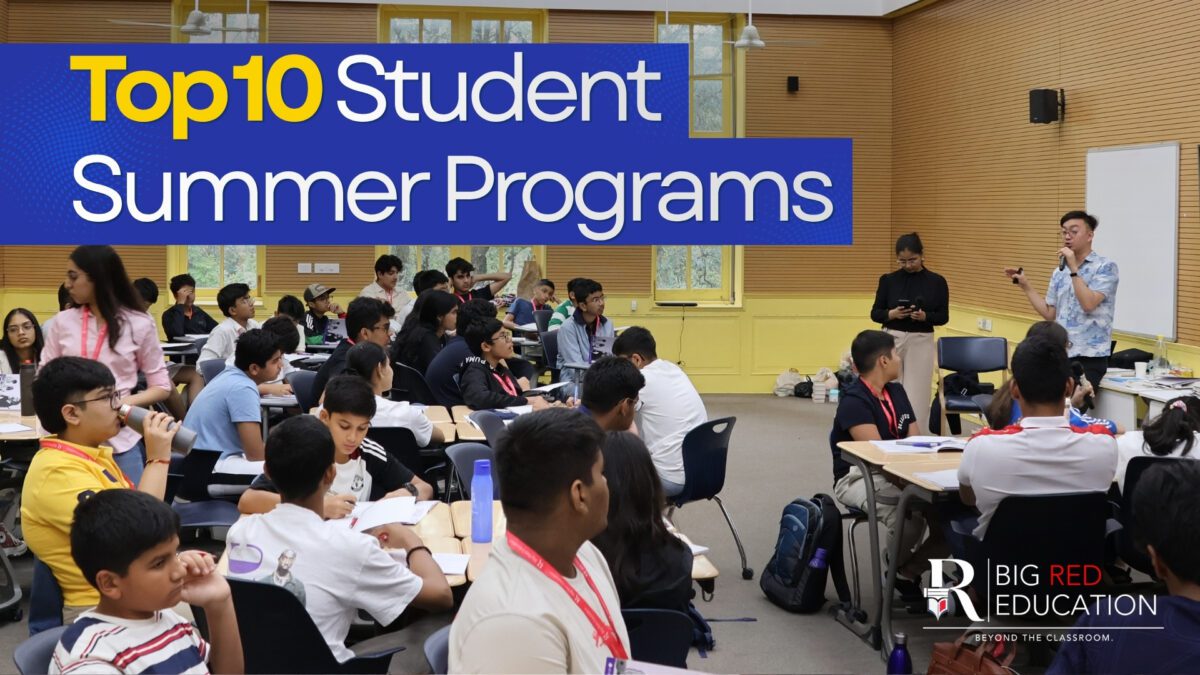
For ambitious high school students, summer break is one of the best opportunities to explore future careers, develop leadership skills, gain college-level experience, and strengthen university applications.

You have about 10 weeks of summer break. You can spend them scrolling, or you can spend them building a tech startup, programming AI, or negotiating global policy on an Ivy League campus.

Today, admissions officers are no longer just looking at your GPA—they want to see what you do when no one is forcing you to study. The best summer programs do more than just keep you busy; they push you out of your comfort zone, expand your worldview, and give you an undeniable edge in competitive college admissions.

If you are looking for impactful extracurricular activities for college applications, skip the generic camps. Here are the top 10 international and regional summer school programs you should enroll in to actually build real-world skills—categorized by the path you want to take.


How We Selected These Programs

Programs were evaluated based on:

  • Academic rigor
  • Leadership development opportunities
  • Hands-on learning experiences
  • Access to expert mentors
  • Global networking opportunities
  • Relevance for college applications

Why Summer Programs Matter for College Admissions


According to trends noted by the National Association for College Admission Counseling (NACAC), a student’s commitment to intellectual and personal growth outside the traditional classroom is a major differentiating factor. A well-chosen summer program proves that you possess intellectual curiosity, leadership skills, and the discipline to handle rigorous environments.


Academic Exploration

Students can explore majors before university, confirming their interest in a field or discovering a new passion without the pressure of full-time tuition.

Leadership Development

Students develop leadership outside school environments, learning how to manage teams, handle adversity, and guide projects to success.

Networking

Students connect with peers worldwide, building an international network that will serve them well in college and their future careers.

Portfolio Building

Students create projects that strengthen applications, moving from theoretical knowledge to real-world impact that admissions officers can clearly see.

How Parents Can Evaluate Summer Programs

Look for:

  • Faculty quality
  • Program outcomes
  • Student-to-mentor ratio
  • Project-based learning
  • Alumni success stories

The Top 10 Summer Programs to Enroll in This Year

International University Programs

  • 1. Yale Young Global Scholars (YYGS) (Yale University)
    • The Focus: Literature, philosophy, culture, and STEM tracks.
    • The Edge: It offers an authentic taste of Ivy League seminar-style learning and unparalleled international networking.
  • 2. Stanford Summer Humanities Institute (Stanford University)
    • The Focus: Advanced humanities research and analytical writing.
    • The Edge: Ideal preparation for drafting complex academic research papers, helping students stand out in their university applications.
  • 3. Harvard Pre-College Program (Harvard University)
    • The Focus: Higher education exposure across hundreds of course options from astrophysics to constitutional law.
    • The Edge: It provides a true “test drive” of university life, teaching students how to balance independent schedules and complex coursework.
  • 4. Wharton Global Youth Program (Wharton School of the University of Pennsylvania)
    • The Focus: Business economics, financial literacy, and corporate strategy.
    • The Edge: Students attend college-level lectures by Wharton faculty and collaborate on intensive business simulation projects.

Entrepreneurship Programs

  • 5. LaunchX Summer Program (Independent)
    • The Focus: Market research, rapid prototyping, and co-founder collaboration.
    • The Edge: Students are placed into co-founding teams and are challenged to start a real, revenue-generating company by the end of the summer.
  • 6. Social Startup Bootcamp: From Influence to Impact (Big Red Education)
    • The Focus: Social entrepreneurship, business design, and impact metrics.
    • The Edge: You learn directly from leading voices in business and social impact, transforming personal conviction or daily observations into a structured, sustainable venture.

Leadership & Diplomacy Programs

  • 7. Leadership & Social Innovation Conference (Big Red Education)
    • The Focus: Systems thinking, ethical leadership, and the UN Sustainable Development Goals (SDGs).
    • The Edge: Students collaborate to build comprehensive problem-solution models and pitch directly to a panel of expert judges.
  • 8. Ivy League Model United Nations Conference (ILMUNC) India (Big Red Education )
    • The Focus: Geopolitical strategy, multilateral negotiations, and persuasive writing.
    • The Edge: Rather than classroom debate, you step into the shoes of global diplomats to tackle real-world crises alongside mentors from top-tier universities.

Innovation & Technology Programs

  • 9. Command Z: Future Tech Lab (Big Red Education)
    • The Focus: AI literacy, creative tech application, and building real-world AI-powered platforms.
    • The Edge: Students step out of rote memorization and work alongside international experts to design a portfolio-ready tech solution.
  • 10. Innovate NOW (Big Red Education)
    • The Focus: Design thinking frameworks, agile methodologies, and creative problem-solving.
    • The Edge: Students tackle live corporate and social case studies, learning how to pitch, pivot, and prototype ideas under tight deadlines.

Beyond the Certificate: What You Actually Gain From These Programs


It is incredibly easy to sign up for a generic summer camp that hands you a certificate of participation just for showing up. Top-tier universities see right through that. The 10 programs listed above are fundamentally different because they are outcome-driven. Here is why you should prioritize them:

  • Real-World Artifacts: You do not just leave with memories; you leave with a tangible asset for your portfolio. Whether it is a functioning AI tool from Command Z, a pitch deck from LaunchX, or a viable impact strategy from the Social Startup Bootcamp, you walk away with proof of your capabilities.
  • High-Stakes Environments: Programs like ILMUNC India and InnovateNOW force you to think on your feet, handle difficult questions, and negotiate under pressure. This builds the kind of grit and cognitive agility that makes future college interviews feel effortless.

.

Ready to Build Something Meaningful This Summer?


Whether you want to launch a startup, explore artificial intelligence, develop leadership skills, or gain experience in global diplomacy, Big Red Education offers immersive summer programs designed to help students stand out in both college admissions and future careers.

Explore our upcoming programs and find the right fit for your goals.

Explore Big Red Education’s Summer Programs and Secure Your Spot Today!


Editor's Pick

blog Communication Entrepreneurship Higher Education Innovation Internship Leadership MUN | 4min Read

How AI Is Transforming Education: 4 Changes Every Student Should Understand

Published on

FacebookTwitterWhatsApp
Categories
blog Communication Entrepreneurship Higher Education Innovation Internship Leadership MUN

How AI Is Transforming Education: 4 Changes Every Student Should Understand

How AI Is Transforming Education

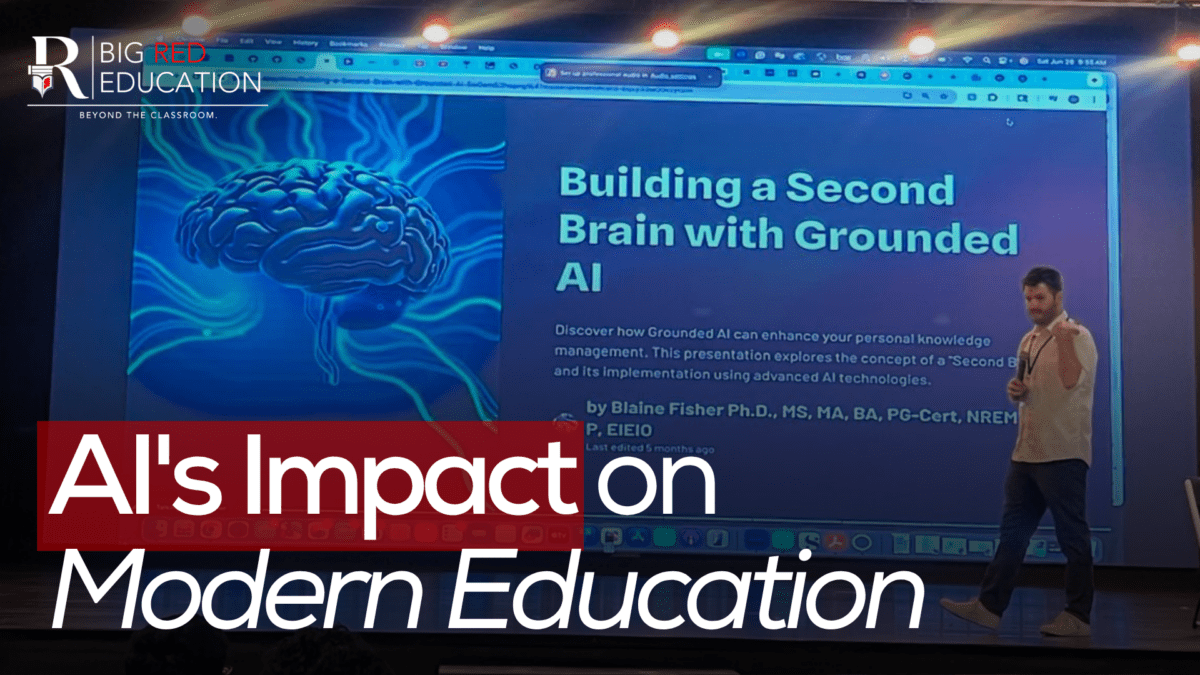
Whether you’re a student preparing for college or a parent thinking about future careers, artificial intelligence is already changing how students learn, solve problems, and prepare for the workforce. Understanding these changes is becoming just as important as understanding traditional academic subjects.

Here is a direct look at four ways artificial intelligence in education is reshaping the educational ecosystem and how to stay ahead of the curve.

1. The Shift from Rote Memorization to Critical Inquiry

For decades, traditional schooling disproportionately rewarded the ability to memorize facts and formulas. AI reduces the value of memorization as a primary educational outcome and increases the importance of critical thinking, analysis, and problem-solving. When global data can be recalled in milliseconds, the value of education shifts from knowing the answer to asking the right question.

  • Before: Students memorized formulas.
  • Now: Students need to evaluate AI outputs, verify information, ask better questions, and think critically.

As highlighted in the World Economic Forum’s report on Education Readiness for the Age of AI, the rapid integration of AI requires a fundamental shift in how we assess students. Educators are moving away from grading final answers and focusing instead on the logic and critical thinking a student uses to get there.

2. Radical Personalization at Scale

The holy grail of education has always been one-on-one mentorship, but traditional classrooms force a “one-size-fits-all” model. AI breaks this bottleneck by acting as an adaptive, hyper-personalized tutor.

Modern AI platforms analyze a student’s specific learning pace, identifying precise cognitive gaps. If a student struggles with algebraic concepts but excels at visual geometry, the AI dynamically restructures the lesson plan in real time, ensuring they are neither bored by repetition nor left behind.

3. Moving from Passive Consumers to Active Builders

The ultimate goal of classroom technology is not to create a generation that just knows how to use apps, but one that knows how to build them. True AI literacy in the future of education involves understanding the infrastructure of tech.

To evolve from being the “actor on the stage” to the “orchestrator” of AI tools (as discussed by Harvard University), students must develop automation thinking, prompt engineering, and product building skills.

4. Navigating the Ethics of the Algorithm

As AI integrates into everything from healthcare to climate modeling, the most critical skill a student can develop is ethical literacy. Understanding algorithmic bias, data privacy, and the social implications of automation is vital.

UNESCO’s AI competency frameworks emphasize that the leaders of tomorrow will not just be technical experts; they will be the ethical anchors ensuring technology serves human progress responsibly.

Why Human-Centric Skills Are the Ultimate Differentiator

While AI handles computation, data processing, and rapid content generation, it cannot replicate the nuance of human connection and strategic vision. To truly thrive in an AI-driven world, students must double down on the uniquely human skills:

  • Leadership & Collaboration: The ability to inspire diverse teams, navigate human emotions, and drive collective action.
  • Communication & Public Speaking: Articulating complex visions with personal charisma that algorithms lack.
  • Entrepreneurship & Design Thinking: Identifying real-world human problems and iterating innovative, empathetic solutions.
  • Negotiation: Managing conflicting interests, reading the room, and finding nuanced compromises.

What Can Students Do Next? Build Real-World Capability

Understanding these skills is one thing; practicing them is another. The traditional classroom cannot always provide the sandbox needed to build entrepreneurial resilience or high-stakes negotiation skills. This is where experiential learning ecosystems bridge the gap.

Big Red Education designs programs that move high schoolers from passive learning to active creation, specifically targeting the human-centric skills needed in an AI era. By learning directly from global mentors—including alumni and former faculty from Columbia, MIT, and Cornell—students can dive into specialized tracks designed to cultivate these very skills:

InnovateNOW Pre-College Entrepreneurship

  • Core Skills Developed: Entrepreneurship, Design Thinking, Collaboration
  • How It Prepares Students: Guided by Columbia Business School alumni, students build, validate, and pitch startup ideas. Through this intensive process, they learn how to identify critical market gaps and design deeply user-centric solutions.

Social Startup Bootcamp 

  • Core Skills Developed: Leadership, Communication, Social Innovation
  • How It Prepares Students: Mentored by former admissions officers and Ivy faculty, students tackle complex real-world case studies. This environment helps them develop personal charisma and learn exactly how to influence and lead with lasting impact.

ILMUNC India (Ivy League Model UN)

  • Core Skills Developed: Public Speaking, Negotiation, Global Policy
  • How It Prepares Students: Through high-level diplomacy simulations, students develop the art of persuasion, geopolitical negotiation, and the invaluable skill of commanding a room under intense pressure.

Command Z: Future Tech Lab

  • Core Skills Developed: AI Literacy, Automation Thinking, Problem Solving
  • How It Prepares Students: This residential workshop takes students entirely out of their comfort zones, moving them beyond simply using apps. Here, they focus on building functional AI models and thoroughly understanding ethical tech infrastructure.

What Parents Should Know About AI in Education

For parents, navigating AI in education can feel overwhelming. The best approach is to shift focus from “Is my child using AI to do their homework?” to “Is my child developing the skills AI can’t replace?” Encourage them to engage in real-world problem-solving, debates, and leadership opportunities that force them to think on their feet, communicate effectively, and lead with purpose.

Stop waiting for the future of education to arrive, and start building the skills to lead it today.

Editor's Pick

blog Higher Education MUN Trending | 7min Read

What Is Model United Nations (MUN)? A Beginner’s Guide to Leadership, Diplomacy, and College Success

Published on June 11, 2026

FacebookTwitterWhatsApp
Categories
blog Higher Education MUN Trending

What Is Model United Nations (MUN)? A Beginner’s Guide to Leadership, Diplomacy, and College Success

What Is Model United Nations (MUN)? A Beginner’s Guide to Leadership, Diplomacy, and College Success


Picture this: you’re 16, standing at a podium in a conference hall, representing the Republic of France in a debate on global climate policy. Delegates from 30 other “countries” are listening. You have three minutes to make your case, hold your ground, and maybe even change a few minds.

No, this isn’t a scene from a political thriller. This is a regular Saturday for thousands of high school students who do Model United Nations and honestly? It might just be the most underrated skill-builder available to students today.


So, What Exactly Is MUN?


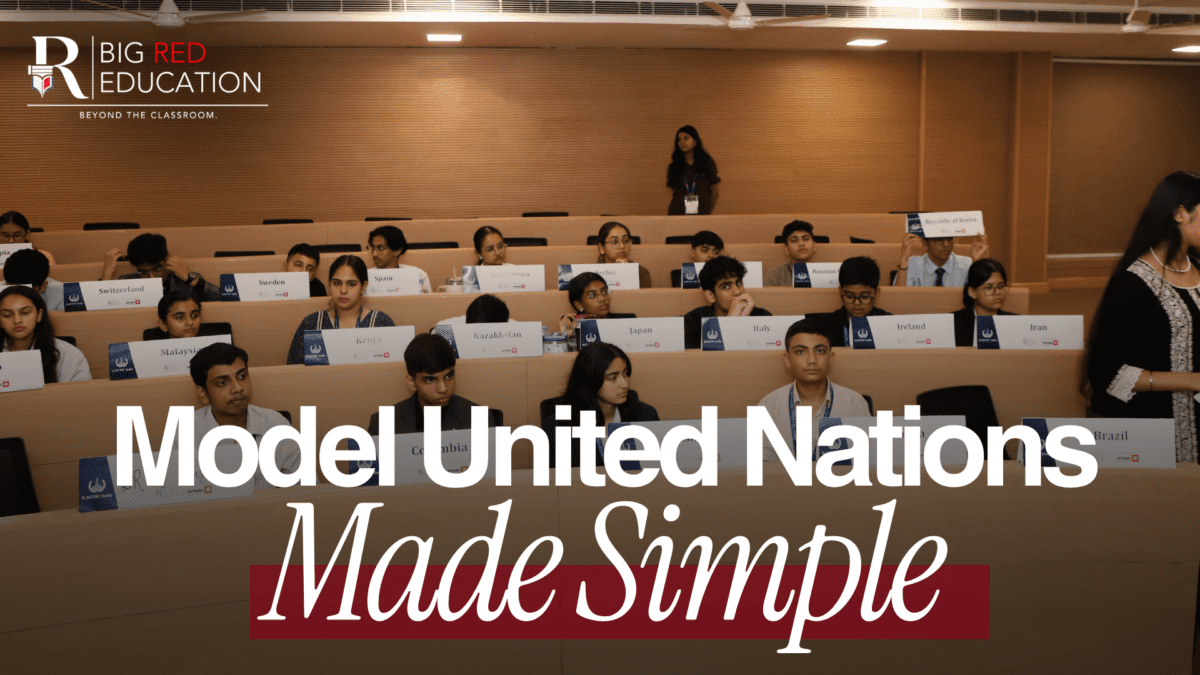
Model United Nations or MUN is an educational simulation of the United Nations. Students take on the roles of delegates representing different countries and debate real-world issues: climate change, nuclear disarmament, refugee crises, global health emergencies, you name it.

Think of it as part debate, part diplomacy, part theatre except the issues you’re arguing about are very, very real.

Each MUN conference is organised around committees, which mirror actual UN bodies like the Security Council, the General Assembly, or the Human Rights Council. Delegates research their assigned country’s position, write policy papers called “position papers,” debate with other delegates, and ultimately work toward drafting and passing resolutions.

It sounds formal. In practice, it’s equal parts exhilarating and nerve-wracking and students consistently describe it as one of the experiences that changed how they think.


What Skills Does MUN Actually Build?


MUN has a reputation for being “great for college applications.” That’s true, but it’s almost selling it short. The skills MUN develops are things you’ll use for the rest of your life in college interviews, in boardrooms, in any situation where you need to think fast, speak clearly, and work with people who disagree with you.

Public Speaking and Persuasion – There’s no substitute for actually standing up and speaking in front of a room full of your peers. MUN forces you to do it repeatedly, under pressure, on topics you’ve had to deeply research. Most MUN veterans say their fear of public speaking essentially disappears after their first few conferences.

Research and Critical Thinking – To represent a country well, you have to understand its foreign policy, its alliances, its economic interests, and its history. That kind of research teaches you to think in systems to understand that every policy has a context, and every position has a reason behind it.

Negotiation and Diplomacy – Here’s the part most people don’t expect: MUN is as much about the hallway conversations as it is about the podium speeches. The real work happens when you’re trying to convince three other delegates to co-sponsor your resolution, or when you’re negotiating a compromise between two completely opposing blocs. These are negotiation skills that MBA students pay a lot of money to learn.

Writing and Structured Argumentation – Position papers, draft resolutions, amendments, MUN involves a surprising amount of writing, and it’s writing with a specific purpose: to persuade, to structure arguments, to build consensus. It sharpens how you think on paper in ways that directly translate to essay writing and college applications.

Cross-Cultural Awareness – When you spend a weekend arguing a position from the perspective of a country that isn’t yours, defending its interests, understanding its constraints- something shifts in how you see the world. MUN alumni consistently describe it as one of the first times they genuinely tried to understand a viewpoint very different from their own.


How Does a MUN Conference Actually Work?


Most MUN conferences run over two to three days. Here’s a rough sense of how it unfolds:

Before the conference: You receive your country assignment and committee topic weeks in advance. You research, write your position paper, and prepare your opening speech.

Opening ceremonies: Large conferences often begin with a formal opening session speeches, rules of procedure, committee assignments.

Committee sessions: This is where the bulk of the conference happens. Delegates make speeches, raise points of information, form blocs, draft working papers, and debate amendments. The committee chair (called a “dais”) manages the procedure.

Informal lobbying: Between formal sessions, delegates negotiate in the corridors, building alliances, merging draft resolutions, making deals. This is often where the most interesting action happens.

Voting: At the end, committees vote on final resolutions. Delegates can abstain, vote yes, or vote no, consistent with their country’s position.

Awards: Most conferences give out awards – Best Delegate, Outstanding Delegate, Honorable Mention recognising delegates who showed exceptional diplomacy, research, and speaking skills.


MUN and College Admissions: What Admissions Officers Actually See


Let’s be direct about this, because it matters.

College admissions officers, especially at selective universities in the US and UK aren’t just looking at grades and test scores. They’re looking for evidence of intellectual curiosity, leadership, and the ability to engage with complexity. MUN, done well, ticks all three boxes.

But here’s the nuance: the students who stand out in their applications aren’t the ones who just “participated in MUN.” They’re the ones who can speak to what they learned, how their thinking evolved, and what they did with that experience. A student who went from nervous first-timer to committee chair, or who wrote a compelling essay about the moment they had to argue a position they personally disagreed with- that’s a story admissions readers remember.

MUN is also one of the few extracurriculars where the quality of the conference itself can matter. Participating in a nationally recognised or university-affiliated conference signals a level of seriousness and preparation that carries weight.

That’s why some students, particularly those aiming for top universities intentionally seek out higher-calibre MUN experiences. Conferences affiliated with Ivy League universities, for instance, tend to attract more competitive delegates, more rigorous committee work, and a level of intellectual challenge that genuinely prepares students for what university-level discourse feels like. The Ivy League Model United Nations Conference (ILMUNC), organised by the University of Pennsylvania students, has been brought to India by Big Red Education giving students access to that kind of experience without having to travel to the US.

The real advantage: Colleges don’t just look for the activity, they look for the story. Someone who started as a nervous first-timer, worked their way to Best Delegate, and then organised their own conference isn’t just listing an extracurricular. That’s a character arc.


Is MUN Right for You?


“I’m shy and hate public speaking.” This is actually the most common profile of a student who ends up loving MUN. The structure of MUN where you have a role, a script, a position makes it easier to speak than open-ended conversation. Most students who start terrified of the podium become some of the most confident speakers in their school within a year.

“I don’t know anything about global politics.” Perfect. that’s the point. You learn as you go. The research process is built into the experience. Most first-time delegates are surprised by how quickly they absorb geopolitical context when they have a reason (a speech, a debate) to understand it.

“My school doesn’t have a MUN club.” Start one. Seriously. The initiative of founding a MUN club at your school is, on its own, a significant leadership story and it makes every conference you subsequently attend mean more.

“Is it just for students who want to go into law or politics?” Not at all. The skills MUN develops- structured argumentation, negotiation, research, public communication are directly applicable in business, medicine, engineering, journalism, and virtually every field where you need to work with other people and make a case for your ideas.


How to Get Started


If you’re new to MUN, here’s a practical path forward:

  1. Find a conference near you. Most cities in India now have active MUN circuits; school-hosted conferences are a great entry point. Look for ones with beginner-friendly committees.
  2. Do your prep seriously. The delegates who get the most out of MUN are the ones who actually research their country. Even two or three hours of focused reading can transform your experience.
  3. Attend more than once. Your first conference will feel chaotic. Your second will feel like you’re starting to understand the game. Your third is when it starts to get genuinely exciting.
  4. Aim higher over time. As you gain experience, look for larger, more competitive conferences including those affiliated with universities. The challenge level matters.
  5. Reflect on what you learn. Keep notes. Think about what changed in how you see an issue, how you argued, how you negotiated. These reflections are what turn MUN participation into something you can actually articulate in a college essay or interview.

The Bottom Line

MUN is one of those activities that sounds impressive on a CV but is actually impressive in practice. It’s a place where curious, driven students learn to hold their own in a room, argue a case under pressure, listen carefully to the other side, and find common ground where it seemed impossible.

If you’re a student who wants to build real-world skills, not just tick boxes- MUN is worth your time.

And if you’re ready to take it seriously, the quality of the experience you choose matters. Seek out conferences that challenge you. Find ones that connect you with students and mentors who push your thinking. The more you put in, the more the room starts to feel like yours.


Editor's Pick

blog Communication Higher Education Leadership MUN Productivity summer | 5min Read

Beyond Grades: 5 Skills Ivy League Admissions Officers Value

Published on June 4, 2026

FacebookTwitterWhatsApp
Categories
blog Communication Higher Education Leadership MUN Productivity summer

Beyond Grades: 5 Skills Ivy League Admissions Officers Value


Beyond Grades: 5 Skills Ivy League Admissions Officers Value


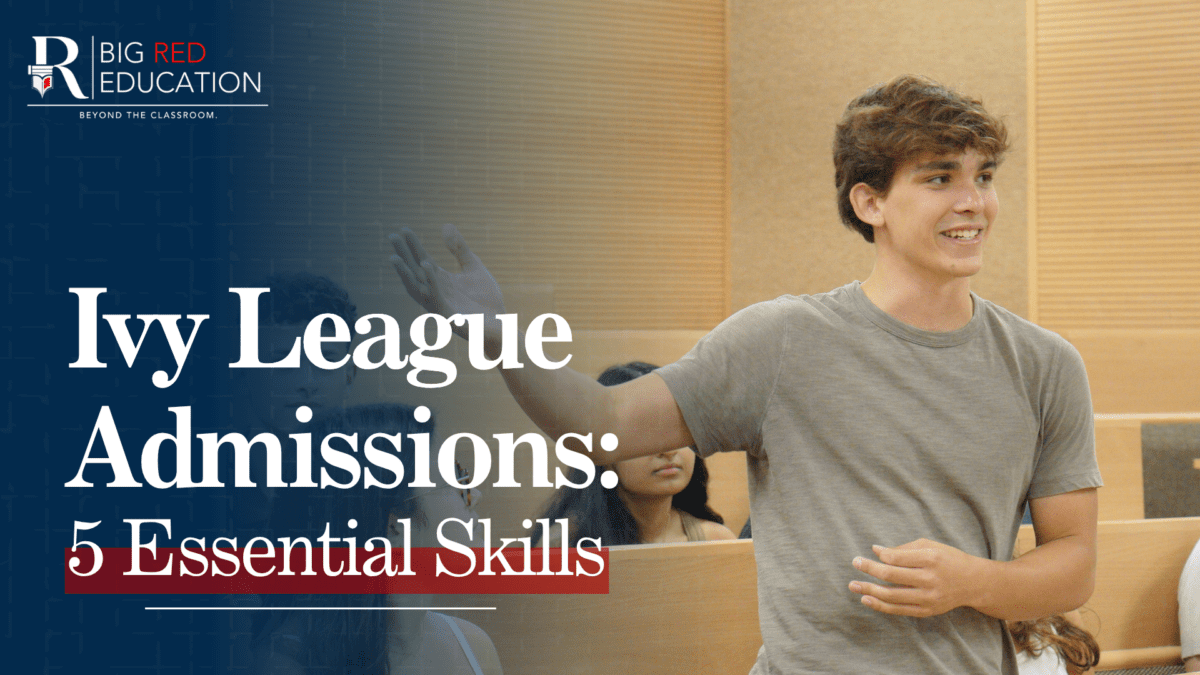
Many students assume Ivy League admissions depend primarily on grades and standardised test scores. While academic performance remains important, top universities evaluate applicants holistically looking for leadership, intellectual curiosity, communication skills, resilience, and meaningful impact beyond the classroom. A 98 percentile score won’t get you in alone. Neither will a trophy shelf. What Ivy League admissions officers are really searching for- and what most students never think to build- are the five skills below. The good news? Every single one can be developed, starting now.


THE MYTH WORTH BUSTING FIRST

Most students and most parents believe that the path to a top university runs straight through grades and test scores. It doesn’t. Ivy League acceptance rates hover below 5%. At that level, nearly every applicant has stellar academics. What separates the ones who get in isn’t the GPA it’s who they are beyond it.


01. Leadership – and not the title kind

Every application has a “Head Boy” or “Club President.” Admissions officers have seen thousands of them. What they’re actually hunting for is something harder to fake: evidence that a student influenced people, changed something, or moved a group toward a goal- with or without an official title.

The student who noticed a gap in their school and did something about it. The one who organised a tutoring initiative for younger students, led a sustainability project, coordinated a community fundraiser because it needed to be done, or worked with peers to develop solutions to real-world challenges through experiences such as the Leadership & Social Innovation Conference. Leadership, in the Ivy League sense, is about impact, not position. If your leadership story starts with “I was elected,” it might be worth finding a deeper one.

Ask yourself: Have I ever changed the way a group of people thought or acted? That moment – however small – is your leadership story.

 alone.


02. Intellectual curiosity that goes off-syllabus

Top universities aren’t just looking for students who ace exams- they’re looking for students who would stay curious if exams didn’t exist. The applicant who read a paper that wasn’t assigned. Who pursued an independent research project or passion project just because it fascinated them. Who asked “why does this work this way?” instead of “what do I need to memorise?”

This quality, genuine intellectual hunger- shows up in essays, interviews, and the specificity of a student’s interests. It often develops when students explore ideas beyond the classroom, whether through independent projects, research, or experiences that expose them to emerging fields. 

Students who engage with topics such as Generative AI, technology ethics, and future-focused innovation through programs like Command Z often find themselves asking deeper questions and developing interests that extend well beyond the syllabus.

The tell: Can you talk for five minutes about something you learned recently that has nothing to do with your coursework? If not, that’s the gap to close.


03. The ability to communicate – not just correctly, but compellingly

Every student who applies to an Ivy League school can write a grammatically correct essay. Very few can write one that a tired admissions officer reads to the end and remembers the next day. The same goes for interviews and presentations.

Communication at the level these schools expect is not about being articulate, it’s about being specific, honest and human. It’s about having a point of view and expressing it with conviction.

Students who have debated, written creatively, presented research or participated in public speaking programs and Model United Nations conferences such as Ivy League MUN Conference 2.0 carry a visible edge in the application process

The test: Read your personal statement out loud. If it sounds like anyone could have written it, rewrite it until it sounds unmistakably like you.


04. A genuine commitment to something beyond yourself

Admissions officers can spot a résumé-padding volunteer experience from a mile away: the one-week trip, the charity drive that conveniently started in Grade 11, the activity that perfectly mirrors what the student thought the school wanted to see. 

What they actually respond to is depth over breadth- a student who cared about something real, demonstrated sustained impact over time, and can speak about it with genuine conviction.It doesn’t have to be saving the world. It could be tutoring kids in your neighbourhood for three years. It could be running a community initiative that started small and grew. The through-line is authenticity: you did it because it mattered, not because it looked good.

Depth check: How long have you been doing your most meaningful extracurricular? If the answer is less than a year, it’s time to build something you’ll actually stick with.


05. Resilience- the capacity to fail and keep going

This is the one most students never think to demonstrate- and the one admissions officers often find most telling. University is hard. The students who thrive are the ones who’ve already learned, in some meaningful way, how to handle setbacks. Not the ones who’ve never failed, but the ones who’ve failed, sat with it, and figured out what to do next.

A student who can write honestly about a challenge, a loss, a mistake- and what it taught them shows a kind of maturity that a perfect transcript never can. Top schools want people who will contribute to their campus community for four years. That requires more than intelligence. It requires character.

Worth reflecting on: What’s the hardest thing you’ve faced in the last two years? How did you respond? That’s potentially your most powerful application story.


Final Conclusion:

The students who get into the world’s best universities aren’t superhuman. They’re not necessarily smarter than everyone else in the applicant pool. What they have almost without exception- is a clear sense of who they are, what they’ve built and why it matters. That clarity doesn’t come from cramming. It comes from years of doing things that matter, reflecting on them honestly and learning to talk about them with conviction. Start now, and September of your application year will look very different.


What Parents Should Know About Ivy League Admissions

Many parents focus heavily on grades and test scores, but top universities increasingly seek students who demonstrate initiative, leadership, curiosity and meaningful engagement outside the classroom. Understanding this shift early and actively creating opportunities for your child to build these qualities makes a measurable difference by the time applications are due.


The students who get into the world’s best universities aren’t superhuman. They’re not necessarily smarter than everyone else in the applicant pool. What they have almost without exception- is a clear sense of who they are, what they’ve built, and why it matters. That clarity doesn’t come from cramming. It comes from years of doing things that matter, reflecting on them honestly and learning to talk about them with conviction. Start now, and September of your application year will look very different.


Editor's Pick

blog Entrepreneurship Higher Education Internship Leadership MUN Productivity Research Uncategorized | 5min Read

Why Debate Is Your Ultimate College & Career Cheat Code.

Published on June 3, 2026

FacebookTwitterWhatsApp
Categories
blog Entrepreneurship Higher Education Internship Leadership MUN Productivity Research Uncategorized

Why Debate Is Your Ultimate College & Career Cheat Code.

Why Debate Is Your Ultimate College & Career Cheat Code.

This article highlights the key reasons why participating in debate can significantly boost your academic journey and career prospects. It explores how debate programs enhance public speaking skills, critical thinking skills, and networking opportunities, all of which are valuable assets in the academic and professional world.

At Big Red Education, we have worked with students participating in international debate and MUN programs, helping them develop communication skills, leadership, and analytical skills that support both academic and personal growth. By addressing the most common questions regarding the benefits of debate for students, this post breaks down the cognitive, structural, and practical values that make finding your voice at the podium a major advantage.

Does Debate Look Good for College Applications? 

Admissions officers are flooded with identical transcripts and test scores. When evaluating extracurricular activities for college applications, universities look for a track record of critical engagement. Committing to a student debate program proves you have the intellectual stamina to handle the rigors of higher education, making debate for college admissions an incredibly powerful tool.

The Academic Proof: According to data from the National Speech & Debate Association (NSDA), the academic benefits are measurable: students who participate in debate are 17% more likely to graduate high school and 29% more likely to enroll in tertiary education.

Beyond Rote Memorization: Whether you are navigating competitive university cutoffs or drafting complex academic papers on state policy and fundamental rights, debate proves you can research deeply and articulate complex ideas under immense pressure. If you are wondering, does debate look good for college? the answer is a resounding yes.

The 3 M’s of Debate: Matter, Manner, and Method

To take a room by storm in any debate competition, you need to master the three core pillars of argumentation. Honing these debating skills will set you apart:

  1. Matter (The Content): This is the logic, evidence, and substance behind your claims. It is about taking daily observations—like the sociology of household dynamics or political science theories—and transforming them into air-tight, structured arguments.
  2. Manner (The Delivery): How you say something matters just as much as what you say. This encompasses your vocal modulation, eye contact, and the sheer, unshakeable confidence you project.
  3. Method (The Structure): This is the strategic flow and organization of your speech. Good debaters act as academic mentors for their audience, signposting their points so seamlessly that anyone can follow their train of thought.

“Debate isn’t just about winning an argument; it is about learning to view the world through multiple lenses and articulating your stance with absolute conviction.”

How Debate Improves Public Speaking Skills.

One of the most immediate benefits of joining a student debate program is the mastery of Public Speaking. While many students fear the podium, debate transforms that anxiety into confidence in public speaking.

Thinking on Your Feet: In a live debate, you cannot rely on a pre-written script. You must actively listen, process opposing arguments, and deliver sharp rebuttals on the spot. This ability to think quickly is essential for handling questions during presentations or defending a thesis.

Interview Preparation and Success: The communication skills built through debate translate directly into real-world success. When you learn to speak confidently and structure your thoughts under pressure, college interview success becomes much more attainable. Admissions officers and future employers alike value candidates who exhibit strong presentation skills and the ability to articulate their value clearly.

Does Debate Improve Intelligence and Critical Thinking?

Measurable Cognitive Growth: The cognitive agility you build through debate is scientifically proven. According to a study published in the Journal of Educational Psychology, researchers found significant improvements in critical thinking skills and analytical thinking among students who regularly participated in structured debate activities.

Accelerated Learning: Academic research further reveals that debate participants improve their reading scores by the equivalent of roughly two-thirds of a year of learning. This makes debate one of the most powerful educational tools available for developing advanced problem-solving skills.

Enhancing Emotional Intelligence: By constantly anticipating counter-arguments and being forced to understand opposing perspectives, debaters develop a profound sense of empathy alongside their analytical prowess.

Why is debate important for students?

Developing a Robust Worldview: Debate forces you to step outside your comfortable echo chamber. You learn to dissect societal issues and complex concepts from viewpoints you might not naturally agree with, a core component of student enrichment programs.

Scientifically Proven Teamwork: Research highlighted by frameworks like Harvard Project Zero emphasizes how collaborative learning environments build deep understanding. Working in teams on debate topics dramatically enhances students’ collaboration skills and their ability to genuinely understand diverse viewpoints.

Fostering Unshakeable Confidence: When you learn to hold your ground in a rapid-fire rebuttal, pitching a creative vision board to your peers or presenting a project to a room full of people becomes effortless second nature. These are the foundations of true leadership development.

Take Your Debate Skills Global Through ILMUNC India –

If debate has taught you to think critically, communicate persuasively, and defend ideas with confidence, the next step is applying those skills in real-world global discussions.

Join the Ivy League Model United Nations Conference (ILMUNC) India!

Brought to you by Big Red Education and organized by UPenn’s premier high school MUN conference resources, ILMUNC India 2.0 offers students the opportunity to move beyond classroom debates and engage in international diplomacy simulations led by mentors from top universities.

This isn’t just a mock debate—it is an immersive simulation where you will tackle the world’s most pressing challenges and collaborate with future leaders from across the globe. Whether you are looking to enhance your college admissions consulting profile, join elite summer programs, or participate in a world-class MUN conference, ILMUNC India is the ultimate platform.

You will connect with top-tier mentors, engage in intense multilateral negotiations, and walk away with real-world diplomacy skills, collaboration, and leadership traits that don’t just look good on a report card, but actually work in the real world. No memorization marathons here; you are in the driver’s seat.

Apply for ILMUNC 2026 Here

Editor's Pick