blog Productivity Trending | 5min Read

7 Ways to Make Your Summer Actually Count

Published on June 3, 2026

FacebookTwitterWhatsApp
Categories
blog Productivity Trending

7 Ways to Make Your Summer Actually Count

7 Ways to Make Your Summer Actually Count

It’s June. You have roughly 10 weeks before school starts again. Here’s the uncomfortable truth: most students waste them- not because they’re lazy, but because they never decide what they want from summer in the first place. Whether you’re looking for productive summer activities, structured summer learning opportunities, or simply a way to return to school more confident and capable, these 7 strategies will change how you approach the next 10 weeks.


01

Build one real skill- not ten half-finished ones

Every summer, students download Duolingo, sign up for a coding course, buy a guitar, and abandon all three by July 15th. The problem isn’t motivation- it’s breadth. Pick one skill you genuinely want, commit to 30 minutes a day, and watch what happens in 60 days. Whether it’s Python, public speaking, graphic design, or a second language, one skill done properly is worth ten things half-started. Colleges and employers remember specifics, not “I tried stuff.”

Quick start: Write down 3 skills you’ve been curious about. Cross out 2. Spend the summer on the one that’s left.


02

Start a project that solves something real

The best thing about summer is that no one’s grading you- which means you can actually make things instead of just studying them. Pick a problem in your world and build something around it: a small app, a short film, a research paper on a topic you care about, a social media page for a cause, a handmade product you sell to friends and family. It doesn’t have to be big. It has to be yours. Projects show initiative in a way that grades simply can’t-  and when interview or application season comes, “I built this” is one of the most powerful things a student can say.

Need a starting point?
Ask yourself: what’s something that annoys me, confuses me, or could be better in my school or neighbourhood? That irritation is usually a project idea in disguise.


03

Join a summer program that gives your summer actual structure

Self-discipline is hard to manufacture out of thin air – especially when every other signal in your environment says “relax.” That’s exactly why structured summer programs work so well for students who want to grow but struggle to stay consistent on their own. A good summer enrichment program gives you a schedule, peers who push you, and mentors who hold you accountable. 

Research from the Harvard Graduate School of Education consistently shows that students in structured summer programs retain more learning, perform stronger academically in the following school year, and report higher confidence going into new grades. 

Big Red Education runs some of the most hands-on student leadership programs available right now- here are three worth knowing about:

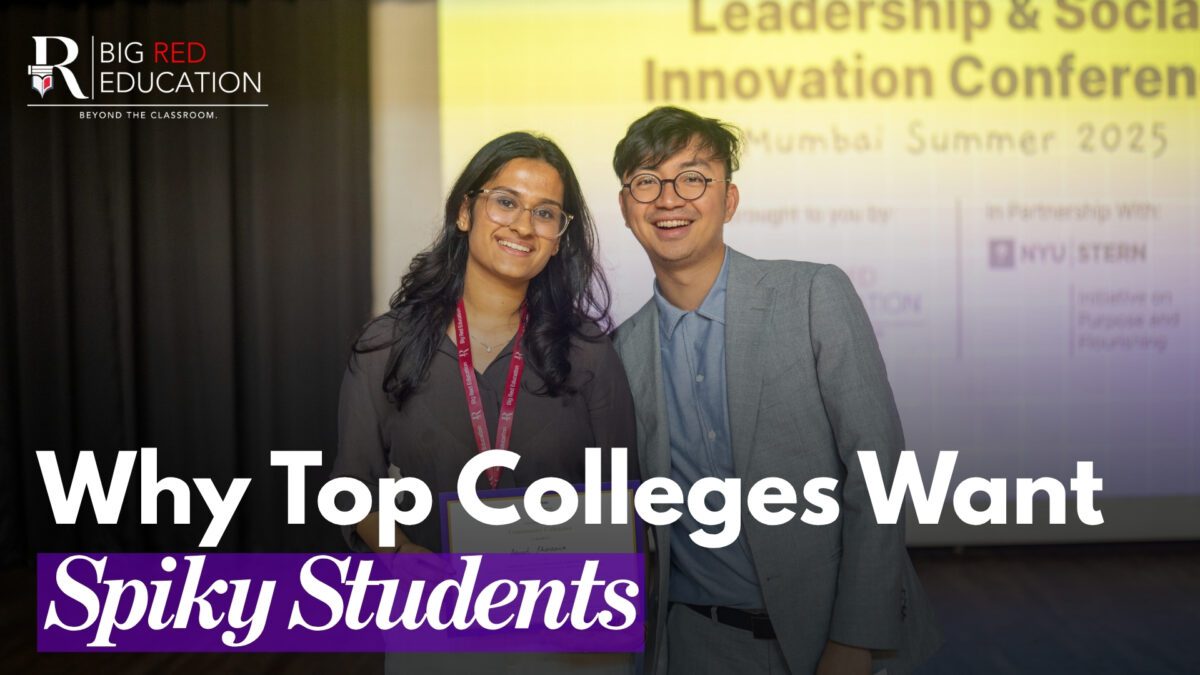
Leadership & Social Innovation Conference

In Partnership with NYU Stern’s Initiative on Purpose and Flourishing

A 5-day in-person conference where students develop leadership, design thinking, and social innovation skills aligned with the UN SDGs. Students develop:

  • Design thinking and social innovation skills
  • Strengths-based and adaptive leadership
  • Rapid prototyping and problem-solving
  • Pitching real solutions to an expert panel

Mentored by Dustin Liu, Senior Associate Director at NYU Stern’s Initiative on Purpose and Flourishing, who has taught design thinking at Stanford and worked with Cornell, Harvard, MIT, and the University of Chicago.

Ivy League MUN Conference 2.0

An immersive Model United Nations summer conference organised by University of Pennsylvania students designed to sharpen research, debate, diplomacy, and public speaking skills giving students a taste of high-stakes global problem-solving before they ever step into a university. Students develop:

  • Diplomacy and negotiation abilities
  • Public speaking and argumentation
  • Research and analytical thinking
  • Resilience under pressure

Command Z: Future Tech Lab

An intensive summer learning opportunity that introduces students to Generative AI through real hands-on projects mentored by Dr Blaine Fisher, a professor of information technology, emergency management & GIS at Tulane University. Students gain:

  • AI literacy and prompt engineering skills
  • Ethical technology awareness
  • The ability to build real projects using tools that are reshaping every industry
  • Original thinking, not just technical know-how


04

Read Beyond the Classroom to Build Knowledge and Critical Thinking

Not textbooks. Not revision guides. Pick up a non-fiction book about something you actually find fascinating, the psychology of decision-making, the history of the internet, how cities are built, how pandemics spread. Throw in a novel you’ve been meaning to read. Reading outside your curriculum does something school can’t easily replicate: it builds the kind of broad, connected knowledge that makes you interesting to talk to, sharper in arguments, and better at writing. Even 20 pages a day is 4-5 books by September.

Reading hack: Tell someone else what you read. Explaining a book out loud forces you to actually understand it, and it sticks far longer.


05

Build a physical routine before you need one

Summers without structure quietly destroy sleep schedules, eating habits, and energy levels- and then students arrive at September already running on empty. The fix is simple but non-negotiable: establish one physical habit and protect it. Run three times a week. Swim. Play a sport. Do yoga. It doesn’t have to be intense; it has to be consistent. A body that moves regularly sleeps better, thinks more clearly, and handles stress more effectively. Academic performance is not just a brain problem- it’s a whole-body problem.


06

Sit with boredom – Unstructured Time Actually Boosts Creativity

This one sounds counterintuitive. We live in an era of zero-tolerance for boredom, there’s always a scroll, a stream, a notification.But research from the American Psychological Association is clear: unstructured, screen-free time is where original thinking happens. The shower thoughts, the random ideas, the “what if I tried this” moments, they don’t come when your brain is constantly stimulated. Build at least a few hours a week with no agenda. Walk without podcasts. Sit without your phone. Let your mind wander. You might be surprised what it comes up with.


07

Write down what you want September to look like

Most students start the school year in reactive mode – responding to deadlines, assignments, and social pressures as they arrive. The ones who feel most in control? They spent some time before term deciding what they wanted. Not a rigid 5-year plan – just a clear sense of 2 or 3 things they want to do differently, achieve, or prioritize. According to research from Stanford’s Life Design Lab, students who set intentions before term are measurably more focused and less overwhelmed once the year gets busy.

Try this: Write “By the end of this school year, I want to have ___.” Fill it in three different ways. That’s your compass for the next 10 months.


A Note for Parents

Summer isn’t about filling every hour. The most impactful summers balance skill-building, exploration, and genuine rest. Encouraging students to pursue structured opportunities like a summer leadership program or entrepreneurship bootcamp alongside independent projects and downtime helps them return to school more confident, motivated, and ready to perform. The goal isn’t a packed schedule; it’s an intentional one.


Final Thoughts

The students who benefit most from summer aren’t necessarily the busiest they’re the most intentional. Whether you choose to develop a skill, launch a project, join a summer enrichment program, or simply read more widely, the goal is the same: start September with more confidence, knowledge, and direction than you had in June.

If you’re looking for a structured way to challenge yourself this summer, explore Big Red Education’s programs designed to help students build leadership, innovation, and real-world skills.


Editor's Pick

blog Entrepreneurship Higher Education Internship Leadership MUN Productivity Research Uncategorized | 5min Read

Why Debate Is Your Ultimate College & Career Cheat Code.

Published on

FacebookTwitterWhatsApp
Categories
blog Entrepreneurship Higher Education Internship Leadership MUN Productivity Research Uncategorized

Why Debate Is Your Ultimate College & Career Cheat Code.

Why Debate Is Your Ultimate College & Career Cheat Code.

This article highlights the key reasons why participating in debate can significantly boost your academic journey and career prospects. It explores how debate programs enhance public speaking skills, critical thinking skills, and networking opportunities, all of which are valuable assets in the academic and professional world.

At Big Red Education, we have worked with students participating in international debate and MUN programs, helping them develop communication skills, leadership, and analytical skills that support both academic and personal growth. By addressing the most common questions regarding the benefits of debate for students, this post breaks down the cognitive, structural, and practical values that make finding your voice at the podium a major advantage.

Does Debate Look Good for College Applications? 

Admissions officers are flooded with identical transcripts and test scores. When evaluating extracurricular activities for college applications, universities look for a track record of critical engagement. Committing to a student debate program proves you have the intellectual stamina to handle the rigors of higher education, making debate for college admissions an incredibly powerful tool.

The Academic Proof: According to data from the National Speech & Debate Association (NSDA), the academic benefits are measurable: students who participate in debate are 17% more likely to graduate high school and 29% more likely to enroll in tertiary education.

Beyond Rote Memorization: Whether you are navigating competitive university cutoffs or drafting complex academic papers on state policy and fundamental rights, debate proves you can research deeply and articulate complex ideas under immense pressure. If you are wondering, does debate look good for college? the answer is a resounding yes.

The 3 M’s of Debate: Matter, Manner, and Method

To take a room by storm in any debate competition, you need to master the three core pillars of argumentation. Honing these debating skills will set you apart:

  1. Matter (The Content): This is the logic, evidence, and substance behind your claims. It is about taking daily observations—like the sociology of household dynamics or political science theories—and transforming them into air-tight, structured arguments.
  2. Manner (The Delivery): How you say something matters just as much as what you say. This encompasses your vocal modulation, eye contact, and the sheer, unshakeable confidence you project.
  3. Method (The Structure): This is the strategic flow and organization of your speech. Good debaters act as academic mentors for their audience, signposting their points so seamlessly that anyone can follow their train of thought.

“Debate isn’t just about winning an argument; it is about learning to view the world through multiple lenses and articulating your stance with absolute conviction.”

How Debate Improves Public Speaking Skills.

One of the most immediate benefits of joining a student debate program is the mastery of Public Speaking. While many students fear the podium, debate transforms that anxiety into confidence in public speaking.

Thinking on Your Feet: In a live debate, you cannot rely on a pre-written script. You must actively listen, process opposing arguments, and deliver sharp rebuttals on the spot. This ability to think quickly is essential for handling questions during presentations or defending a thesis.

Interview Preparation and Success: The communication skills built through debate translate directly into real-world success. When you learn to speak confidently and structure your thoughts under pressure, college interview success becomes much more attainable. Admissions officers and future employers alike value candidates who exhibit strong presentation skills and the ability to articulate their value clearly.

Does Debate Improve Intelligence and Critical Thinking?

Measurable Cognitive Growth: The cognitive agility you build through debate is scientifically proven. According to a study published in the Journal of Educational Psychology, researchers found significant improvements in critical thinking skills and analytical thinking among students who regularly participated in structured debate activities.

Accelerated Learning: Academic research further reveals that debate participants improve their reading scores by the equivalent of roughly two-thirds of a year of learning. This makes debate one of the most powerful educational tools available for developing advanced problem-solving skills.

Enhancing Emotional Intelligence: By constantly anticipating counter-arguments and being forced to understand opposing perspectives, debaters develop a profound sense of empathy alongside their analytical prowess.

Why is debate important for students?

Developing a Robust Worldview: Debate forces you to step outside your comfortable echo chamber. You learn to dissect societal issues and complex concepts from viewpoints you might not naturally agree with, a core component of student enrichment programs.

Scientifically Proven Teamwork: Research highlighted by frameworks like Harvard Project Zero emphasizes how collaborative learning environments build deep understanding. Working in teams on debate topics dramatically enhances students’ collaboration skills and their ability to genuinely understand diverse viewpoints.

Fostering Unshakeable Confidence: When you learn to hold your ground in a rapid-fire rebuttal, pitching a creative vision board to your peers or presenting a project to a room full of people becomes effortless second nature. These are the foundations of true leadership development.

Take Your Debate Skills Global Through ILMUNC India –

If debate has taught you to think critically, communicate persuasively, and defend ideas with confidence, the next step is applying those skills in real-world global discussions.

Join the Ivy League Model United Nations Conference (ILMUNC) India!

Brought to you by Big Red Education and organized by UPenn’s premier high school MUN conference resources, ILMUNC India 2.0 offers students the opportunity to move beyond classroom debates and engage in international diplomacy simulations led by mentors from top universities.

This isn’t just a mock debate—it is an immersive simulation where you will tackle the world’s most pressing challenges and collaborate with future leaders from across the globe. Whether you are looking to enhance your college admissions consulting profile, join elite summer programs, or participate in a world-class MUN conference, ILMUNC India is the ultimate platform.

You will connect with top-tier mentors, engage in intense multilateral negotiations, and walk away with real-world diplomacy skills, collaboration, and leadership traits that don’t just look good on a report card, but actually work in the real world. No memorization marathons here; you are in the driver’s seat.

Apply for ILMUNC 2026 Here

Editor's Pick

blog Entrepreneurship | 3min Read

Entrepreneurship and Leadership for Students (Grades 8–12): Building Future-Ready Skills

Published on May 4, 2026

FacebookTwitterWhatsApp
Categories
blog Entrepreneurship

Entrepreneurship and Leadership for Students (Grades 8–12): Building Future-Ready Skills

Entrepreneurship and Leadership for Students (Grades 8–12): Building Future-Ready Skills

In an increasingly complex and competitive global landscape, academic achievement alone is no longer sufficient to ensure long-term success. Universities and employers are placing growing emphasis on skills such as critical thinking, initiative, adaptability, and collaboration. For students in grades 8–12, developing an entrepreneurial mindset alongside strong leadership capabilities is one of the most effective ways to build these competencies early.

This article explores the importance of entrepreneurship and leadership education at the school level, and how students can begin cultivating these essential skills.


Understanding Entrepreneurship in a Student Context

Entrepreneurship is often misunderstood as the process of starting a business. While venture creation is one possible outcome, entrepreneurship fundamentally refers to the ability to identify opportunities, solve problems creatively, and take initiative.

For school students, entrepreneurship can take many forms:

  • Launching a small-scale business or digital project
  • Initiating a school club or community campaign
  • Developing creative content such as blogs, podcasts, or applications
  • Identifying inefficiencies in their environment and proposing solutions

At its core, entrepreneurship fosters innovation, resilience, and ownership, enabling students to move from passive learning to active problem-solving.


Defining Leadership for Young Learners

Leadership is not confined to formal roles or titles. Rather, it is the capacity to influence, guide, and inspire others toward a shared goal. In a school setting, leadership is demonstrated through consistent actions and behaviors.

Key characteristics of effective student leaders include:

  • Proactive decision-making
  • Clear and confident communication
  • Accountability and integrity
  • The ability to collaborate and motivate peers

Leadership opportunities arise in diverse contexts, including academic group work, extracurricular activities, sports teams, and student-led initiatives.


Why Early Development Matters

1. Confidence and Self-Efficacy

Engaging in entrepreneurial and leadership activities helps students build confidence through real-world experiences. By taking initiative and managing responsibilities, students develop a strong sense of self-belief.

2. Acquisition of Transferable Skills

Students gain practical, transferable skills such as:

  • Problem-solving and analytical thinking
  • Effective communication
  • Financial and organizational literacy
  • Team collaboration and conflict resolution

These competencies are critical for both higher education and professional environments.

3. Enhanced University Applications

Leading global universities seek students who demonstrate initiative, impact, and intellectual curiosity. Participation in entrepreneurial ventures or leadership roles signals a student’s ability to contribute meaningfully beyond academics.

4. Preparation for Future Careers

As industries evolve, adaptability and innovation are becoming increasingly valuable. Early exposure to entrepreneurship and leadership prepares students to navigate uncertainty and seize emerging opportunities.


Practical Ways to Get Started

Students do not need significant resources or prior experience to begin developing these skills. The following approaches provide accessible entry points:

• Initiate a Project

Students can start by creating a small-scale initiative, such as a digital platform, a school-based club, or a community service project.

• Engage in School Activities

Taking on responsibilities in events, competitions, or student organizations provides hands-on leadership experience.

• Apply Learning in Real Contexts

While theoretical knowledge is important, applying concepts through practical experiences accelerates learning and builds competence.

• Collaborate with Peers

Team-based initiatives help students develop interpersonal skills and understand the dynamics of working toward shared objectives.

• Embrace Challenges and Setbacks

Failure is an inherent part of growth. Learning to adapt, reflect, and improve is central to both entrepreneurship and leadership.


The Long-Term Impact

Entrepreneurship and leadership are not isolated skills; they represent a broader mindset that shapes how individuals approach challenges and opportunities. Students who cultivate this mindset early are more likely to become proactive, solution-oriented individuals who contribute meaningfully to society.

Rather than following predetermined paths, these students are equipped to create their own, whether in business, academia, or public service.


Conclusion

For students in grades 8–12, the development of entrepreneurial thinking and leadership ability is not an optional enhancement. It is a strategic investment in their future. By starting early, students gain a competitive advantage, develop essential life skills, and position themselves for success in an ever-evolving world.

The most effective time to begin is now.

Editor's Pick

blog | 3min Read

Crack the Ivy code: Expert tips to prepare for Ivy League admissions

Published on January 21, 2025

FacebookTwitterWhatsApp
Categories
blog

Crack the Ivy code: Expert tips to prepare for Ivy League admissions

Preparing for Ivy League admissions is no small feat, but expert guidance can make all the difference. Rishi Jalan, Founder of Big Red Education and a proud Cornell University graduate, brings a wealth of experience to the table. With a double major in Economics and Government. With acceptance rates often in the single digits, standing out in a pool of exceptional candidates requires more than just stellar grades and test scores. It demands a well-rounded application that highlights academic achievements, extracurricular passions, leadership skills, and a unique personal story. Whether you’re a high school student or a parent guiding your child, these expert tips will help you pave the way to Ivy League success.

Academic excellence and standardized tests.

A strong academic profile is built by excelling in challenging courses such as Advanced Placement (AP) or International Baccalaureate (IB), while maintaining a high GPA. For example, a student who takes AP Calculus and scores a 5 on the exam, while also excelling in other advanced subjects, demonstrates both academic rigor and subject mastery. While Ivy League schools like Harvard and Princeton have gone test-optional, a student with a 1550+ SAT score, in addition to academic achievements, can stand out and provide more data points for admissions. However, the focus should be on a holistic profile-test scores are just one piece.

Extracurricular activities.

Consider a student who, beyond joining the debate team, becomes its captain, mentors younger students, and organizes regional debate tournaments. This kind of leadership, coupled with personal growth, resonates with Ivy League admissions. For example, a student who founded a non-profit to provide tutoring for underprivileged students shows initiative, social responsibility, and leadership. The admissions committee values students who make a meaningful impact-starting a tutoring program that helps increase graduation rates at a local high school, for instance, would demonstrate a commitment to service, leadership, and problem-solving.

Essays and personal statements.

A standout personal essay might center on a life-changing experience, such as overcoming a serious health challenge or immigrating to the U.S. A student could reflect on how this experience shaped their worldview, highlighting their resilience and growth. For example, a student who struggled with dyslexia but ultimately developed a passion for literature by learning to read fluently might write about how that journey sparked their desire to help others with learning disabilities. The key is to use specific anecdotes that illustrate personal development, rather than simply stating achievements or ambitions.

Letters of recommendation.

A letter from a teacher who witnessed a student’s transformation could make a significant difference. For example, a high school math teacher who saw a quiet student grow into a confident leader after spearheading a successful STEM outreach project would provide detailed insight into that student’s intellectual curiosity and leadership. Similarly, a mentor who guided a student through an internship at a local hospital might discuss how the student not only demonstrated medical knowledge but also compassion for patients. These letters should go beyond generic praise and include examples that highlight the student’s specific contributions and personal strengths.

Researching the right fit.

A student applying to Yale might emphasize their passion for environmental policy, mentioning how they were inspired by Yale’s robust focus on sustainability and the Yale School of the Environment’s innovative research. They might reference specific professors whose work aligns with their interests or discuss the Yale Sustainability Program, noting how it will help them achieve their career goals. For example, a student applying to Columbia might express admiration for its core curriculum and how it complements their interest in global history. Demonstrating a clear connection between a school’s offerings and the student’s goals is critical in standing out.

Handling challenges and setbacks.

If a student experienced a drop in grades due to a family crisis, they could address this in their application, explaining the situation briefly but focusing on how they bounced back. For instance, if a student’s GPA dipped during a challenging time but they later improved it through consistent effort in subsequent semesters, they can discuss the personal growth they experienced. A student who faced the setback of a failed science project but used the feedback to develop a better project the following year, ultimately winning an award, could highlight this as an example of resilience and self-improvement. It’s important to show how setbacks were turning points for growth rather than just obstacles.

Editor's Pick

blog | 4min Read

Introduction to Passion Projects: A Four-Step Guide

Published on April 11, 2024

FacebookTwitterWhatsApp
Categories
blog

Introduction to Passion Projects: A Four-Step Guide

College Admissions are competitive. The Ivy League is even moreeee competitive!

Question is,

How do you stand out?

Grades?
Captaining the debate team?
Playing football?

Trust me there will be thousands of people who will be doing these things and more. Just think how many schools exist in the world and probably each school will have a debate team and each debate team will have its captain and that gives you a couple of million debate team captains. Whew!

That is a lot.

I have another idea.

Something that is interesting and will definitely help you stand out.

Passion Projects!

NOTE!

Passion projects are not just hobbies. Rather, it needs to be strategically chosen and should be focused.

Your passion project should reflect:

1. Your Skills
2. Your Ambitions
3. Your Unique Interests

Today, in 4 steps, I will be telling you the best way to develop a meaningful and impactful passion project.

Key word: IMPACT!

Step 1: Strategise

Strategise

This is the first and probably the most crucial.

It might feel tedious but trust me you will save yourself years if you do this step properly.

Take a breath, eat a sandwich, eat two and think about what you want to show. About yourself that is (duh).

A lot of people jump straight in.

They get up in the morning and even before they brush, they think: oh yeah let me create a passion project on, I don’t know, stamps.

Funny thing is: They might not have ever seen a stamp!

Point is, you need to carefully think about the project and ask why?

Ask yourself. Why? Why? Why and one more time, Why?

Pro Tip: Think about your academic interest. Think what you are interested in personally. And use what I (and a lot of other people) call: SPV (Strength, Personality, Values).

This will help you:

A. Alight project to your overall profile, so that it makes sense.
B. Make sure it complements your goals (academic and personal).

Tldr; it needs to have a well throughout theme which makes sense in relation to YOU!

Step 2: Brainstorm

Okay, now your strategy is done.

Move on to brainstorming.

Creativity, creativity, creativity.

What are you passionate about?

How can you turn that into a project that will showcase your skills, interests and ambitions?

1. Media / Creative: Start a blog, youtube channel or podcast.

2. Research: You can start off by interning with a professor. Learn everything about research and then you can start working on your project.

3. Service Based Project: Create a community project or a startup.

How does this help?

This shows leadership, initiative and a commitment to making a positive impact in your community.

Step 3: Execute

Execute

Now, it’s all about bringing your idea to life.

This is all practical:

Building a website
Starting a social media campaign.

Reaching out to potential mentors or collaborators

Put your plan into action!

Remember: Starting is just the first step

Maintaining momentum is key.

Regular updates, continuous engagement and steady growth.

These are key to transforming a simple project into a compelling story.

This is the story that will convince your college admission officer.

Step 4: Scale

Scale

Now that you are executing, next step is to scale.

Scaling is not only just making it bigger but it is also about impact.

Partner with other organisations.

Expand your project’s reach.

Find Innovative ways to increase its influence.

Scaling is also about going deeper. It’s also about refining your idea. Hone your skills and the most important aspect: solidifying your project’s place within your personal and academic narrative.

You can consider seeking external validation here. Testimonials, media mentions and awards!

This helps to make the project even more real. Think of it as an external audit. 

Again, why should you do passion projects?
Passion projects are powerful.

In filmmaking there is a saying, show don’t tell.

Passion projects help you show your interests, skills and commitment to personal growth.

By following this framework, you can create a project that not only boosts your college applications but also provides a fulfilling and rich personal experience.

Key thing to remember:

The best passion projects are those that groove well with your personal interests and goals.

They should be something you are genuinely interested about.
It should be something you are committed to.

Your passion project should not feel as if it has been developed to get to your dream college. Your objective should be to learn and everything else will fall into place.

Stay focused, stay patient and remain passionate.
Trust me, the process will truly change you.

Good Luck and see you next time!

Best,
Aanya Janan

Editor's Pick