
blog Communication Entrepreneurship Higher Education Innovation Leadership MUN Research summer Trending | 4min Read
Published on June 12, 2026


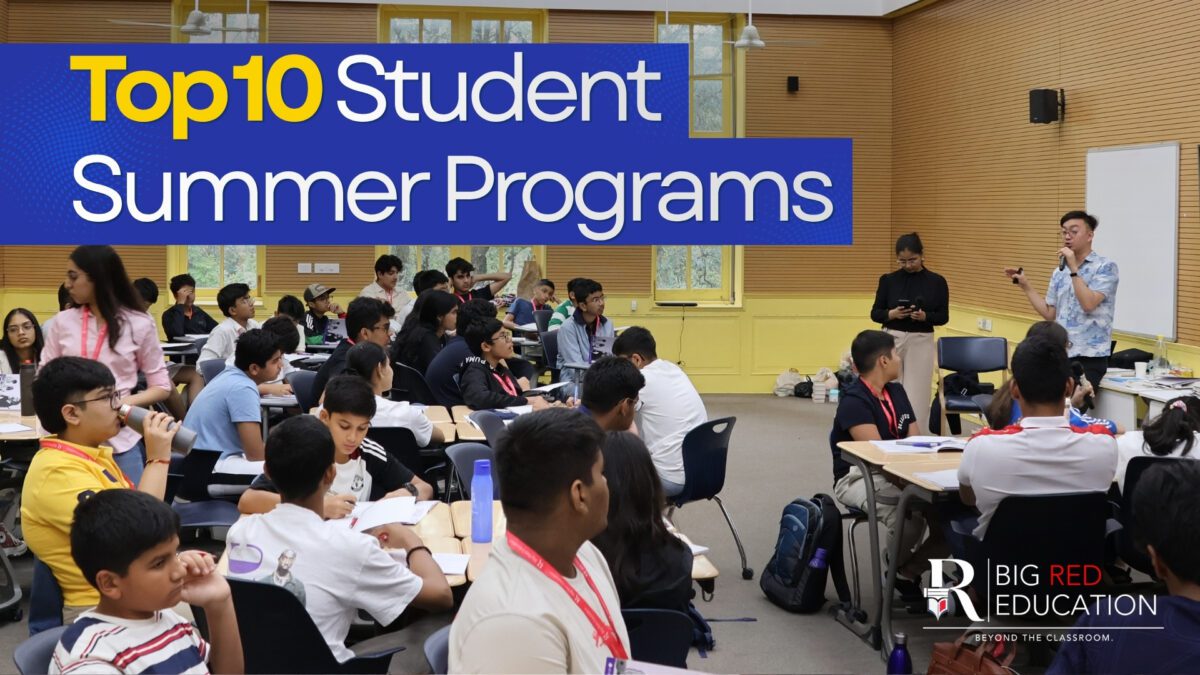
Top 10 Summer Programs for High School Students in 2026
For ambitious high school students, summer break is one of the best opportunities to explore future careers, develop leadership skills, gain college-level experience, and strengthen university applications.
You have about 10 weeks of summer break. You can spend them scrolling, or you can spend them building a tech startup, programming AI, or negotiating global policy on an Ivy League campus.
Today, admissions officers are no longer just looking at your GPA—they want to see what you do when no one is forcing you to study. The best summer programs do more than just keep you busy; they push you out of your comfort zone, expand your worldview, and give you an undeniable edge in competitive college admissions.
If you are looking for impactful extracurricular activities for college applications, skip the generic camps. Here are the top 10 international and regional summer school programs you should enroll in to actually build real-world skills—categorized by the path you want to take.
How We Selected These Programs
Programs were evaluated based on:
- Academic rigor
- Leadership development opportunities
- Hands-on learning experiences
- Access to expert mentors
- Global networking opportunities
- Relevance for college applications
Why Summer Programs Matter for College Admissions
According to trends noted by the National Association for College Admission Counseling (NACAC), a student’s commitment to intellectual and personal growth outside the traditional classroom is a major differentiating factor. A well-chosen summer program proves that you possess intellectual curiosity, leadership skills, and the discipline to handle rigorous environments.
Academic Exploration
Students can explore majors before university, confirming their interest in a field or discovering a new passion without the pressure of full-time tuition.
Leadership Development
Students develop leadership outside school environments, learning how to manage teams, handle adversity, and guide projects to success.
Networking
Students connect with peers worldwide, building an international network that will serve them well in college and their future careers.
Portfolio Building
Students create projects that strengthen applications, moving from theoretical knowledge to real-world impact that admissions officers can clearly see.
How Parents Can Evaluate Summer Programs
Look for:
- Faculty quality
- Program outcomes
- Student-to-mentor ratio
- Project-based learning
- Alumni success stories
The Top 10 Summer Programs to Enroll in This Year
International University Programs
- 1. Yale Young Global Scholars (YYGS) (Yale University)
- The Focus: Literature, philosophy, culture, and STEM tracks.
- The Edge: It offers an authentic taste of Ivy League seminar-style learning and unparalleled international networking.
- 2. Stanford Summer Humanities Institute (Stanford University)
- The Focus: Advanced humanities research and analytical writing.
- The Edge: Ideal preparation for drafting complex academic research papers, helping students stand out in their university applications.
- 3. Harvard Pre-College Program (Harvard University)
- The Focus: Higher education exposure across hundreds of course options from astrophysics to constitutional law.
- The Edge: It provides a true “test drive” of university life, teaching students how to balance independent schedules and complex coursework.
- 4. Wharton Global Youth Program (Wharton School of the University of Pennsylvania)
- The Focus: Business economics, financial literacy, and corporate strategy.
- The Edge: Students attend college-level lectures by Wharton faculty and collaborate on intensive business simulation projects.
Entrepreneurship Programs
- 5. LaunchX Summer Program (Independent)
- The Focus: Market research, rapid prototyping, and co-founder collaboration.
- The Edge: Students are placed into co-founding teams and are challenged to start a real, revenue-generating company by the end of the summer.
- 6. Social Startup Bootcamp: From Influence to Impact (Big Red Education)
- The Focus: Social entrepreneurship, business design, and impact metrics.
- The Edge: You learn directly from leading voices in business and social impact, transforming personal conviction or daily observations into a structured, sustainable venture.
Leadership & Diplomacy Programs
- 7. Leadership & Social Innovation Conference (Big Red Education)
- The Focus: Systems thinking, ethical leadership, and the UN Sustainable Development Goals (SDGs).
- The Edge: Students collaborate to build comprehensive problem-solution models and pitch directly to a panel of expert judges.
- 8. Ivy League Model United Nations Conference (ILMUNC) India (Big Red Education )
- The Focus: Geopolitical strategy, multilateral negotiations, and persuasive writing.
- The Edge: Rather than classroom debate, you step into the shoes of global diplomats to tackle real-world crises alongside mentors from top-tier universities.
Innovation & Technology Programs
- 9. Command Z: Future Tech Lab (Big Red Education)
- The Focus: AI literacy, creative tech application, and building real-world AI-powered platforms.
- The Edge: Students step out of rote memorization and work alongside international experts to design a portfolio-ready tech solution.
- 10. Innovate NOW (Big Red Education)
- The Focus: Design thinking frameworks, agile methodologies, and creative problem-solving.
- The Edge: Students tackle live corporate and social case studies, learning how to pitch, pivot, and prototype ideas under tight deadlines.
Beyond the Certificate: What You Actually Gain From These Programs
It is incredibly easy to sign up for a generic summer camp that hands you a certificate of participation just for showing up. Top-tier universities see right through that. The 10 programs listed above are fundamentally different because they are outcome-driven. Here is why you should prioritize them:
- Real-World Artifacts: You do not just leave with memories; you leave with a tangible asset for your portfolio. Whether it is a functioning AI tool from Command Z, a pitch deck from LaunchX, or a viable impact strategy from the Social Startup Bootcamp, you walk away with proof of your capabilities.
- High-Stakes Environments: Programs like ILMUNC India and InnovateNOW force you to think on your feet, handle difficult questions, and negotiate under pressure. This builds the kind of grit and cognitive agility that makes future college interviews feel effortless.
.
Ready to Build Something Meaningful This Summer?
Whether you want to launch a startup, explore artificial intelligence, develop leadership skills, or gain experience in global diplomacy, Big Red Education offers immersive summer programs designed to help students stand out in both college admissions and future careers.
Explore our upcoming programs and find the right fit for your goals.
Explore Big Red Education’s Summer Programs and Secure Your Spot Today!




 11th – 17th Jan 2022


